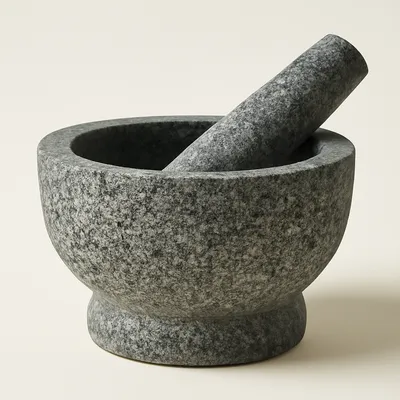


Soupe au pistou comes out of the Niçois-Genoese coastal exchange — Liguria's pesto crossed the border without pine nuts or hard sheep's cheese, becoming pistou (from Provençal pistar, 'to pound'). The soup form is a Provençal household summer staple, eaten when the late-July courgettes and green beans flood the markets. There is no fixed recipe — every village and every grandmother adjusts the vegetable mix — but the rule is always the same: pistou is pounded raw and added at the table, never cooked into the soup. The 2-mortar version of pistou (one with parmesan, one without) lets diners choose.
Provençal answer to Ligurian pesto — no pine nuts, no pecorino, pounded raw. Heat above 60°C kills basil's linalool and methyl chavicol; that's why pistou hits the bowl at the table, never the pot.
Steam carries up a thick basil-and-garlic perfume from the dark-green swirl on the soup's surface. The broth itself is light, vegetable-clean, almost transparent — Provençal soup is not the murky bean stew you might expect. White beans are creamy, courgette nearly melted, pasta tender. Pistou hits the tongue cool and raw against the hot soup. By the second bowl the basil has dispersed; the third spoonful in carries no perfume, only colour. Eat fast.
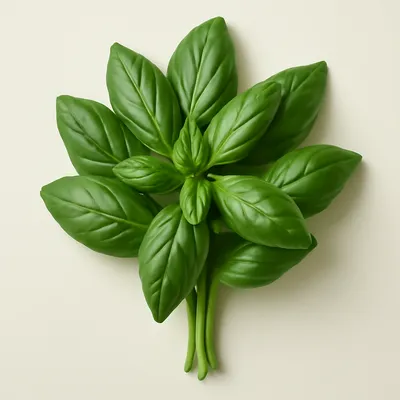
Heat is the enemy of basil. Basil's perfume comes from volatile oils (linalool, eugenol, methyl chavicol) that evaporate above 60°C and oxidise to khaki within 90 seconds of contact with hot liquid. Pounding cold in a mortar, adding olive oil immediately to coat the cells, and stirring in only at the table preserves both colour and aroma. Blender pistou turns dark because steel blade friction heats the leaves and oxidises the chlorophyll; mortar-pounded pistou stays bright green for the same reason heirloom-tomato sauce stays red.
Variations
Niçois purist version adds tomato and gruyère; Marseille adds hard-boiled egg yolk to the pistou; Genoese minestrone al pesto (the Ligurian cousin) keeps the pine nuts and pecorino.
On the Palate
Where Soupe au Pistou sits in the French flavor cloud
Ingredients
Serves 6





How it's made
5 steps · 40 min active + 50 min waiting
- 160 min
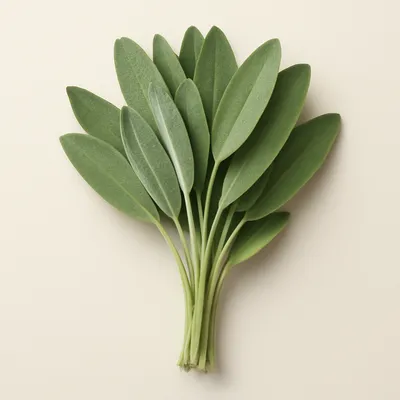
Soak 200g dried white beans (coco de Pamiers or cannellini) overnight. Drain. Simmer in unsalted water with 1 bay leaf and 1 sage sprig 60 minutes until tender. Reserve cooking liquid.
Watch outEnsure beans are fully submerged in water to prevent uneven cooking.
- 212 min
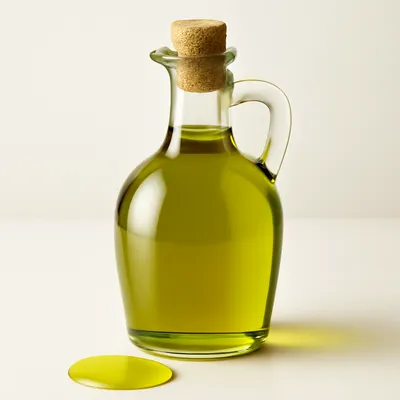
Sweat 1 sliced leek and 1 chopped onion in 30g olive oil 5 minutes — no colour. Add 2 diced potatoes, 2 diced courgettes, 200g green beans cut in 2cm lengths, 4 chopped tomatoes (peeled). Cover with the bean liquid plus water to make 2L. Salt lightly.
Watch outSweat the leek and onion soft with no colour at all — any browning turns the broth sweet-heavy instead of the clean, light body pistou needs.
- 333 min
Simmer 25 minutes uncovered. Add the cooked white beans and 100g small pasta (vermicelli or coquillettes). Cook 8 more minutes until pasta is just tender. Taste — should be light, not stewed.
Watch outCheck pasta frequently to prevent overcooking; it should be al dente.
- 48 min
Make pistou in a marble mortar: pound 4 garlic cloves with 1/2 tsp coarse salt. Add 60g basil leaves (Genovese or fine-leaf Provençal), pound to bright green paste. Stir in 80ml fruity olive oil and 30g grated parmesan or aged tomme — the parmesan is small, not a pesto-level amount.
Watch outPound the basil cold and add the oil the instant it's a paste — coat the leaves in oil fast and the paste stays bright green instead of oxidising to khaki.
- 53 min
Ladle hot soup into wide bowls. Each diner spoons 2 tsp pistou into their bowl and stirs once — the basil aroma lifts off the surface. Serve immediately; reheating soup with pistou stirred in turns the basil khaki.
Watch outStir the pistou in only at the table, off the heat — the aroma lifts off the surface; reheat the soup once it's in and the basil goes khaki and dull.
Archive tool suggestions — not reviewed
These legacy suggestions have not been evidence-reviewed and are not presented as required tools.