A rich, airy chocolate mousse paired with fresh blackberries for a contrast of flavors and textures.


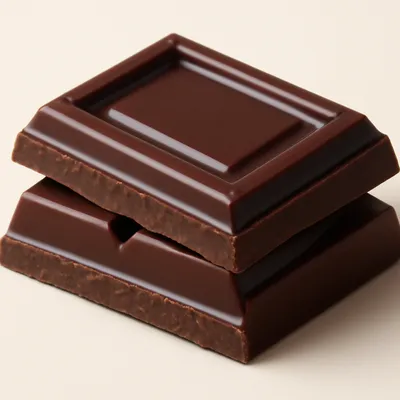
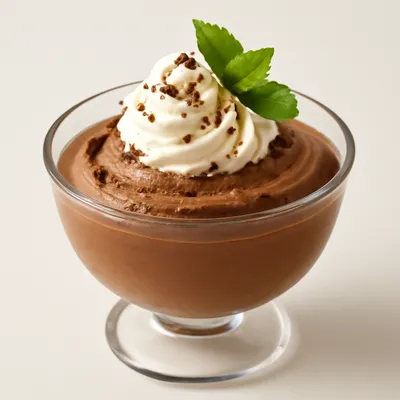


Chocolate mousse appeared in French recipe books much earlier than usually assumed — printed recipes for mousse au chocolat exist from 1768, 1814 and 1827; the painter Henri de Toulouse-Lautrec is credited with an early home version (mayonnaise au chocolat) in the 1890s. Industrial cocoa from Van Houten's 1828 dutching process made dark chocolate cookable in volume. Blackberry as the standard partner is later — a Parisian bistro pairing for its color and acidity.
Paris bistro standard — 70% Valrhona melted with butter, folded into whipped egg whites and a little cream. Blackberry coulis cuts the fat. The texture failure point is hot chocolate hitting cold whites.
A spoonful holds shape for a moment, then collapses on the tongue into cold dark chocolate and air. Bittersweet — the good versions run 65–70% cocoa — cut by fresh blackberries scattered on top, their tartness pulling against the cocoa's edge. No whipped cream on the plate, no powdered sugar; this is the French version, set with egg, not gelatin.
Structure depends entirely on stiff egg whites folded into melted chocolate while both sit at the same temperature — too cold and the chocolate seizes into grains, too warm and the foam liquefies. Yolks add richness and emulsify cocoa butter. No cream, no gelatin in the canonical recipe; the bubble matrix is pure protein. Overfold once and the mousse loses half its volume — irreversible.
Variations
Mousse au chocolat classique (egg whites only, no cream — Escoffier's); mousse au chocolat à la crème (whipped cream, denser); Bayonne version uses Espelette pepper for warmth; vegan «aquafaba mousse» has appeared since 2015.
On the Palate
Where Chocolate Mousse with Blackberry sits in the French flavor cloud
Structure is pure egg-white foam, so temperature-match before you fold: melt the chocolate and cool it to just warm, whip the whites to soft peaks, and combine when both are the same coolish temperature — chocolate too cold seizes into grains, too warm and it liquefies the foam, and one overzealous fold collapses the volume for good.
Ingredients





How it's made
6 steps · 45 min
- 110 min
Melt the dark chocolate in a double boiler over low simmering water, stirring occasionally until smooth. Add espresso powder and mix well. Remove from heat and let it cool until it's cool to the touch, about 10 minutes.
Watch outTake the chocolate off the heat the moment it's smooth and glossy, then let it cool until it's no warmer than your fingertip — residual heat is what kills the foam later.
- 25 min
In a large bowl, whip the heavy cream with sugar and vanilla to soft peaks. The cream should hold its shape but still be soft and billowy. Let it rest at room temperature for about 10 minutes.
Watch outDo not overwhip the cream, as it can turn grainy and start to separate.
- 35 min
In a separate bowl, whip the egg whites until they form soft peaks. The whites should be glossy and just hold their shape.
Watch outStop whipping the whites the instant they turn glossy and the peak just flops over at the tip — dry, matte whites have gone too far.
- 410 min
Fold a large spoonful of the egg whites into the cooled chocolate mixture to lighten it. Gently fold in the remaining egg whites, then fold in the whipped cream until no white streaks remain. Divide the mousse among serving glasses.
Watch outSlacken the chocolate with one spoonful of whites first, then fold the rest in a few broad strokes and quit the moment the streaks disappear.
- 512 min
For the blackberry sauce, combine blackberries, sugar, and lemon juice in a saucepan over medium-high heat. Bring to a boil, then reduce to a simmer until the berries soften, about 10 minutes. Mash and strain through a sieve, then stir in the liqueur.
Watch outDo not let the sauce boil too long after mashing, as it can become too thick.
- 63 min
Let the sauce cool slightly, then drizzle over the mousse. Garnish with grated chocolate and whipped cream if desired.
Archive tool suggestions — not reviewed
These legacy suggestions have not been evidence-reviewed and are not presented as required tools.