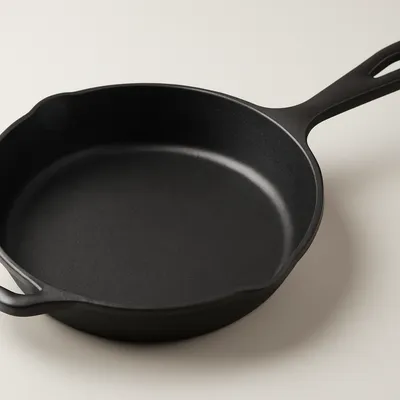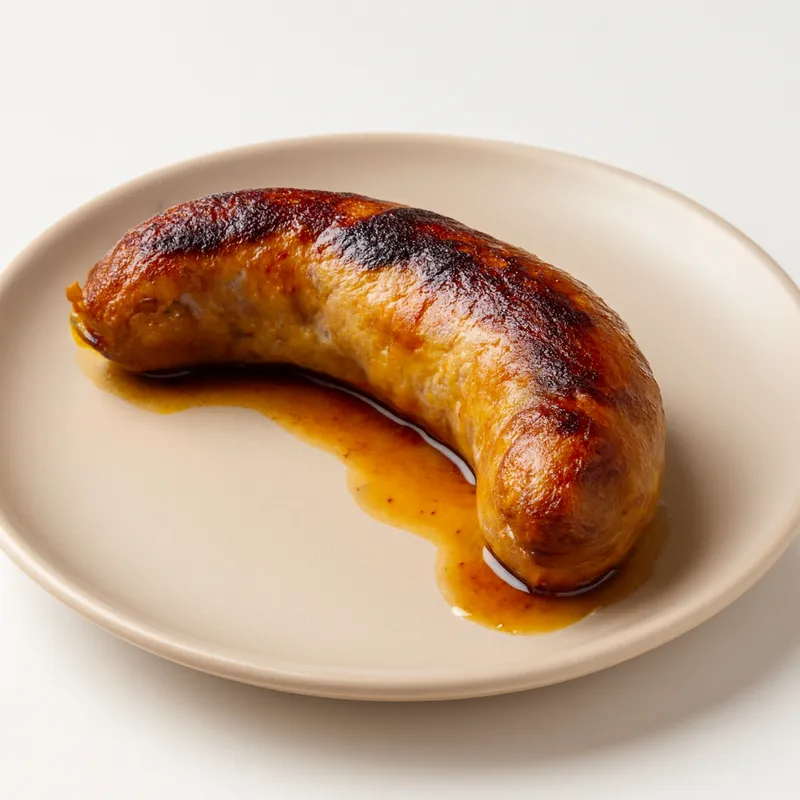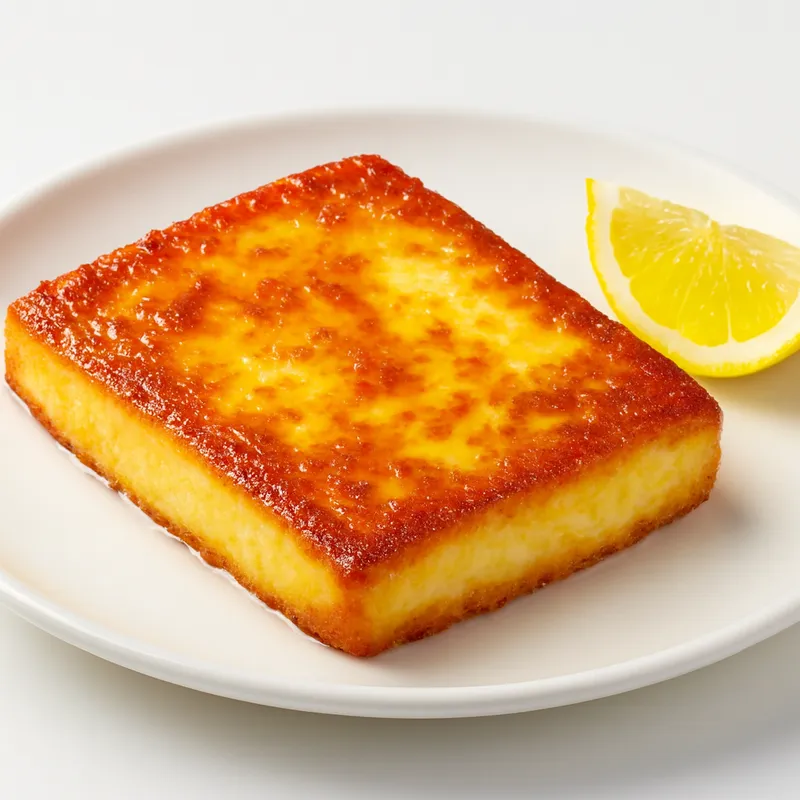






Named after the saganaki, a small two-handled frying pan from the Greek word sagani (Turkish sahan, copper dish). The pan-fried cheese form is documented in Greek tavernas from at least the 19th century. The flaming brandy version (saganaki opa!) was popularized in 1968 at the Parthenon restaurant in Chicago's Greektown — the fried cheese itself was already a taverna staple, but owner Chris Liakouras invented the tableside flambé-and-"Opa!" presentation after a customer suggested dousing it in brandy — not a Greek tradition.
Named for the two-handled sagani pan it's fried in. Kefalograviera or graviera cheese, dredged in flour, pan-fried 60 seconds per side, finished with a lemon squeeze. The flaming-brandy version (saganaki flambé) is a 1968 Chicago invention by Diana's Opaa restaurant — not Greek, despite the menu.
A slab of hard cheese — typically kefalograviera, kefalotyri, or graviera — dredged in flour and pan-fried in olive oil until the outside forms a brown crust and the inside stays just barely melted. Hit with lemon juice and sometimes flamed with brandy at the table. Eaten with bread, immediately. The textural contrast lasts maybe 90 seconds before the crust softens.
The cheese must be a hard, low-moisture aging variety — soft cheeses like feta release water and disintegrate in the pan. The flour coat is a barrier: it dries the surface so a crust forms before the interior overheats and breaks. High heat, short time. Once the crust is on, you have under two minutes to plate, lemon, and serve before texture collapses.
Variations
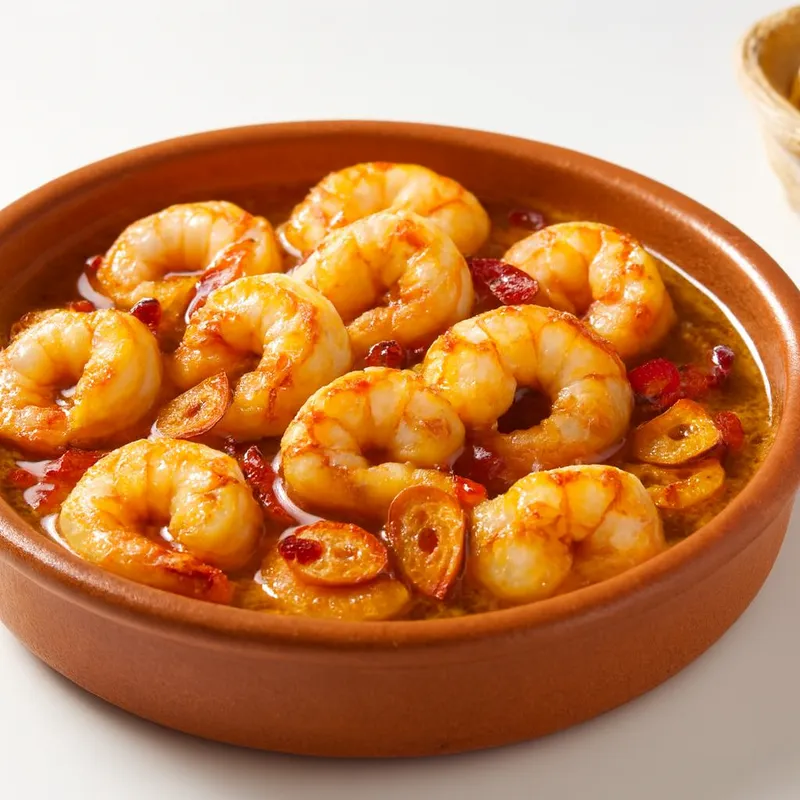
Cheese saganaki (kefalograviera, the canonical); shrimp saganaki (with tomato-feta sauce); mussel saganaki (mydia saganaki); Cypriot saganaki uses halloumi.
On the Palate
Where Saganaki sits in the Greek flavor cloud
Use a hard, low-moisture cheese and work fast over high heat: the flour coat dries the surface so a crust forms before the inside melts through, and you have under two minutes from crust to plate before it slumps.
Ingredients



How it's made
4 steps · 10 min
- 13 min
Cut the cheese into slices about ¾ centimeter thick. Optionally, dredge each slice in flour for a crispier crust.
Watch outSlice a full finger-width thick — thinner and it melts through before a crust can set; coat evenly in flour and shake off the loose dusting.
- 22 min
Heat a small frying pan over medium-high heat. Add olive oil and swirl to coat the pan. When the oil shimmers, carefully add the cheese slices.
Watch outWait for the oil to shimmer and ripple before the cheese goes in; a cool pan means it slumps before it browns.
- 34 min
Fry the cheese for 1-2 minutes on each side, until golden brown and the edges are crisp. Use a spatula to flip them gently.
Watch outOne to two minutes a side is all it takes — flip once the underside is deep golden with crisp edges, and move fast, the window is short.
- 41 min
Remove the cheese from the pan and serve immediately with a squeeze of fresh lemon juice over the top and a sprinkle of black pepper.
Archive tool suggestions — not reviewed
These legacy suggestions have not been evidence-reviewed and are not presented as required tools.