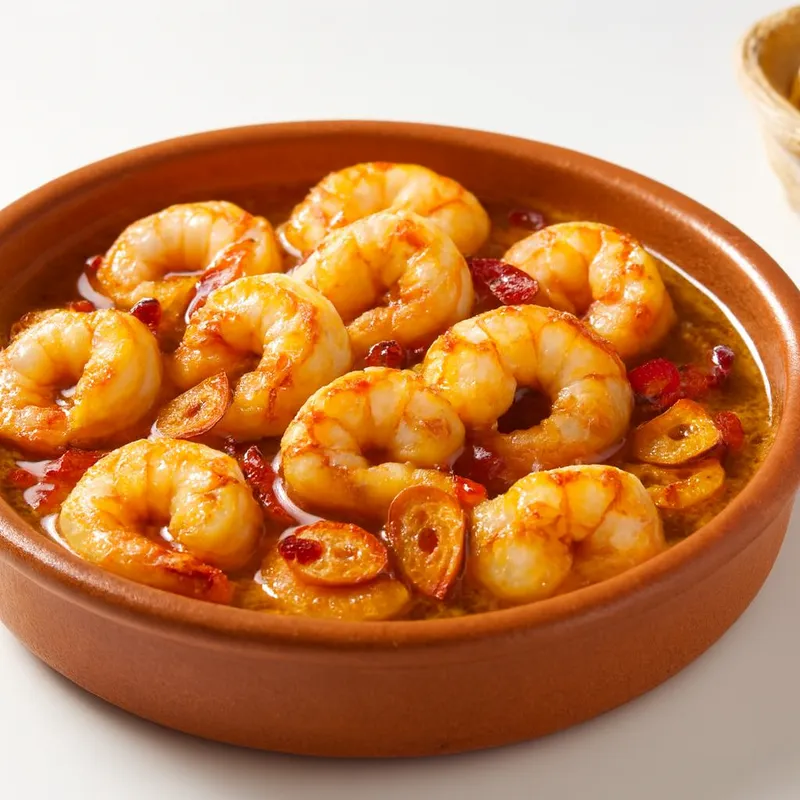
An Andalusian and Madrid tapas-bar dish that took its modern form in the early 20th century, when small terracotta cazuelas (cheap, retain heat well) became standard equipment in Spanish bars. The garlic-and-oil base is straightforward Mediterranean cooking; the addition of dried chili (guindilla) and the cazuela presentation is what makes it specifically Spanish rather than Italian.
Sevilla tapas-bar staple — head-on prawns sizzled in olive oil with sliced garlic and dried guindilla, served in the same terracotta cazuela it cooked in. Bread is mandatory.
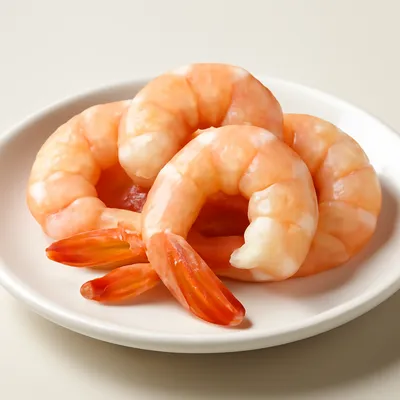
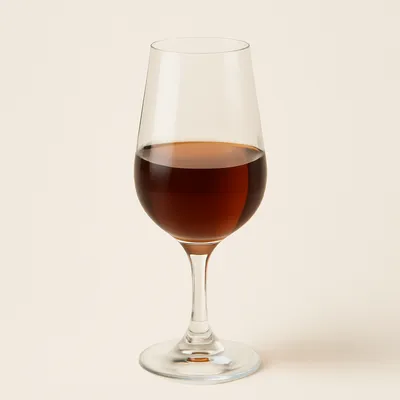
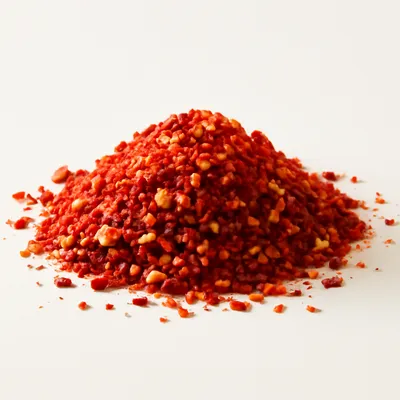
Whole peeled shrimp swimming in a small earthenware cazuela of olive oil, with sliced garlic and a few dried chili flakes — the oil still bubbling when it lands on the table. A splash of dry sherry or brandy goes in at the end. Eaten with a fork plus bread to mop the oil; the bread is half the dish. The shrimp should be just-cooked, the garlic golden — never browned dark, which turns bitter.
The cazuela is doing real work: terracotta absorbs heat and continues cooking the shrimp at the table after the dish leaves the burner. That residual heat is calibrated — chefs pull the cazuela just before the shrimp are fully cooked, knowing the residual heat will finish them. Use a metal pan and the shrimp either come out raw or, by the time they're done, overcooked into rubber.
Variations
Cádiz adds a splash of fino sherry; Galicia uses larger langostinos; modern Madrid tapas bars finish with smoked pimentón and parsley.
On the Palate
Where Gambas al Ajillo sits in the Spanish flavor cloud
Time the shrimp to the residual heat: in a terracotta cazuela, pull the pan just before the shrimp are fully cooked because the hot clay keeps cooking them at the table — chase them to done on the burner and they finish rubbery, so they should come off pink and only just curled.
Ingredients






How it's made
5 steps · 7 min
- 11 min
Warm the olive oil in a sauté pan over medium heat until it shimmers. Add the minced garlic and cook for about a minute, just until it begins to turn golden and releases its aroma.
Watch outCook the garlic only to pale gold and fragrant — once it smells nutty, move on before it browns and turns bitter.
- 21 min
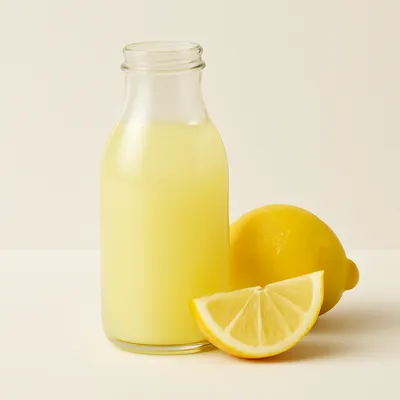
Increase the heat to high and add the shrimp, lemon juice, sherry, and paprika. Stir briskly to coat the shrimp in the flavorful oil.
- 33 min
Continue to sauté the shrimp, stirring constantly, until they turn pink and start to curl, about 3 minutes.
Watch outStop while the shrimp are barely pink and just curling into a loose C — a tight curl means they're already past done.
- 41 min
Remove the pan from heat and transfer the shrimp, along with the oil and sauce, to a warm plate. Season with salt and freshly ground black pepper to taste.
Watch outOff the heat, the shrimp should still be glistening and just-firm, sitting in a pool of clear golden garlic oil for the bread.
- 51 min
Sprinkle the dish with chopped fresh parsley for a burst of color and freshness before serving.
Archive tool suggestions — not reviewed
These legacy suggestions have not been evidence-reviewed and are not presented as required tools.
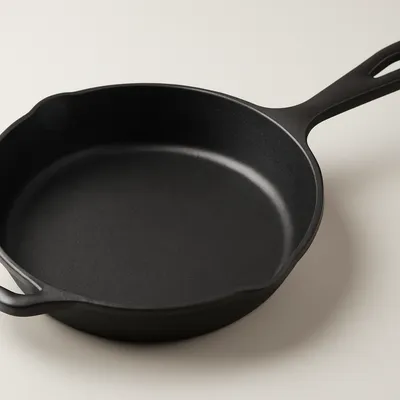
A heavy, single-piece cast iron pan, 25-30 cm across, weighing 1.5-2.5 kg. Once preheated, the thick mass holds 230°C+ even when a cold steak hits the surface — that's the secret to a deep crust. A well-seasoned skillet (multiple thin layers of polymerized oil baked into the iron) is essentially nonstick, gets better with use, and lasts a century. Lodge skillets from Tennessee have been in continuous production since 1896.

A heavy flat griddle, often 40-60 cm across, made from cast iron or chrome-plated steel, used in Spanish (and southern French) cooking for fast searing of seafood, meats, and vegetables. The dense metal holds 250-280°C steady; food is laid directly on the surface (no oil) and gets a deep crust without overcooking. Restaurant planchas are gas-or-electric flat-tops; the home version sits across two stovetop burners.

A round, shallow, glazed terracotta dish, 18-30 cm across with sloping walls, used for tableside-served Spanish tapas — gambas al ajillo, almejas a la marinera, callos, fideuà. Clay's slow heat retention keeps olive oil at the perfect 80-90°C garlic-confit zone for prawns without scorching, and the wide shallow profile lets liquids reduce while keeping protein lightly moored at the bottom.