Buttery almond shortbread cookies blanketed in a thick coat of icing sugar, traditionally shaped into mounds or crescents. They are the Christmas counterpart to honey-soaked melomakarona, and the two almost always appear together on Greek holiday tables. The dough is short and crumbly, made rich with browned butter and toasted almonds, and a splash of brandy or ouzo runs through it. A whole clove is often pressed into each cookie before baking.

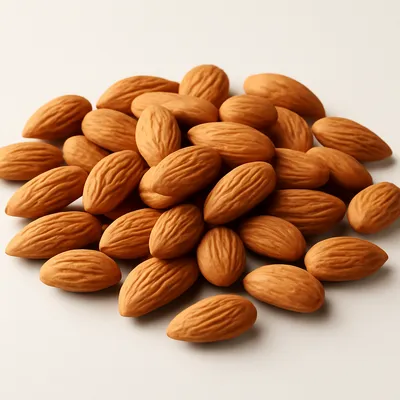


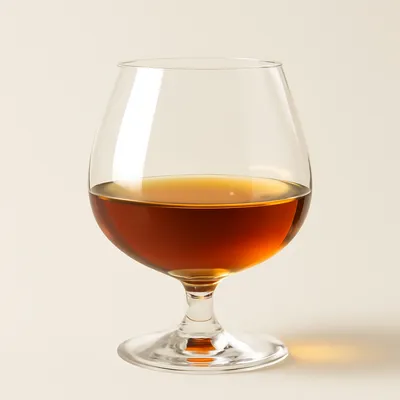
The name derives from the Ottoman Turkish kurabiye (cookie), itself from Arabic, and shortbread-style cookies dusted in sugar are found across the former Ottoman lands. The Greek version, distinguished by ground almonds and the heavy icing-sugar coat, became fixed as a Christmas and name-day sweet; the town of Kavala in northern Greece is widely cited for a particularly renowned style. Its pairing with melomakarona as the two emblematic Greek Christmas cookies is a firmly established custom, though when that pairing crystallized is not precisely documented.
The first bite is pure crumble — the cookie collapses into a sandy, melt-in-the-mouth texture, never chewy. Browned butter gives a deep nutty backbone, toasted almonds add crunch, and the cloud of icing sugar on top means you cannot eat one without dusting your shirt. A faint warmth of clove and brandy sits underneath. Best a day after baking, once the sugar coat has set into the surface.
The texture depends on keeping the dough short: high butter, no liquid beyond a little brandy, and minimal handling so gluten never develops. Browning the butter first (cooking it until the milk solids turn golden) deepens the flavour and is what separates a good kourabie from a flat one. The icing sugar is applied twice — a light dusting onto the warm cookies so it adheres, then a heavy second burial once cool, which is why a finished plate looks snowed-in.
Variations
Crescent (half-moon) and round mound shapes are both traditional. Some bakers use rosewater or orange-flower water in place of, or alongside, the brandy. The clove stuck into each cookie is common but optional and is removed before eating. Almonds may be left out for a plainer butter-cookie version, and the proportion of almonds varies by region and household.
On the Palate
Where Kourabiedes sits in the Greek flavor cloud
Ingredients
Serves 8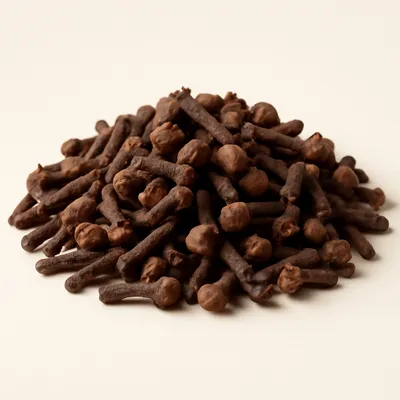
How it's made
6 steps · 40 min
- 18 min
Brown the butter gently until the milk solids turn golden and it smells nutty, then cool until soft but not solid.
Watch outBrown the butter until the milk solids turn golden and it smells nutty — this is what lifts a good kourabie above a flat one; let it go too far and it tastes scorched.
- 25 min
Beat the browned butter with icing sugar until pale and fluffy, then beat in the egg yolk and brandy.
- 35 min
Fold in the toasted ground almonds and flour to form a soft, short dough; do not overwork.
- 410 min
Shape into small mounds or crescents and, if using, press a clove into each.
- 520 min
Bake at 170C until just set and pale gold underneath, about 20 minutes; they should stay light in colour.
Watch outBake only until just set and pale gold underneath — they must stay light in color; any real browning on top means they're overdone.
- 65 min
Dust the warm cookies lightly with icing sugar, then once fully cool bury them in a thick second layer.
Archive tool suggestions — not reviewed
These legacy suggestions have not been evidence-reviewed and are not presented as required tools.


