A dense, golden cake of honey, mixed nuts, dried fruit, and candied citron glazed with a saffron-flour wash before baking—Rome's ancient winter-solstice confection, distributed at Saturnalia to summon the sun's return, and still baked each December across Lazio.

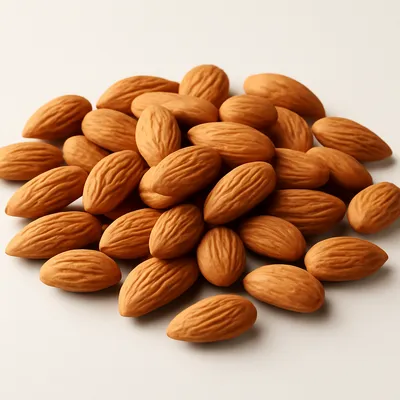
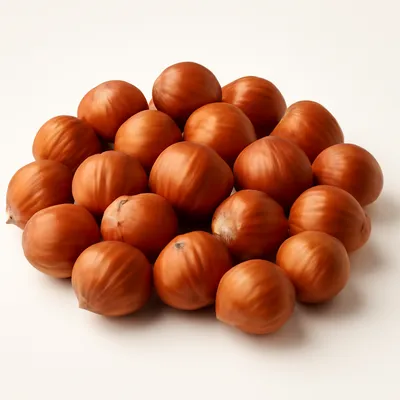
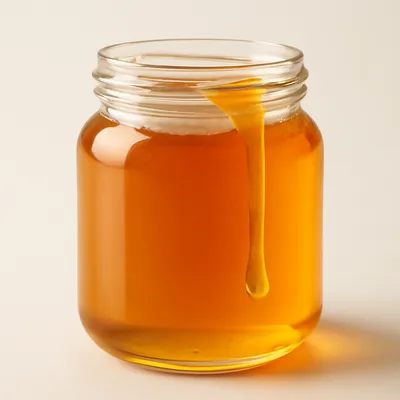
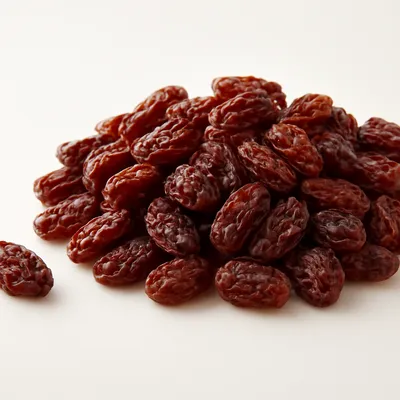

The pangiallo traces to the Saturnalia, the great mid-winter Roman festival honouring Saturn, celebrated from 17 to 23 December during the imperial era. Housewives baked small golden cakes to invoke the sun's return after the winter solstice; the practice continued under Emperor Aurelian's Feast of the Unconquered Sun established on 25 December. A kindred recipe appears in De re coquinaria, the compendium attributed to the 1st-century CE Roman gastronome Marcus Gavius Apicius: honey spiked with wine, raisins, pine nuts, walnuts, and barley flour. The name pane giallo (yellow bread) refers directly to the golden saffron-flour glaze; over the centuries, candied citron, additional dried fruits, and in the modern era dark chocolate enriched the ancient nut-and-honey base. Roman housewives long substituted dried apricot and plum pits for costly almonds when money was scarce.
Intensely honeyed and nutty with a dense, slightly chewy interior; candied citron cuts through the sweetness with floral bitterness, and the saffron glaze crackles lightly on the surface with every bite.
Honey acts as both sweetener and binder: its high fructose-glucose content and strong hygroscopic nature hold the nut mixture together and resist staling. During baking at 170C, the honey-flour-nut matrix undergoes Maillard browning, and honey's fructose begins caramelising above 110C, generating deep amber aromatic compounds. The saffron glaze is a flour slurry coloured by crocin—the water-soluble carotenoid pigment of Crocus sativus—which gelatinises during baking to form a thin, brittle golden shell. The nuts' polyunsaturated fats roast and produce aromatic pyrazine compounds, deepening the overall flavour. The absence of eggs or dairy keeps the texture compact rather than airy, concentrating every flavour into a small, dense form.
Variations
Traditional Roman families substituted ground dried apricot and plum pits for almonds when funds ran short. Modern recipes frequently add dark chocolate pieces. The Umbrian panpepato is a close cousin distinguished by black pepper, mixed spices, and a bitter chocolate coating rather than a saffron glaze.
On the Palate
Where Pangiallo Romano sits in the Italian flavor cloud
Ingredients
Serves 10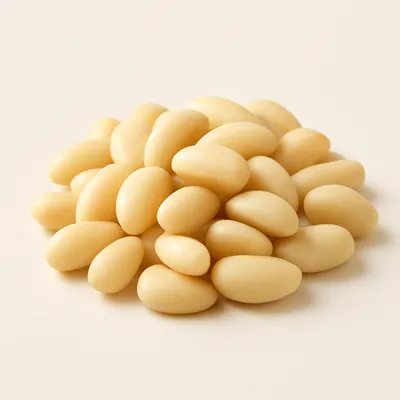


How it's made
8 steps · 25 min
- 15 min
Toast walnuts, blanched almonds, pine nuts, and hazelnuts in a dry pan over medium heat, stirring, until fragrant and lightly coloured, about 5 minutes. Cool, then roughly chop the larger nuts.
- 23 min
Warm the honey in a large heavy saucepan over low heat until completely liquid and just beginning to bubble at the edges. Remove from heat.
Watch outWarm the honey just until liquid and edges bubble, no hotter — overheated honey scorches and the finished cake turns bitter.
- 35 min
Add the toasted nuts, raisins, roughly chopped candied citron, and sifted flour to the warm honey; stir vigorously until a thick, sticky, unified mixture forms.
- 46 min
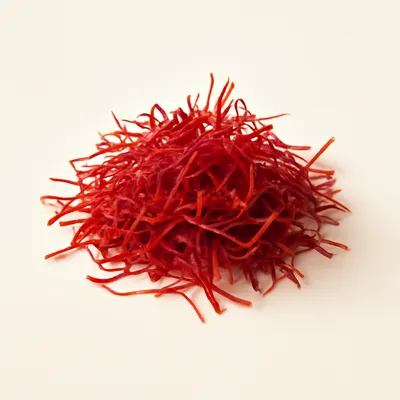
Dissolve a large pinch of saffron threads in 2 tablespoons of hot water; let steep 5 minutes, then whisk into 3 tablespoons of flour and a pinch of salt to form a smooth, bright golden glaze paste.
- 55 min
Wet your hands lightly. Divide the nut-honey mixture into portions of about 80g each and shape into compact round mounds on a parchment-lined baking tray.
- 63 min
Using a pastry brush, coat the entire surface of each cake generously with the saffron glaze, leaving no bare patches.
- 728 min
Bake in a preheated oven at 170C for 25-30 minutes until the glaze is set, crackled, and deep gold, and the interior is firm to a light press.
Watch outBake until the saffron glaze is set, crackled and deep gold and the inside firm to a light press — a soft centre means it needs longer.
- 830 min
Cool completely on the tray before serving or wrapping. Pangiallo keeps well for up to two weeks stored in paper at room temperature.
Archive tool suggestions — not reviewed
These legacy suggestions have not been evidence-reviewed and are not presented as required tools.


