
A mendiant is a small disc of tempered chocolate studded, while still fluid, with dried fruits and nuts. The classic version carries four toppings — almond, hazelnut, dried fig and raisin — whose colours traditionally recall the robes of the four mendicant (begging) monastic orders, which is where the name 'mendiant' (beggar) comes from. They are one of the Treize Desserts, the thirteen desserts of a Provençal Christmas table. Glossy, snapping cleanly, they pair the smoothness of good chocolate with chewy fruit and crunchy nuts.

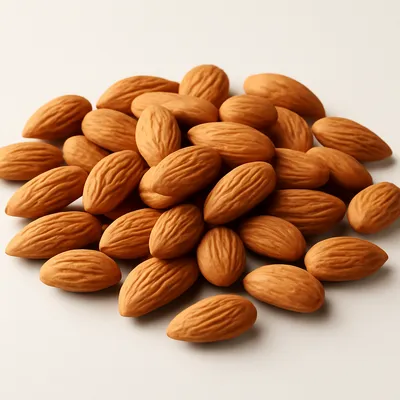
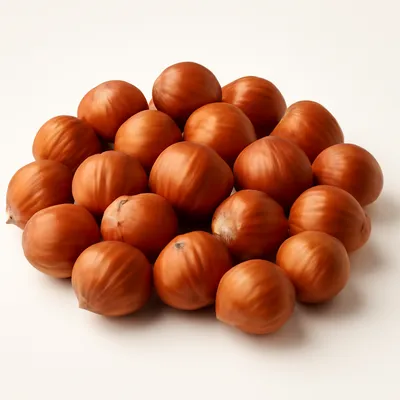

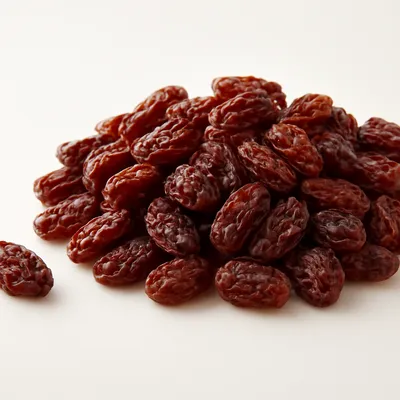
The mendiant belongs to the Provençal tradition of the Treize Desserts served at Christmas, where the 'quatre mendiants' (four beggars) are a set of four dried fruits and nuts — almond, hazelnut (or walnut), dried fig and raisin — each linked to one of the four great mendicant orders that took a vow of poverty: the Dominicans, the Carmelites, the Franciscans and the Augustinians. The colours of the fruits were said to echo the orders' habits. The exact fruit-to-order mapping varies from source to source and should be taken as a traditional association rather than a fixed scheme; common versions tie the white almond to the Dominicans, the brown fig to the Franciscans, the hazelnut to the Carmelites and the dark raisin to the Augustinians. The chocolate disc bearing the four toppings is the form in which mendiants are sold today by French chocolatiers.
It begins with the snap — a clean, brittle break of well-tempered chocolate, and the cool, almost glassy melt that follows on the tongue. Then the toppings come into play: the chewy give of fig and raisin, the firm crunch of toasted almond and hazelnut, fruit sweetness and nut bitterness set against the dark chocolate. The surface is glossy and the chocolate stays firm at room temperature, not waxy or dull.
Everything depends on tempering the chocolate — coaxing the cocoa butter to crystallise in the right polymorph. Cocoa butter can set in several crystal forms, but only Form V (the stable beta form) gives a glossy surface, a firm snap, a clean melt near body temperature and resistance to bloom. To reach it, the chocolate is melted to about 45–50°C to erase all existing crystals, cooled to around 27°C so a mix of crystals forms, then gently rewarmed to about 31–32°C for dark chocolate, which melts out the unstable forms and leaves only stable Form V seeds to set the whole mass. The discs are piped or spooned and the fruits and nuts pressed on while the chocolate is still fluid, so they bond as it crystallises. Poorly tempered chocolate sets dull and soft and later blooms — a grey film of fat or sugar surfacing as unstable crystals reorganise.
Variations
The base can be dark, milk or white chocolate. Modern chocolatiers stray well beyond the four classic toppings, adding candied orange peel, pistachios, dried cranberries, crystallised ginger or gold leaf, so a 'mendiant' today is often a free-form scatter of whatever fruits and nuts suit. The strict 'quatre mendiants' — almond, hazelnut, fig and raisin alone — remains the traditional, symbolic version tied to the four mendicant orders.
On the Palate
Where Mendiant sits in the French flavor cloud
Ingredients
Serves 20How it's made
7 steps · 40 min
- 15 min
Set out the dried fruits and nuts so they are ready: halved or whole almonds and hazelnuts, small pieces of dried fig, and raisins.
- 28 min
Chop the dark chocolate finely and melt about two-thirds of it gently to roughly 45–50°C, stirring until smooth.
Watch outMelt two-thirds to 45–50°C to wipe out every existing crystal — leftover crystals give a dull, streaky, bloomed finish.
- 35 min
Add the remaining chopped chocolate off the heat and stir until it cools to around 27°C, seeding stable crystals.
- 43 min
Rewarm very gently to about 31–32°C, the working temperature for tempered dark chocolate.
Watch outRewarm to just 31–32°C for the working temperature — overheat past this and you melt out the stable seeds and lose the snap and gloss.
- 55 min
Spoon or pipe small rounds of chocolate onto a sheet of baking parchment or acetate, spreading each into a neat disc.
- 65 min
While the chocolate is still fluid, press one of each topping onto every disc — almond, hazelnut, fig and raisin.
Watch outPress the toppings on while the chocolate is still fluid — once it starts to set they won't bond and will fall off later.
- 730 min
Leave the discs to set at cool room temperature until firm and glossy, then peel them from the parchment.
Archive tool suggestions — not reviewed
These legacy suggestions have not been evidence-reviewed and are not presented as required tools.


