Serpent-shaped spiced Christmas biscuits from Naples, made from flour, honey and almonds and perfumed with the pisto spice blend. Their name joins the Latin sesamum and mel, sesame and honey, for the sesame seeds that once coated them before almonds took over; the honey-worked dough bakes firm, then softens over a few days into a dense, fragrant biscuit eaten through the Christmas holidays with sweet wine.


Susamielli are among the oldest of the Neapolitan Christmas sweets. Their name joins the Latin sesamum and mel, sesame and honey, recalling a time when the biscuits were coated in sesame seeds later replaced by almonds; one tradition even carries their ancestry back to the sesame-and-honey cakes offered to Demeter and Kore in the rites of the Eleusinian Mysteries. They are also called sapienze, after the Clarisse nuns of the convent of Santa Maria della Sapienza in the historic centre of Naples, who by the sixteen-hundreds were making a celebrated elliptical version. Tradition held three social grades: the coarse susamielli dello zampognaro of rough flour and reused trimmings, for the bagpipers and servants; the buon cammino filled with sour-cherry jam, for friars and priests; and the fine susamielli nobili of white flour, pisto and almond paste, for noble houses. It is this noble version, recorded in the recipe book of the Neapolitan cook Vincenzo Corrado, that survives today; the philologist Antonio Altamura holds that the S-shape was first given in honour of the nineteenth-century Neapolitan writer and patriot Luigi Settembrini.
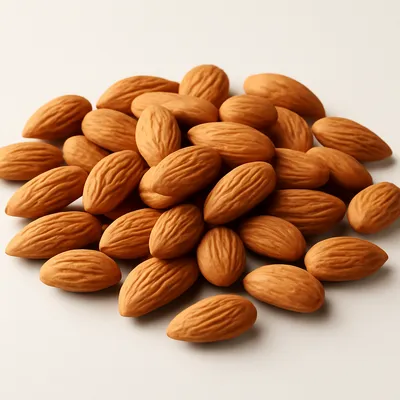
A susamiello eats dense and satisfyingly chewy, its crumb bound and darkened by honey and thick with ground almond. The pisto comes through warm and layered, cinnamon and clove over a whisper of pepper, while the honey keeps everything moist and lightly sticky, and a whole almond pressed into the curve adds a toasty crunch.
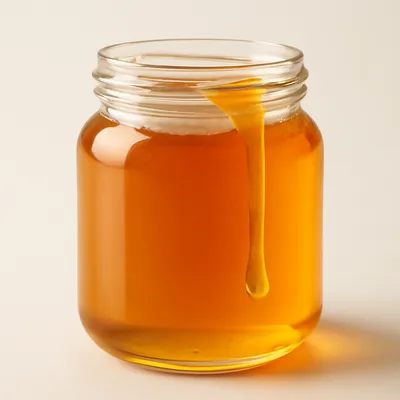
Honey does most of the work here. As the main sweetener and the only liquid, it is strongly hygroscopic: its invert sugars, fructose and glucose, pull moisture from the air, which is why a susamiello bakes firm but softens and improves over the following days. Fructose also browns readily, so the dough colours and deepens in flavour at a relatively low oven heat. With almonds supplying fat and protein and little else to build a gluten network, and no chemical leavener, the biscuit sets dense rather than airy. The dough must be worked quickly and briefly, because the warmth of the hands melts the honey and fat and turns it sticky and unmanageable.
Variations
The best-known modern form is the noble susamiello of white flour, almond and honey, but bakers still make an elliptical sapienza and, at the humbler end, versions bulked out with rougher flour and citrus-peel trimmings. Some finish the biscuits the old way, rolling the tops in sesame seeds before baking or setting a whole almond into the central curve; a few glaze them with a thin sugar or chocolate coating.
On the Palate
Where Susamielli sits in the Italian flavor cloud
Ingredients
Serves 12How it's made
7 steps · 30 min
- 115 min
Finely grind the almonds and mix them with the flour, sugar, pisto and grated orange zest, then heap the mixture into a mound with a well in the centre.
- 25 min
Gently warm the honey until fluid and pour it into the well.
- 310 min
Work the honey quickly into the dry mixture to a firm, homogeneous paste, handling it as little as possible so the warmth of your hands does not make it sticky.
Watch outWork the honey in fast and handle it as little as possible — hand-warmth melts the honey and the dough turns sticky and unworkable.
- 410 min
Let the dough rest briefly, then divide it and roll each piece into a strip about 10 cm long and 2 cm wide.
- 58 min
Curve each strip into an S and flatten it slightly; if you like, press the top into sesame seeds and set a whole almond into the central bend.
- 620 min
Bake at 180°C for about 20 minutes, until set and lightly coloured.
Watch outBake just to set and lightly colored — these firm and improve over days, so pull them before they harden in the oven.
- 730 min
Cool completely and keep in a tin; the biscuits soften and improve over a few days, so serve with a sweet wine or marsala.
Archive tool suggestions — not reviewed
These legacy suggestions have not been evidence-reviewed and are not presented as required tools.


