Mihidana are Bengal's tiniest fried sweet — pinpoint spheres of saffron-gilded rice and gram flour batter dropped through a brass perforated ladle into smoking ghee, emerging as golden grains no larger than coarse salt, then steeped in fragrant sugar syrup until they glisten. The name is literal Bengali: mihi means fine, dana means grain. Born in the Nag family's confectionery in Bardhaman, they pair inseparably with Sitabhog at every major Bengali celebration and Durga Puja offering.



Mihidana was created in Bardhaman (Burdwan), West Bengal, by Khettranath Nag of the Nag family of confectioners during the reign of Maharaja Mahatabchand Bahadur in the first half of the nineteenth century. The sweet was also a staple offering at the Bardhaman royal family's Durga Puja, cementing its place in the Bengali devotional calendar. Nagendranath Nag, Khettranath's grandson, broadcast an account of the sweet's history on All India Radio on 15 November 1976, preserving the family record. On 19 August 1904, Bhairab Chandra Nag prepared Mihidana and Sitabhog for Viceroy Lord Curzon's state visit to the court of Maharaja Vijaychand Mahatab; Curzon issued a written certificate of appreciation and reportedly mandated the sweets at official functions, spreading their reputation across India. Former Prime Ministers Jawaharlal Nehru and Lal Bahadur Shastri were both served Mihidana during a Congress Party session in Durgapur, and both expressed public admiration. The Government of India granted Mihidana a Geographical Indication tag in 2017; the first GI-certified consignment was subsequently exported to Bahrain.
The spheres are so minute they arrive in clusters on the tongue: a brief, yielding resistance, then a rush of warm saffron-scented syrup from the saturated interior. The background flavour is the faint nuttiness of fried gram flour — just enough to anchor the floral sweetness. Each mouthful dissolves in seconds, leaving warmth.
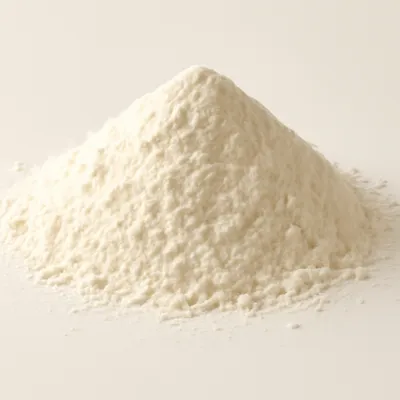
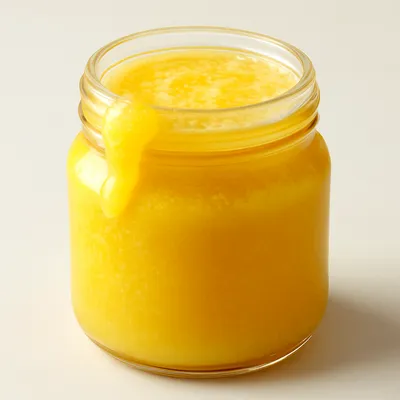
The batter — a thin slurry of finely milled rice flour and gram flour (roughly 3:1 ratio) hydrated with saffron-steeped water — is ladled through a brass utensil pierced with tiny holes over ghee held at 160–170 ℃. Surface tension draws each falling droplet into a near-perfect sphere; within the first second of contact with the hot ghee, the outer starch layer gelatinises and the Maillard reaction browns the surface, locking in the spherical form before the interior sets. Gram flour's legumin proteins denature almost instantly, preventing distortion. The fried pearls emerge porous and crisp; when submerged in warm sugar syrup, capillary action draws liquid into the interior voids, softening the shell through osmotic equilibration while saffron's crocin pigments colour the syrup deep amber. The result is a pearl firm at the surface yet saturated with syrup within.
Variations
The Bardhaman original uses a blend of Gobindobhog, Kaminibhog, and Basmati rice flours together with gram flour; street vendors sometimes substitute plain rice flour or cornflour, losing the characteristic fragrance. Festive versions flavour the syrup with rose water instead of saffron. A drier variant with less syrup-soaking is favoured in warmer months for better keeping quality.
On the Palate
Where Mihidana sits in the Indian flavor cloud
Ingredients
Serves 6
How it's made
8 steps · 20 min
- 15 min
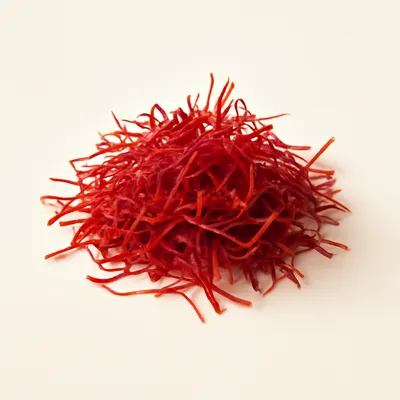
Combine finely milled Gobindobhog rice flour and gram flour in a 3:1 ratio. Steep a generous pinch of saffron in 2 tbsp warm water for 5 minutes, add to the flours, then whisk in more warm water gradually until the batter is very thin, lump-free, and runs off the whisk in a steady unbroken stream.
Watch outThin the batter until it runs off the whisk in a steady unbroken thread — too thick and it won't form clean pearls through the holes.
- 215 min
Rest the batter for 15 minutes to allow the flours to fully hydrate.
- 33 min
Heat ghee (or neutral oil) in a wide, deep vessel to 160–170 ℃ and maintain this temperature throughout.
- 48 min
Hold a fine-holed brass ladle or perforated strainer (3 mm holes or smaller) about 10 cm above the oil; pour a small measure of batter through the holes in a slow circular motion, letting the drops fall freely to form tiny spheres.
Watch outHold the perforated ladle about ten centimeters above 160-to-170-degree ghee — the falling drops round into spheres and set on contact; too close and they clump.
- 510 min
Fry the pearls in small batches, stirring gently to prevent sticking, until pale golden, about 2–3 minutes; remove with a fine-mesh skimmer and drain on paper.
- 67 min
Prepare a single-thread sugar syrup: dissolve sugar in water, add 4 crushed cardamom pods and the remaining saffron strands; simmer until single-thread stage, then reduce to the lowest heat to keep warm.
- 715 min
Add the fried pearls to the warm syrup in two or three batches; stir gently and leave each batch to soak for 12–15 minutes until the pearls glisten and feel slightly soft when pressed.
Watch outSoak the fried pearls in warm syrup twelve to fifteen minutes until they glisten and give slightly when pressed — that's full saturation.
- 82 min
Drain lightly through a colander; transfer to a serving dish and garnish with a few saffron threads. Serve at room temperature.


