Deep-fried chickpea-flour sticks seasoned with ajwain, asafoetida, and black pepper — a cornerstone Gujarati farsan eaten at tea-time, crumbled into kadhi, or packed as a travel snack, with the Rajkot and Surat variants each claiming their own devoted following.




Gathia belongs to Gujarat's ancient farsan tradition of gram-flour snack foods, a culinary lineage shared with sev, chakli, and papdi that is rooted in the Jain and merchant communities' long practice of pulse-based, shelf-stable travel provisions. Medieval Gujarati household records mention extruded and fried chickpea-flour preparations, and the format persisted across generations in communal snack-making. The concentrated commercial identity of Rajkot gathia emerged during the late 19th and early 20th centuries as Rajkot grew into a major mercantile hub of the Saurashtra region; its gathia is known for a slightly softer texture and more restrained spicing. Surat produces a harder, spicier variant. Both cities now distribute their gathia across India and to diaspora communities in the United Kingdom and North America.
A clean, dry snap on the first bite, then a warm flood of carom-seed warmth and the earthy depth of asafoetida; lighter and more brittle than a breadstick, with a mildly savoury chickpea finish that makes the next piece hard to resist.
Besan contains roughly 22% protein and starch granules that gelatinise rapidly in hot oil at 170–180 °C. When extruded dough strands enter the oil, surface moisture turns to steam almost instantly, forming thousands of micro-bubbles that create the characteristic open, porous cross-section. The protein network coagulates simultaneously, locking in the porous structure. Because besan is gluten-free, no long-chain gluten networks form to introduce chewiness; the result is a uniformly crisp, brittle texture. Ajwain's principal volatile compound, thymol, is heat-stable and survives frying to deliver a persistent aromatic note. Asafoetida's volatile sulphur compounds partially dissipate in the hot oil, shedding the raw pungency while leaving a rounded, savoury umami backbone.
Variations
Nylon gathia is extruded through a fine die to produce hair-thin, very soft strands; papdi gathia uses a flat ribbon die for a wafer-crisp result. Tikha gathia amplifies chilli. Methi gathia incorporates dried fenugreek leaves. A sweet preparation called gathia nu churma crumbles the fried sticks and mixes them with ghee and sugar.
On the Palate
Where Gathia sits in the Indian flavor cloud
Ingredients
Serves 6How it's made
7 steps · 10 min
- 15 min
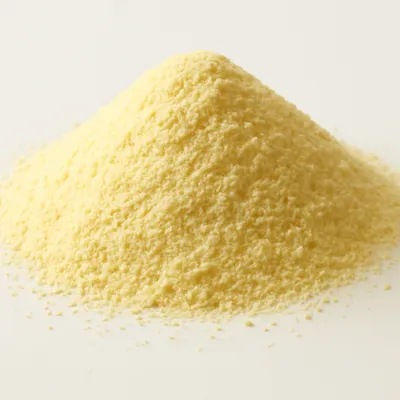
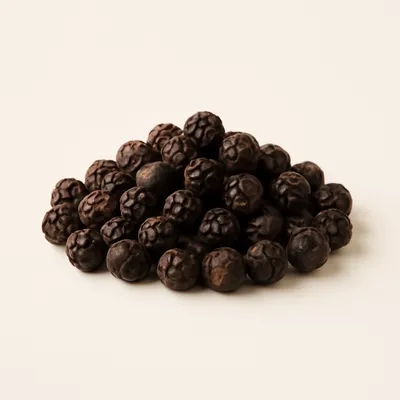
Combine 2 cups besan (chickpea flour), 1 tsp ajwain seeds, ¼ tsp asafoetida, ½ tsp black pepper, ½ tsp salt, and 2 tbsp oil; mix until the fat is evenly distributed and the mixture looks crumbly.
- 25 min
Add warm water gradually, kneading into a smooth, pliable but firm dough — it must hold its shape when pressed through a sev press without collapsing.
Watch outKnead to a smooth, firm, pliable dough — it has to hold its shape pressed through the sev press without collapsing; too wet and the strands won't stay crisp.
- 33 min
Heat oil in a deep pan to 170–175 °C. Confirm temperature by dropping in a small piece of dough; it should rise to the surface within 3 seconds.
Watch outHold the oil at 170–175 — drop in a bit of dough and it should surface within three seconds; too cool and the gathia go soft and greasy instead of brittle.
- 45 min
Fit the sev press with a medium-hole disc. Press long strands directly into the hot oil, snipping at 7–8 cm intervals with scissors.
- 510 min
Fry in batches for 3–4 minutes, turning once, until the gathia are pale golden and completely rigid — they should not flex when lifted with a slotted spoon.
Watch outFry till pale golden and completely rigid — they shouldn't flex at all when you lift them; any bend means they're still soft inside and will go chewy.
- 65 min
Remove and drain on paper towels; the gathia will crisp further as they cool to room temperature.
- 72 min
Once fully cool, store in an airtight container — they keep well for 2–3 weeks at room temperature.


