Flat, airy strips of chickpea and black gram flour dough deep-fried until puffed and crackling, then dusted while hot with red chilli powder and salt — a prized Gujarati Diwali farsan celebrated for its explosive snap and fiery heat.




Chorafali is a Diwali farsan whose origins lie in the chickpea-flour confectionery traditions that developed across the arid interior of Gujarat, where gram and lentils formed the primary protein staple. The combination of besan and urad dal flour yields a dough of exceptional elasticity — when rolled paper-thin and slid into hot oil, the sheet traps steam and puffs explosively, a technique mastered by Gujarati halwais to produce an ultra-light festival snack. The name is traced to Gujarati: 'chora' carries the folk meaning of something snatched up compulsively, and 'fali' means strips or pods — an etymology that aptly describes the snack's addictive character. Chorafali is documented across Gujarati community food literature and recipe collections as an essential Diwali farsan alongside chakli and sev, and is sold by specialist makers in Surat, Ahmedabad, and Vadodara in the weeks leading up to the festival.
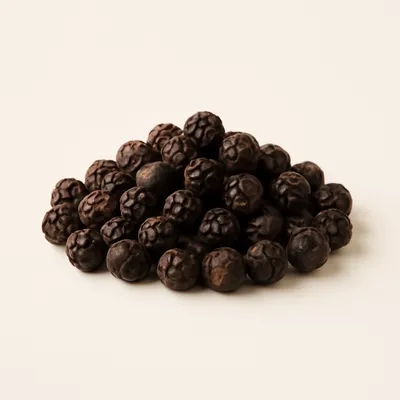
The strip shatters with an almost violent crack the instant teeth touch it — paper-thin walls and a hollow interior offer zero resistance. Red chilli ignites immediately on the tongue, followed by the earthy warmth of black pepper and the lingering nuttiness of the gram flours; salt sharpens everything into a clean, compulsively edible finish.
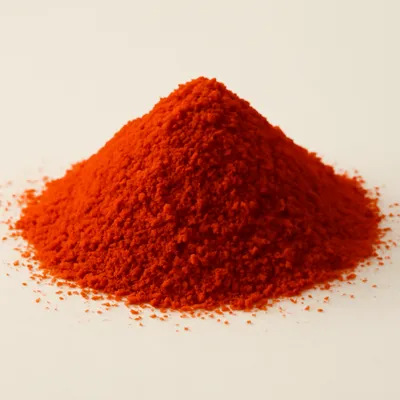
The dough combines besan and urad dal flour at roughly 3:1 — besan provides starch and mild nuttiness, while urad's higher protein content builds gluten-like networks that give the sheet tensile strength without making it too brittle to roll to 1–2 mm thickness. When the sheet enters 185–190 ℃ oil, surface moisture flashes to steam instantly; because the sheet is only 1–2 mm thick, the resulting pressure puffs the entire strip uniformly before the crust sets via starch gelatinisation and protein coagulation, locking in the hollow structure. Red chilli powder dusted on the oily hot surface adheres in a fine, even coat; capsaicin binds rapidly to heat-sensitive nociceptors on the tongue, producing the characteristic sharp, immediate burn.
Variations
Black Pepper Chorafali adds coarsely cracked black pepper into the dough before rolling; Chaat Masala Chorafali dusts the finished strips with tangy chaat masala for a tamarind-forward finish; thicker-cut versions sometimes called Gathiya Chorafali sacrifice the explosive puff for a denser, crunchier chew.
On the Palate
Where Chorafali sits in the Indian flavor cloud
Ingredients
Serves 6How it's made
7 steps · 20 min
- 15 min
Combine chickpea flour and urad dal flour with salt, black pepper, and two teaspoons of oil; mix until the fat is evenly distributed.
- 215 min
Add warm water gradually and knead into a smooth, stiff, non-sticky dough; cover and rest 15 minutes.
- 310 min
Divide dough into six portions; roll each as thin as possible — 1–2 mm — on a very lightly oiled surface.
Watch outRoll each sheet as thin as 1–2 mm — only that thinness lets the strip puff hollow in the oil; any thicker and it fries hard and flat.
- 45 min
Cut each rolled sheet into strips roughly 1 cm wide and 8–10 cm long using a pastry wheel or sharp knife.
- 53 min
Heat oil in a kadai to 185–190 ℃; test with a small scrap of dough — it should rise and puff within 3 seconds.
Watch outTest the oil with a scrap — it must rise and puff within three seconds; too cool and the strips soak oil instead of puffing.
- 65 min
Gently slide strips into hot oil in small batches; they puff within seconds — fry 1–2 minutes until pale gold and fully puffed; drain on paper.
Watch outThey puff within seconds — fry just to pale gold, no darker; over-browned chorafali turns bitter and loses its crackle.
- 75 min
Immediately dust hot strips generously with red chilli powder and salt; toss gently and spread to cool and crisp completely.
Archive tool suggestions — not reviewed
These legacy suggestions have not been evidence-reviewed and are not presented as required tools.


