
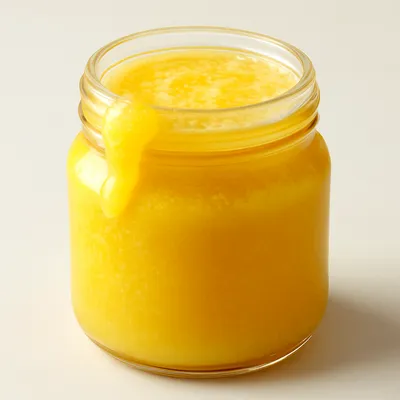


Magas, also spelled Magaj, is a traditional Gujarati mithai whose name is thought to derive from a Sanskrit root for gram or chickpea. The sweet belongs to the broad Gujarati tradition of festival confections built on chickpea flour and ghee, which together also form the basis of other gram-flour preparations central to the state's ceremonial cooking. The defining technique — slow-roasting chickpea flour in generous ghee over low heat until deeply fragrant — converts what is an astringent raw flour into a complex, nutty base. Unlike the finer-ground besan ladoo common across North India, Gujarati magas traditionally uses a coarser grind that yields a more crumbly, textured finished product with a richer aroma. The sweet is a fixture on wedding thalis and Diwali trays across Gujarat and Rajasthan, and has traveled with the Gujarati diaspora to East Africa, the United Kingdom, and North America.
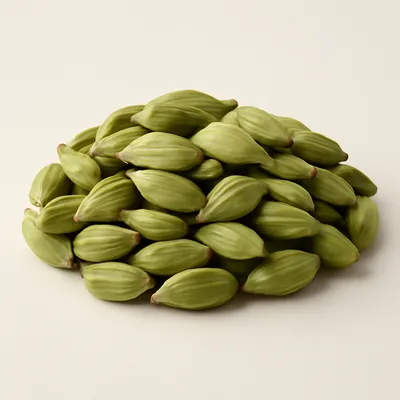
Intensely nutty, buttery, and sweet: the coarse roasted flour gives a slightly grainy, crumbly texture that dissolves into concentrated ghee on the palate. Cardamom cuts through the richness with a floral note; the color is deep gold and the aroma warm and toasted throughout.
Slow-roasting chickpea flour in ghee at 140–160°C simultaneously triggers Maillard reactions and starch dextrinization. The Maillard reaction between the flour's amino acids and its own reducing sugars generates hundreds of aromatic compounds — the nutty, toasted notes that define Magas. Concurrently, starch granules partially gelatinize in the fat and then dextrinize, breaking long glucose chains into shorter, sweeter dextrins that improve solubility and the finished texture. When hot sugar syrup is introduced, the sucrose interacts with the hot fat-starch matrix; as the mixture cools, the hydrophobic ghee solidifies around the partially gelatinized starch granules, locking the structure into the firm-yet-crumbly slab that is then cut into diamonds.
Variations
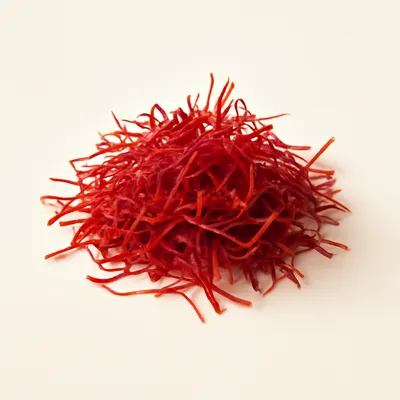
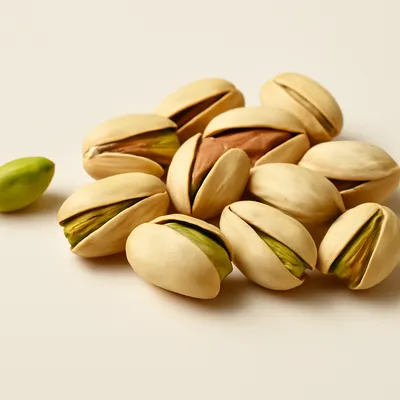
Some versions add saffron soaked in warm milk for color and fragrance. A fudgier texture results from shorter roasting and more sugar. Powdered sugar can substitute for the syrup, producing a drier, sandier set. Modern versions may incorporate ground almonds or pistachios.
On the Palate
Where Magas sits in the Indian flavor cloud
Ingredients
Serves 8
How it's made
7 steps · 10 min
- 15 min
Sift coarse chickpea flour through a medium sieve to remove lumps; set aside.
- 25 min
Melt ghee in a heavy-bottomed kadai over the lowest possible heat; add the sifted flour all at once and begin stirring continuously with a flat spatula.
- 325 min
Stir without stopping for 25–30 minutes, scraping the bottom and sides constantly, until the flour deepens to a rich golden-brown and the kitchen smells intensely nutty.
Watch outStir the flour in ghee without stopping 25-30 minutes until deep golden and intensely nutty — this slow roast is the flavor; scorch it and it turns bitter.
- 43 min
Remove the pan from heat; immediately stir in cardamom powder and saffron soaked in 1 tbsp warm milk; mix well.
- 510 min
In a separate saucepan, dissolve sugar in water and cook over medium heat to a 2-thread consistency (approximately 110°C); the syrup should form two thin threads when stretched between the fingertips.
Watch outCook the syrup to a two-thread stage, about 110°C — pinch a drop between fingertips and it should pull two fine threads; under-cooked, the sweet won't set.
- 63 min
Pour the hot sugar syrup steadily into the ghee-flour mixture while stirring vigorously; work quickly as the mixture thickens fast.
Watch outPour the hot syrup in and stir fast — it thickens in seconds, so work quickly or it seizes into a stiff lump.
- 730 min
Immediately pour into a greased shallow tray to a depth of 1–1.5 cm; press down firmly with a greased spatula; allow to cool at room temperature for 30 minutes, then cut into diamond shapes while still slightly warm.


