Karpatka is named after the Carpathian Mountains (Karpaty in Polish). The cake's defining feature is its rugged, irregular surface — created by baking choux pastry in a single layer rather than piping it into neat shapes. The cake became popular in the 1970s-80s as a simpler alternative to mille-feuille.
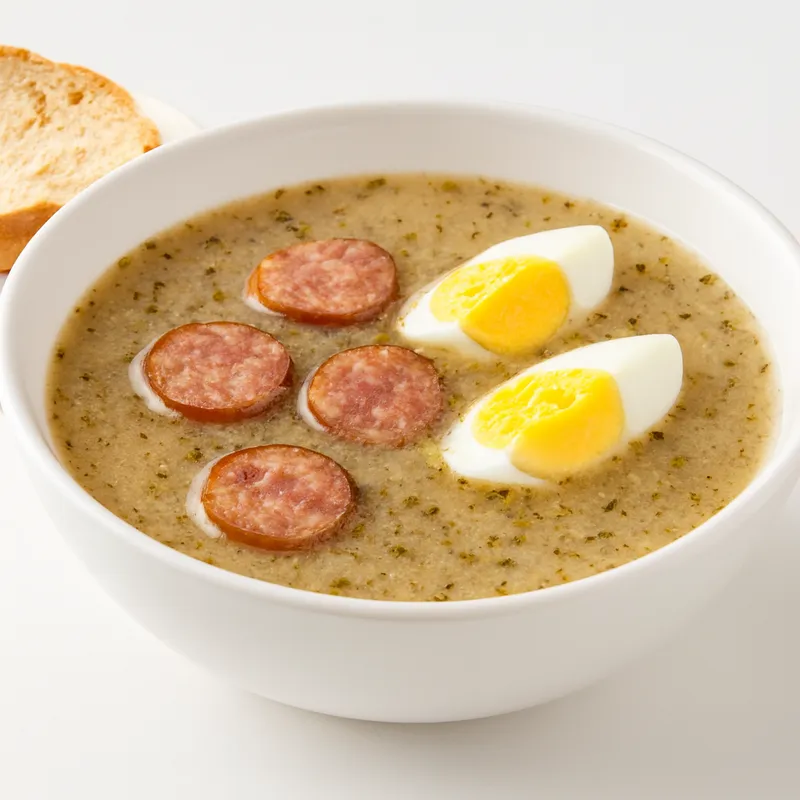
A slice with a cracked, golden-brown top and flat bottom, thick yellow custard in between. The top is crisp and irregular; the custard is cool and silky. The contrast of textures is the point — rough outside, smooth inside.
Karpatka uses choux pastry (pâte à choux) rather than puff pastry. Choux's high water content turns to steam in the oven, inflating the pastry dramatically. The irregular surface comes from spreading (not piping) the dough. The custard is the same as kremówka's — vanilla, egg yolks, cornstarch.
Variations
Some add chocolate glaze on top; the custard can be lighter with whipped cream folded in.
On the Palate
Where Karpatka sits in the Polish flavor cloud
Ingredients
Serves 8
How it's made
6 steps · 45 min active + 30 min waiting
- 115 min
Make choux: boil water with butter; add flour; beat in eggs.
Watch outBeat in the eggs one at a time until the choux forms a smooth, glossy paste that ribbons off the spoon — too runny and it won't rise.
- 25 min
Spread half the dough on a baking sheet (irregularly).
- 325 min
Bake at 200°C for 20-25 min until golden and cracked.
Watch outBake until deep gold and firm-cracked; open the oven too early and the steam escapes and it collapses.
- 420 min
Make custard; cool.
- 55 min
Assemble: choux base, thick custard, choux top.
- 61 min
Dust with powdered sugar; chill before serving.
Archive tool suggestions — not reviewed
These legacy suggestions have not been evidence-reviewed and are not presented as required tools.