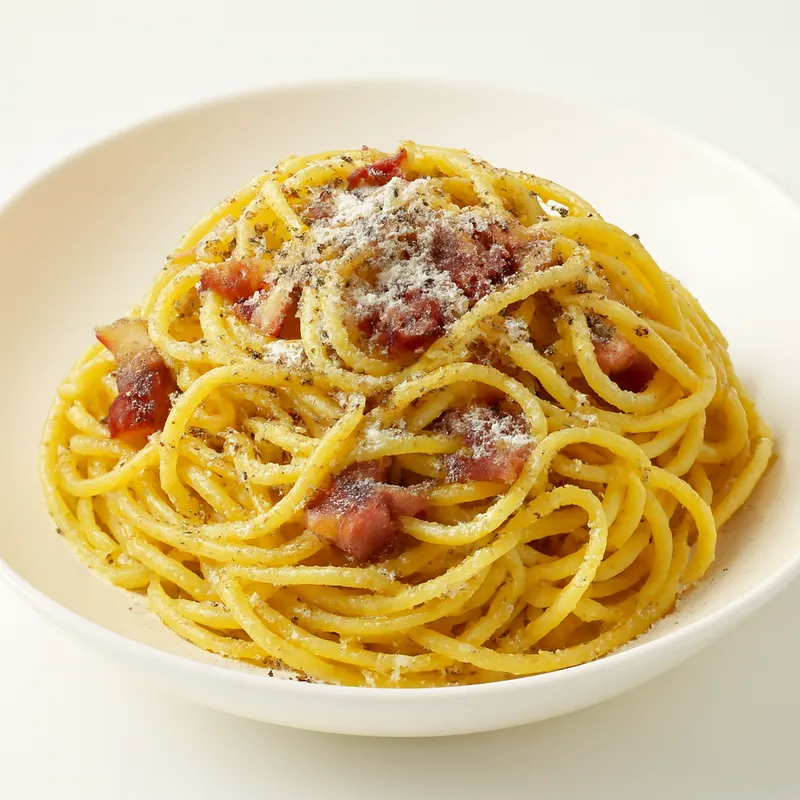
Pici cacio e pepe is a simple yet intensely flavorful dish where thick hand-rolled pasta entwines with the sharpness of Pecorino Romano and freshly cracked black pepper.
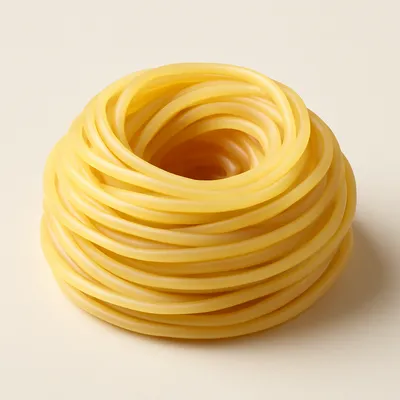





Pici originated as a peasant pasta of southern Tuscany (Siena, Montalcino, Pienza area), hand-rolled because eggs were scarce — just flour and water. Cacio e pepe itself is a shepherd's recipe from Lazio, carried by transhumant flocks: aged pecorino and pepper kept on the trail. The Tuscan version pairs the rougher local noodle with the Roman sauce, common across the Lazio-Tuscany border.
Pici is a Siena-Montalcino-Pienza hand-rolled pasta — flour and water, no egg, because eggs were scarce. Cacio e pepe is Lazio shepherd cooking carried by transhumant flocks. Cheese melts cleanly only between roughly 60 and 75 degrees C; above that, casein seizes into rubber.
Thick hand-rolled pici, each strand uneven and chewy, glossed in an emulsion of grated Pecorino Romano and coarse-cracked black pepper. No butter, no cream — the sauce is sheep cheese, starchy pasta water, and pepper bloomed in oil. The good plate clings; if you see grainy clumps at the bottom, the cheese broke from heat.
The emulsion is the whole game. Cheese melts cleanly only between roughly 60 and 75 °C — too hot and casein protein seizes into rubber. Tuscan cooks pull the pan off the burner, add a ladle of starchy water, then toss the pecorino in off-heat, working it into a paste before the noodles go in. Pepper is bloomed first in oil to release piperine without burning.
Variations
Montalcino cooks roll pici thicker and serve all'aglione (with garlic-tomato); Pienza spec is plain cacio e pepe; Roman tonnarelli cacio e pepe at trattorias like Felice a Testaccio uses the same emulsion technique on egg-pasta strands.
On the Palate
Where Pici Cacio e Pepe sits in the Italian flavor cloud
Ingredients




How it's made
5 steps · 1 hour
- 18 min
Combine wheat flour and water to make a dough.
- 212 min
Roll the dough into thick, long strands by hand.
- 320 min
Boil the pici in salted water until al dente.
Watch outPull the pici a shade before al dente and save a mug of the cloudy water — that starch is what carries the sauce.
- 48 min
Grate Pecorino Romano finely and mix with a splash of pasta water to form a creamy sauce.
Watch outWork the pecorino into a paste with the pasta water off the heat — melt it above roughly 75 degrees and the cheese seizes into rubber lumps.
- 512 min
Toss the cooked pici with the cheese sauce and copious amounts of freshly cracked black pepper.
Watch outToss hard and fast off the burner until the sauce turns creamy and clings — if it looks oily and split, splash in more starchy water and keep tossing.
Archive tool suggestions — not reviewed
These legacy suggestions have not been evidence-reviewed and are not presented as required tools.