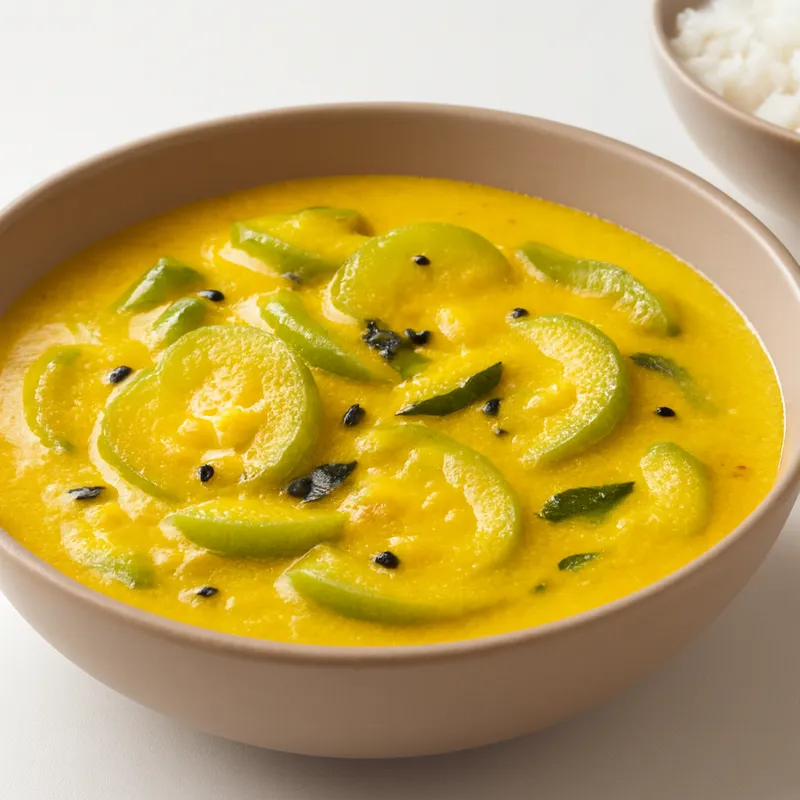
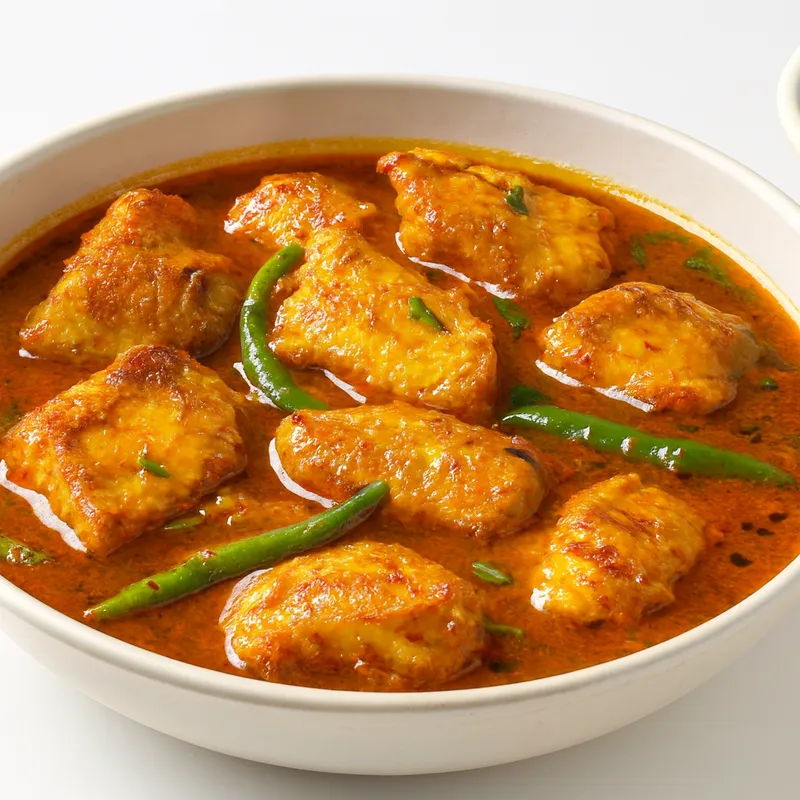
A mild and creamy Goan fish curry, enriched with coconut milk and a blend of spices, finished with a hint of vinegar.




Goan-Portuguese: the name comes from Portuguese 'caldinho' (small broth), and the dish is the mild end of the Goan Christian curry spectrum, developed for fast days, sick days, and children — when the household couldn't take vindaloo or xacuti. Surfaces in Portuguese-Goan cookbooks from the late 19th century, but the technique (turmeric coconut gravy with vinegar finish) reads older.
Goan-Portuguese, name from caldinho (small broth); the mild end of the Goan Christian curry spectrum, made for fast days and sick days. Two coconut presses do different jobs — first-press goes in last and never boils, or it splits and chalks.
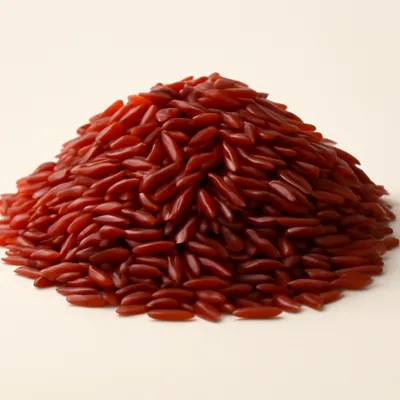
Pale yellow coconut-milk gravy, much thinner and lighter than a Goan red curry. Turmeric does the color; cumin, coriander seed, and a few green chilies do the body. White fish (kingfish, pomfret, sometimes prawn) sits in the gravy barely cooked through. A splash of vinegar at the end — the only acid. Eaten with par-boiled red rice. If the gravy splits or curdles, the coconut milk was boiled too hard.
Two coconut-milk extractions in sequence: thick first-press goes in last and never comes to a full boil — only a slow tremble — or it splits. Thin second-press cooks the fish. The vinegar must go in off-heat at the end; added too early it curdles the coconut and gives a chalky mouthfeel. This split-extraction discipline is why a real caldine looks satin-smooth where home shortcuts look broken.
Variations
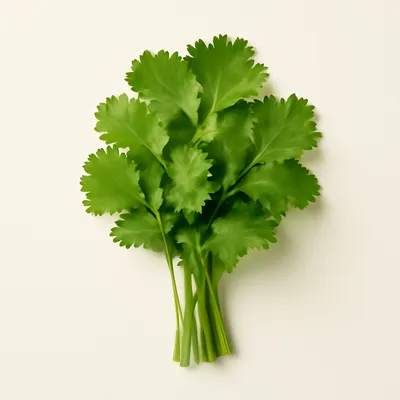
Goan Catholic caldine is the canonical fish version; prawn caldine subs in shellfish and finishes in two minutes; the vegetarian moong-and-pumpkin caldine reads as the fast-day intent; Bombay East Indian green caldine throws in coriander paste for color and herb depth.
On the Palate
Where Caldine sits in the Indian flavor cloud
Ingredients




How it's made
5 steps · 45 min
- 18 min
Heat oil in a pan and sauté onions until translucent.
- 25 min
Add turmeric, coriander, and cumin, cook briefly to release aromas.
- 315 min
Pour in coconut milk and bring to a gentle simmer.
Watch outKeep the coconut milk at a lazy tremble, never a rolling boil — hard heat splits it and the gravy turns grainy instead of satin.
- 45 min
Add fish pieces and cook until just done.
Watch outPull the fish the moment it turns opaque and flakes — it firms up fast in the residual heat, and overcooked fish goes cottony.
- 55 min
Finish with a splash of vinegar and adjust seasoning.
Watch outAdd the vinegar off the heat at the very end — splash it in while the pot's still boiling and the coconut curdles chalky.
Archive tool suggestions — not reviewed
These legacy suggestions have not been evidence-reviewed and are not presented as required tools.