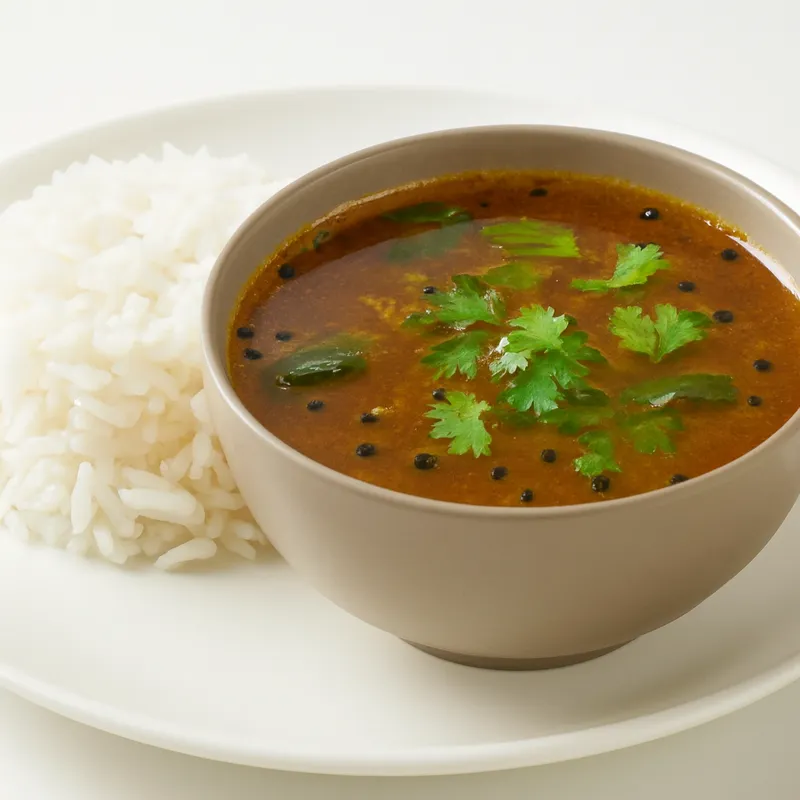
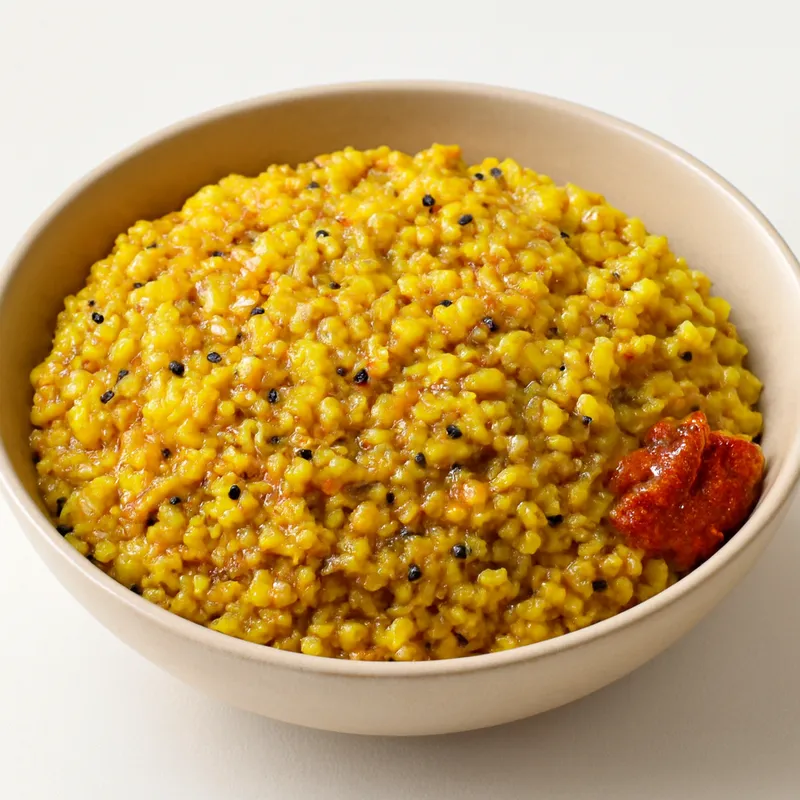
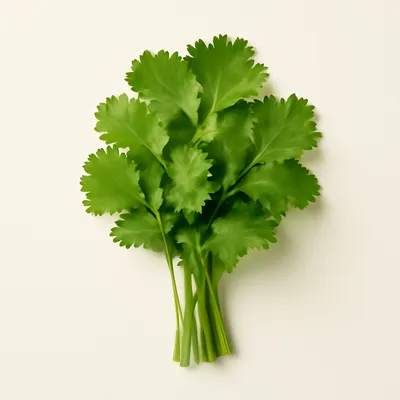
A tangy and sweet tomato curry topped with crispy sev, flavored with cumin, mustard seeds, and jaggery, and garnished with fresh coriander.

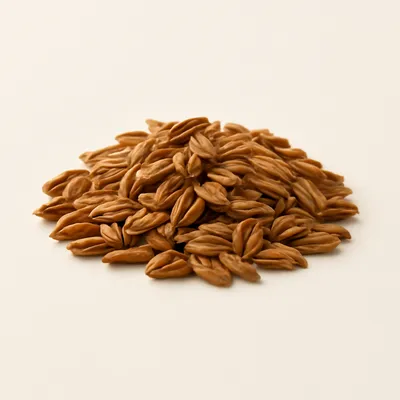

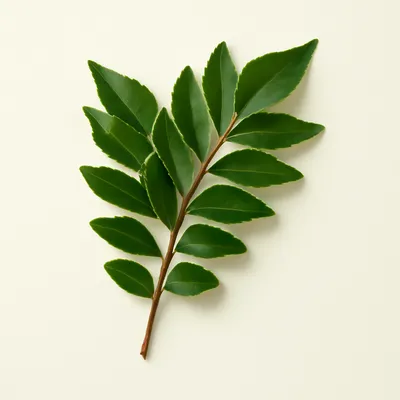


A Kathiawadi Gujarati dish from the dry, vegetable-scarce western peninsula, where households leaned on shelf-stable pantry items — tomatoes (preserved or fresh in season), jaggery, and farsan items like sev — to make a hot meal when nothing fresh was available. It's traveled out of Kathiawad with Gujarati migration, but in Saurashtra villages it still reads as a household survival dish, not a restaurant order.
Kathiawadi Gujarati from the dry western peninsula where households leaned on shelf-stable pantry items. Jaggery is the load-bearing ingredient — without it the tomato curry tastes flatly sour. Sev goes in at the table, not in the pot.
Tomato curry the color of dark brick, mounded with a fistful of crisp gram-flour sev right at the table. The first bite has the sev still crunchy; by the third, it's gone soft and starchy and is doing half the work of thickening the gravy. Cumin, mustard seed, jaggery, a little chili. Eaten with rotli (thin Gujarati flatbread). Pour the sev too early and it turns to porridge.
Jaggery is the load-bearing ingredient. Gujarati tomato curries push the sweetness much further than other Indian regions — the jaggery isn't a hint, it's a balancing block against the tomato acidity, which without it would taste flatly sour. The other tell: sev goes in at the table, not in the pot, because the dish is engineered to be eaten in two textures (crunchy first bite, soft last bite) within five minutes of plating.
Variations
Saurashtra village version uses dried tomato when fresh is unavailable; restaurant-Surat style runs heavier on jaggery and butter; Kutchi households fold in green peas; modern Mumbai-Gujarati canteens pre-mix sev into the pot, which old cooks consider a textural failure.
On the Palate
Where Sev Tameta nu Shaak sits in the Indian flavor cloud
Ingredients




How it's made
5 steps · 25 min
- 15 min
Heat oil in a pan and add mustard seeds, allowing them to crackle.
- 25 min
Add chopped onions and curry leaves, sautéing until the onions are translucent.
- 33 min
Mix in chopped tomatoes, turmeric, cumin, and jaggery, cooking until the mixture thickens.
Watch outPush the jaggery in properly — Gujarati tomato curry wants real sweetness to balance the sour; taste till it's sweet-tart, not flatly sour.
- 42 min
Season with salt and garnish with fresh coriander.
- 52 min
Serve hot, topped with a generous amount of sev.
Watch outScatter the sev only at the table — stirred in early it goes soggy and you lose the crunchy-first, soft-last bite.
Archive tool suggestions — not reviewed
These legacy suggestions have not been evidence-reviewed and are not presented as required tools.