Curry Leaves
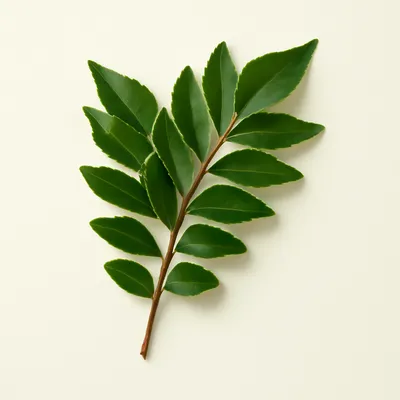
Curry leaves impart an aromatic, citrusy flavor that brightens dishes with their fragrant essence. Their dark green, glossy appearance makes them a visually appealing addition, while their flavor profile is essential in Indian cooking.
Where it comes from
Curry leaves have been used in Indian cuisine for centuries, particularly in South Indian cooking, where they are a staple ingredient. Their unique flavor distinguishes many traditional dishes.
In the kitchen
Used fresh or dried, curry leaves are typically tempered in oil to release their essential oils, infusing dishes like curries and dals with a distinctive aroma and flavor.
Across cuisines
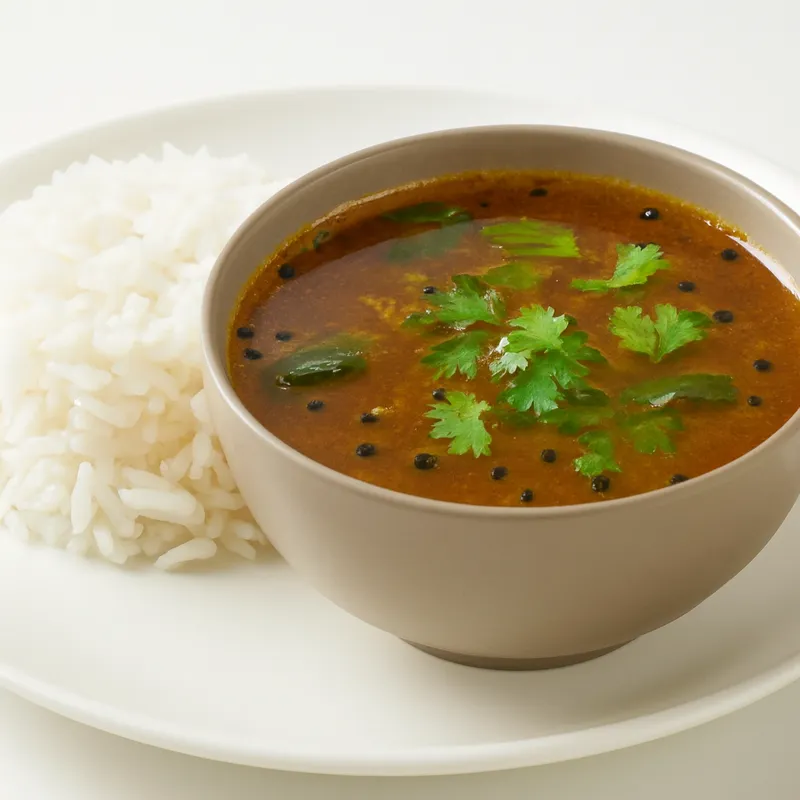
Curry leaves (kadi patta) are the opening note in South Indian tadka: leaves hit hot oil (coconut oil in Kerala, gingelly oil in Tamil Nadu, groundnut in Andhra) and crackle within 30 seconds, releasing volatile citrus-camphor oils before mustard seeds are added. This sequence begins Sambar, Rasam, Chettinad Chicken's braising base, and Medu Vada batter seasoning. Karimeen Pollichathu (pearl spot fish in banana leaf) uses fresh leaves layered inside the parcel.
Gujarat's cooking uses curry leaves in its kadhi (yogurt-gram flour soup), Khaman (steamed gram-cake), Khandvi (rolled gram rolls), and Chaas (buttermilk drink). Each application follows the same tadka logic but with groundnut or sesame oil. Kerala Fish Curry and Avial depend on leaves added at multiple stages — once during cooking, once as garnish — for layered aroma.
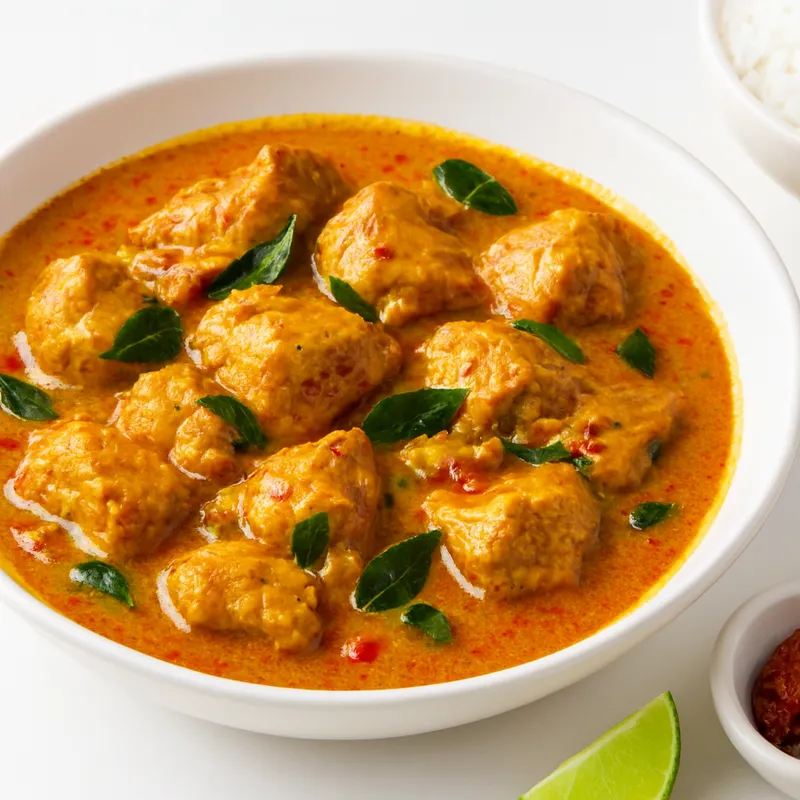
Sri Lankan curries (Sri Lankan Chicken Curry, Pork Black Curry, Polos Curry) rely on curry leaves as a near-constant aromatic. They are used both in the initial tempering of mustard seeds and dried chili, and tied in fresh sprigs during long braises. The island's coconut-oil cooking medium intensifies leaf flavor extraction compared to continental Indian methods.
Nutrition (per 100g)
AI-estimated; model and run unavailable.