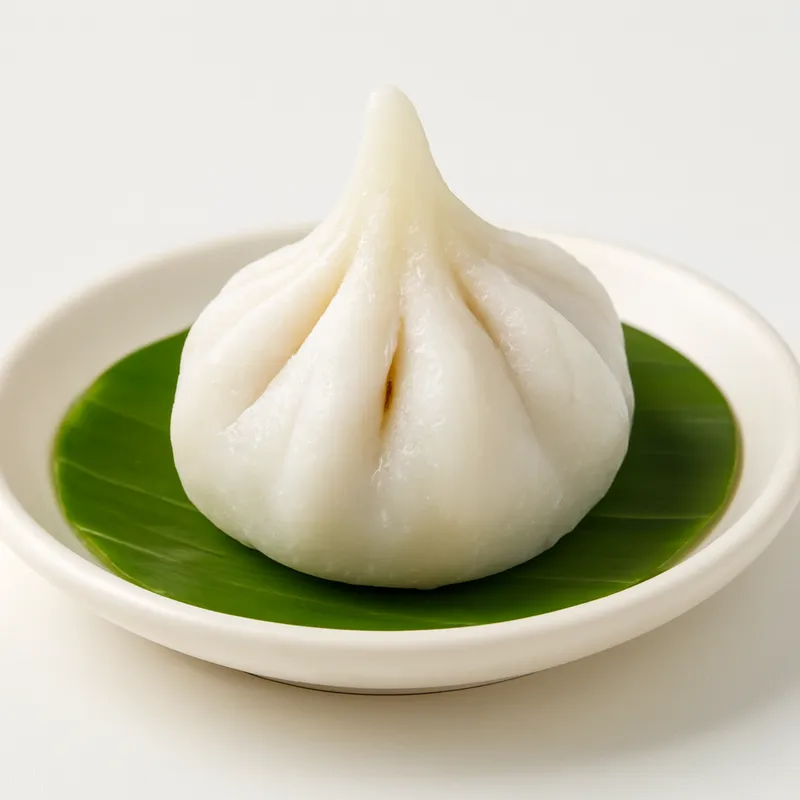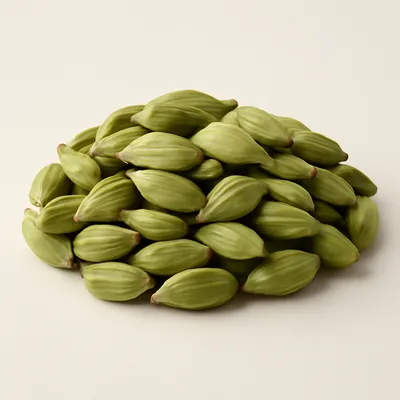



Maharashtrian and broader Deccan, made for Holi (spring) and Ganesh Chaturthi (late summer) since at least the medieval period — an early reference appears in the 12th-century Sanskrit encyclopedia Manasollasa (c. 1130), compiled under the Western Chalukya king Someshvara III. The combination of wheat and chana dal is also indicative of the dish's Deccan plateau origin, where both grains were widely cultivated, unlike the rice belts of coastal India.
Maharashtrian and broader Deccan, made for Holi and Ganesh Chaturthi since at least the medieval period — referenced in the 12th-century Manasollasa. The puran has to cook down until a spoon stands in it; wet filling steams the dough from inside and bursts the round.
A flat round of wheat dough rolled thin around a dense yellow filling of cooked chana dal mashed with jaggery, cardamom, and nutmeg. Cooked on a tava with ghee until both sides are mottled brown. Eaten warm — torn open, the steam carries sweet cardamom. Maharashtrians eat it with a spoonful of warm ghee or a glass of milk; some pour katachi amti (a spiced dal broth) over it. Should roll without the filling tearing through; if it bursts, the dough was too thin or the puran too wet.
The puran (filling) has to be cooked down slow until a spoon stands in it — wet filling steams the dough from inside and breaks it. Old Marathi households test it by pressing the puran against a paddle; if it falls cleanly, it's done. The dough is enriched with a spoon of oil and rested, then rolled ultra-thin around a generous ball of filling — the ratio is closer to 1:1 by weight, dough to puran, far heavier on filling than a samosa or paratha.
Variations
Maharashtrian puran poli uses chana dal and jaggery; Karnataka holige (obbattu) sometimes uses toor dal; Tamil Nadu boli runs thinner and the dough is finer; Andhra bobbatlu uses chana dal but rolls smaller. Pune households eat it with warm ghee; Kolhapur drowns it in katachi amti broth.
On the Palate
Where Puran Poli sits in the Indian flavor cloud
Ingredients

How it's made
5 steps · 3 hours
- 115 min
Cook chana dal until soft and mash it with jaggery, cardamom, and nutmeg.
Watch outCook the dal filling down until a spoon stands up in it — any wetness left inside steams the dough and tears it open on the griddle.
- 290 min
Prepare a dough with wheat flour, and let it rest.
- 315 min
Roll out small portions of dough, fill with the dal mixture, and seal.
Watch outRoll the stuffed dough thin with the filling packed nearly equal to the dough — go gentle so the puran doesn't burst through the skin.
- 415 min
Flatten the stuffed dough and cook on a hot griddle with ghee until both sides are golden brown.
Watch outGriddle until each side shows honey-gold blisters and the dough looks dry, brushing ghee as you go.
- 545 min
Serve warm, optionally drizzled with more ghee.
Archive tool suggestions — not reviewed
These legacy suggestions have not been evidence-reviewed and are not presented as required tools.