
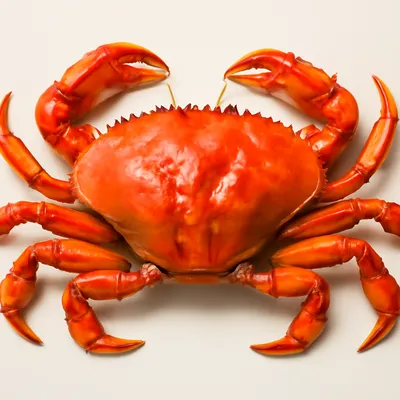
Live freshwater crab cured raw in Shaoxing wine, soy, and ginger for two days, then eaten cold — the alcohol cures the meat without heat.



A Jiangnan delicacy whose documented origin is the 'Zhongzhuang drunken crab' of Xinghua, Jiangsu — created by the Tong family c. 1394 — with parallel traditions in Suzhou, Shanghai and Zhejiang where freshwater crab is abundant. The wine-cured-crab tradition is older still — the Zhou-era Rites records salted crab paste (蟹胥) and the Tang miscellany Youyang Zazu a sugar-and-wine-preserved 糖蟹 — though the dish's documented birthplace is the Tong family's Zhongzhuang workshop in Xinghua, Jiangsu (c. 1394). Shandong's version uses heavier soy and rock sugar; Jiangnan versions tilt sweeter and lighter. It only works in the cool months when bacteria load is low.
Yuan Mei's 1792 Suiyuan Shidan documents the Shandong scholar-table form. The cure is denaturation by ethanol and salt, not heat — Shaoxing wine at 14-18% ABV unfolds protein the way acid does in ceviche. Below 5°C is the load-bearing safety detail; farmed crabs from clean grow-outs only.
Cold, glistening, and unmistakably raw-looking — the meat is translucent-white and gelatinous, the roe sets into a salty-sweet paste the color of dark amber. First taste is the wine: it hits before the salt. Then the meat slides apart in fibers, sweet and oceanic. There is no fish-tank smell when it's done right; if you get one, the crab wasn't fresh enough or the brine was too weak.
The cure is denaturation by ethanol and salt, not heat. Shaoxing wine at 14-18% ABV unfolds crab proteins the way acid does in ceviche; the soy's salt simultaneously draws water out, firming the texture. Below 5°C, parasite and bacterial activity is suppressed long enough for the cure to take. This is the load-bearing safety detail — using market crabs from unknown waters, or curing at room temperature, is how people get sick. Farmed crabs from clean grow-outs are the only safe choice.
Variations
Shandong style runs heavier soy and rock sugar; Jiangsu (Taizhou) and Zhejiang (Ningbo) versions tilt sweeter and lighter; Suzhou's qiang xie uses the same wine cure on river hairy crab; Shanghai's drunken shrimp shares the safety logic.
On the Palate
Where Drunken Crab sits in the Chinese flavor cloud
Ingredients
Serves 4
How it's made
6 steps · 30 min active + 1 day 23 hours 30 min waiting
- 115 min
Buy live, very fresh freshwater crabs (about 150g each) from a trusted source — only farmed crabs raised in clean water are safe for raw curing. Brush shells under running water, scrub joints with a toothbrush.
Watch outOnly clean farmed crab from safe water goes in raw — this is the safety line, not a preference; scrub every joint under running water.
- 220 min
Bind each crab tightly with twine, claws to body. Drop into ice water for 20 minutes to immobilize them.
- 38 min
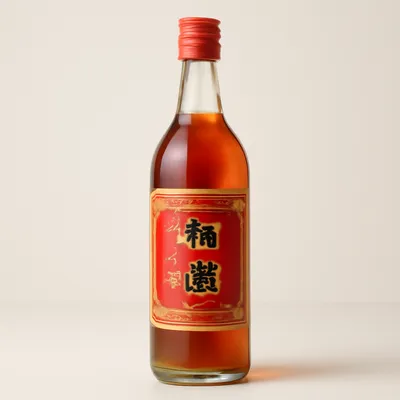
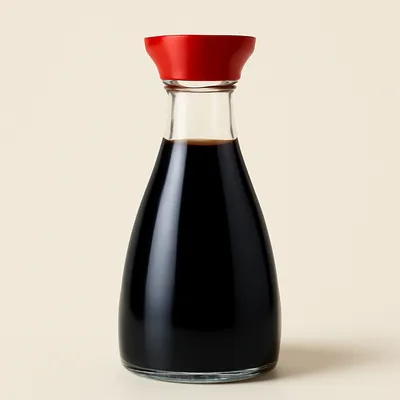
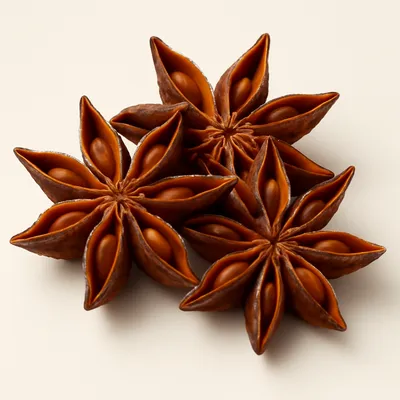
Make the brine: 400ml Shaoxing huadiao wine (5+ year aged), 200ml light soy, 50ml dark soy, 50g rock sugar, 30g sliced ginger, 4 garlic cloves, 1 star anise, 2 tbsp salt. Bring just to a simmer, then cool completely.
Watch outBring the brine just to a simmer then cool it stone-cold before the crab goes in — pour it warm and you start cooking the meat and lose the raw cure.
- 45 min
Pack crabs belly-up into a clean glass jar. Pour cold brine to fully submerge. Top with 100ml extra raw Shaoxing wine. Seal.
- 52880 min
Refrigerate at 4°C for 48 hours minimum, 72 hours preferred. The meat turns from translucent to milky-set; the roe stiffens to a paste.
Watch outHold it a steady 4 degrees for at least two days — the meat should turn from clear to milky-set and the roe stiffen; that shift is your doneness, and the cold is what keeps it safe.
- 65 min
Lift out, cut each crab into halves or quarters with a heavy knife (through the shell). Serve cold with a small dish of brine drizzled on top. Eat within a day of opening.
Watch outConsume within a day of opening to ensure freshness.


