Egg-yolk custard scented with lemon zest and cinnamon stick, the festival name for crema catalana itself — eaten on March 19 (Saint Joseph's Day), it is the same lemon-and-cinnamon, starch-thickened custard finished with a torched-sugar crust.



Crema de Sant Josep is the older form — a baked egg-yolk custard eaten on March 19 (Saint Joseph's day, the patron saint of fathers in Catholic tradition), traditionally a fasting-period dessert before Easter. References appear in 14th-century Catalan cookbooks. The torched-sugar version we now know as crema catalana emerged later, probably in the 18th or 19th century, when the bruleeing technique spread through Europe; the older un-bruleed version retained its religious-calendar association and is still served on Sant Josep in traditional homes across Catalonia.
The older un-bruleed form, eaten on March 19 (Sant Josep) since references in 14th-century Catalan cookbooks. Cornstarch raises the egg-yolk curdling threshold from 85°C to 95°C — more forgiving than French crème anglaise.
Cold spoon meets a custard the colour of buttermilk and the wobble of soft tofu — break the matte top skin and the inside is silken, just-set, so dense in egg yolk it leaves a lemon-cinnamon coating on the tongue. No crackle, no burnt-sugar bitterness — instead, a clean dairy-and-yolk roundness with the cinnamon-lemon perfume floating clearly on top. If your crema is rubbery, you boiled it; if it's watery, you stopped cooking the starch too early.
The egg yolks set the texture; the cornstarch is insurance. Pure-yolk custards (no starch) curdle the moment temperature exceeds 85°C; cornstarch raises the curdling threshold to about 95°C, which is why this Catalan version is more forgiving than French crème anglaise. Crema catalana / crema de Sant Josep is classically cooked on the stovetop — the starch-and-yolk custard is stirred over heat until it thickens, poured into shallow dishes to set, then dusted with sugar and torched, distinguishing it from baked, bain-marie crème brûlée.
Variations
Barcelona's old patisseries serve un-bruleed on March 19; Girona variant uses milk-cream blend; the torched crema catalana cousin emerged 18th-19th century; Lleida home version skips lemon and just uses cinnamon.
On the Palate
Where Crema de Sant Josep sits in the Spanish flavor cloud
Ingredients
Serves 6

How it's made
6 steps · 20 min
- 118 min
Heat 750ml whole milk in a heavy saucepan with the peel of 1 lemon (no white pith), 1 cinnamon stick, and 100g sugar. Bring to a bare simmer; turn off heat. Cover and steep 15 minutes.
Watch outWhite pith turns the cream bitter — peel only the yellow zest with a vegetable peeler.
- 24 min
Whisk 8 large egg yolks with 30g cornstarch in a bowl until smooth and pale.
- 33 min
Strain the warm milk into the yolks in a slow stream, whisking constantly to temper. Discard the lemon peel and cinnamon. Pour the mix back into the saucepan.
Watch outIf you pour fast or stop whisking, yolks scramble. Slow stream, constant whisk — that's the rule.
- 410 min
Cook over low heat, stirring with a wooden spoon in figure-eights, 8-10 minutes. The custard thickens to coat the spoon — about 82°C. Do not let it boil.
Watch outIf steam rises and you see the first bubble at the edge, pull it off — one degree too far and yolks split.
- 522 min
Divide custard among 6 shallow earthenware cazuelitas (or ramekins). Place in a deep baking tray; pour boiling water around them halfway up the sides. Bake at 150°C for 20 minutes — the surface forms a thin matte skin and the centre still trembles when nudged.
Watch outCrema de Sant Josep is the un-bruleed version — a baked skin, not a torched sugar shell. If you crank the broiler to brown it, you've made crema catalana, not crema de Sant Josep.
- 65 min
Lift cazuelitas from the water bath. Cool to room temperature, then refrigerate at least 4 hours. Serve cold, with a dry biscotti or melindro biscuit on the side.
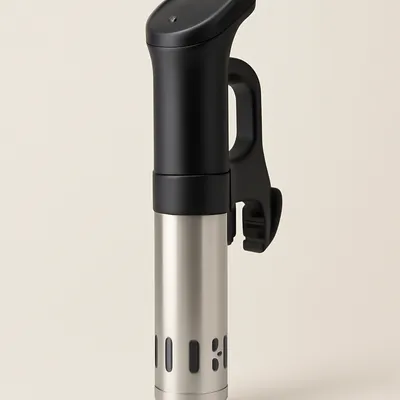
Archive tool suggestions — not reviewed
These legacy suggestions have not been evidence-reviewed and are not presented as required tools.