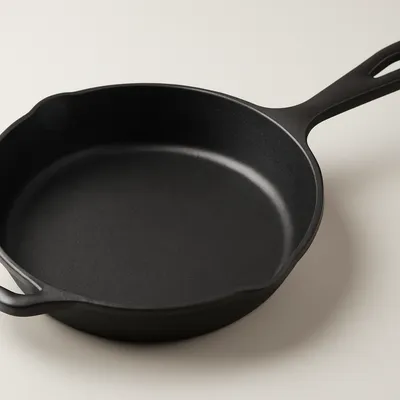
Famous French upside-down apple tart with deeply caramelized fruit beneath a buttery puff pastry crust.




Created around the 1880s at the Hôtel Tatin in Lamotte-Beuvron, Sologne, by sisters Stéphanie and Caroline Tatin. The accepted story: Stéphanie overcooked the apples in butter and sugar, dropped a pastry round on top in a panic, and inverted the pan. The accidental-origin tale is likely apocryphal: inverted fruit tarts were an old Sologne specialty (Antonin Carême already described glazed apple-topped gâteaux renversés in 1841), and the sisters themselves called it tarte solognote, never publishing a recipe. The dish was named and popularized only after their deaths—by the gastronome Curnonsky in the 1920s and by Maxim's in Paris in the 1930s.
Lamotte-Beuvron 1880s, an accidental upside-down apple tart from the Tatin sisters' hotel — caramelized in butter and sugar, pastry on top, flipped to serve. Reine des Reinettes apples are the canonical choice.
Apples sit cut-side up under a thin lid of puff pastry, baked together in a heavy pan. Inverted onto a plate at service: dark amber caramel pools around the fruit, the pastry now underneath catching the syrup. Apples should hold their shape but yield to a fork. If the caramel is pale or runs clear, it wasn't taken far enough.
The cooking order is the trick: caramel and apples go in the pan first and reduce on the stovetop until the apples are half-cooked and the sugar is a deep mahogany; only then does the pastry go on and the whole thing goes to the oven. Reine des Reinettes or Belle de Boskoop hold up; soft eating apples turn to sauce.
Variations
Provençal cooks sometimes use quince or pear; Alsatian version glazes with mirabelle eau-de-vie; modern Paris bistros use puff pastry, traditionalists insist on pâte brisée; savory versions with endive or shallot are a 1990s Loire-Valley trick.
On the Palate
Where Tarte Tatin sits in the French flavor cloud
Cook the caramel and apples on the stovetop first until the sugar is deep mahogany and the apples half-tender — the pastry goes on only after that, or the fruit turns to wet sauce in the oven.
Ingredients
How it's made
4 steps · 25 min
- 15 min
Peel and core the apples, then cut them into quarters. Melt butter in a heavy skillet over medium heat and add sugar, stirring until it caramelizes to a deep amber color, about 5 minutes.
Watch outTake the sugar all the way to a deep amber-mahogany that just starts to smell nutty; pale caramel means flat, one-note sweetness.
- 210 min
Arrange the apple quarters in the caramel in a circular pattern, cut side up. Cook the apples in the caramel for about 10 minutes, turning occasionally until they are tender and coated.
Watch outCook the apples in the caramel until half-tender and glossy, not fully soft; they finish cooking in the oven.
- 35 min
Roll out the pastry to fit over the skillet. Drape it over the apples, tucking the edges down around them. Prick the pastry with a fork to allow steam to escape.
- 45 min
Bake in a preheated oven at 190°C (375°F) until the pastry is golden brown and crisp, about 25 minutes. Let it cool slightly before inverting onto a serving plate.
Watch outCool just a few minutes, then invert while the caramel is still fluid; let it fully set and it welds the tart to the pan.
Archive tool suggestions — not reviewed
These legacy suggestions have not been evidence-reviewed and are not presented as required tools.