
Coffee brewed in a clay pot with cinnamon stick and piloncillo (raw cane sugar) — a Coatepec specialty.




Coatepec, in the cool mountains 20 km from the city of Veracruz, has produced shade-grown arabica since the 1820s and is one of Mexico's two appellation-controlled coffee regions. Café de olla is the rural breakfast preparation across central and Gulf Mexico — the clay pot was every farmhouse's vessel, piloncillo the only sweetener available before refined sugar reached small towns.
Coatepec, 20km from Veracruz city, has grown shade arabica since the 1820s and holds one of Mexico's two coffee appellations. Off-heat steeping matters: coffee compounds extract at 90°C but go bitter past 96°C — most home recipes boil it.
Steam carries cinnamon and dark cane molasses before the coffee even hits your lip. The piloncillo gives a mineral, slightly smoky sweetness no white sugar can replicate; the Coatepec beans bring chocolate and bright acidity that anchor the spice. You drink it from a clay mug that smells of damp earth — half the cup is the vessel.
The unglazed clay matters: porous walls absorb tiny amounts of liquid, mineralizing each subsequent brew, and the thermal mass holds steeping temperature without re-boiling. Off-heat steeping is the real secret — coffee compounds extract fully at 90°C but go bitter past 96°C. Most home recipes botch it by boiling.
Variations
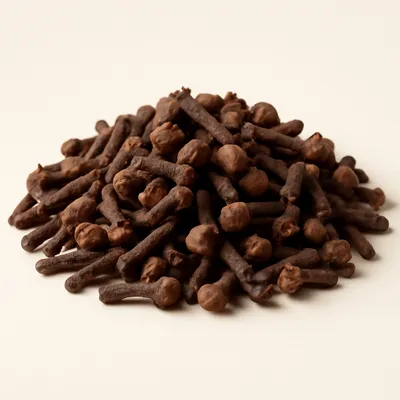
Oaxaca runs it heavier on clove; Chiapas adds ground cacao for café-cacao; the Veracruz urban café version skips spices entirely and is just piloncillo coffee.
On the Palate
Where Café de Olla sits in the Mexican flavor cloud
Ingredients
Serves 4How it's made
4 steps · 5 min
- 16 min
Bring 1 L water to a boil in an unglazed clay olla (or a heavy saucepan if no clay pot). Add 1 cinnamon stick (preferably Mexican canela), 80 g piloncillo broken into pieces, and 2 whole cloves.
Watch outMexican canela is soft, papery, layered — different from hard Saigon cinnamon. The soft kind dissolves into the water.
- 25 min
Stir until piloncillo dissolves completely, then simmer gently 5 minutes for the spices to infuse.
- 35 min
Add 50 g coarsely ground dark-roast Coatepec coffee. Stir, cover, and remove from heat. Steep 5 minutes — do not boil with the coffee in.
Watch outBoiling coffee makes it bitter. The pot is hot enough to extract without simmering.
- 42 min
Pour through a fine sieve into clay mugs. Serve hot, ideally beside pan dulce (concha or cuernito) for dipping.
Archive tool suggestions — not reviewed
These legacy suggestions have not been evidence-reviewed and are not presented as required tools.
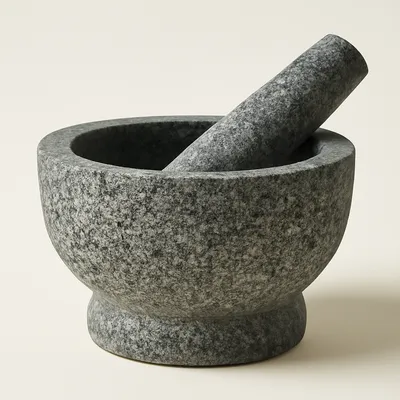
The simplest tool in any kitchen: a heavy bowl and a club to bash things in it. Different cuisines use different stones — Thai cooks pound green papaya in a tall granite mortar (krok hin); pesto Genovese requires the soft-pored Carrara marble; Indian masalas grind down on rough basalt. The bash-don't-cut motion releases volatile oils that a blade keeps sealed in the cell wall.

A round-bellied unglazed clay pot, 1.5-3 liters, with a domed lid and side handles, used for slow-cooking Chinese soups, claypot rice (煲仔饭), and stews. The clay's high porosity diffuses heat slowly so soups never come to a violent boil — flavor develops over 2-3 hours of low simmer. Cantonese claypot rice gets its prized crispy bottom (锅巴) from the same direct-flame stovetop heat that would crack a less robust pot.


