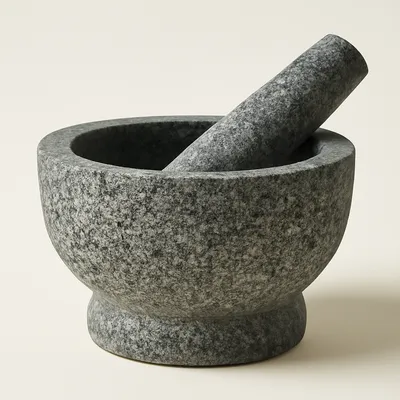
Raw fresh red chili pounded with salt and a splash of vinegar in a stone uleg-uleg. The mother sambal — base for many derivatives.


The verb ngulek (to pound in a uleg) gives the name — a Javanese kitchen-action word, not a place name. Listed in Catenius-van der Meijden's 1902 colonial cookbook Groot Nieuw Volledig Oost-Indisch Kookboek as 'sambal oelek,' the spelling preserved from Dutch-era orthography.
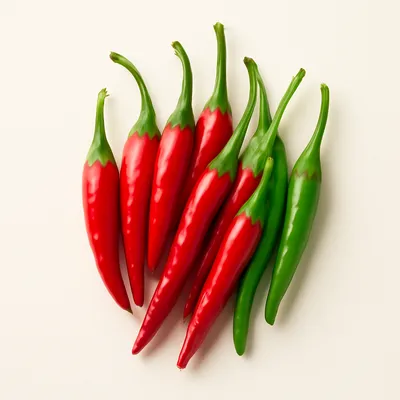
Huy Fong (Sriracha) sells a US-market 'Sambal Oelek' in a green-cap jar that is the most-shipped sambal in North America — but it includes potassium sorbate and sodium bisulfite, which Indonesian home cooks skip. Cabe rawit merah (red bird's-eye) is the only correct chili; cayenne or jalapeño is wrong heat-curve.
Bright red-orange, coarse-pulpy, seeds visible. Smell is grassy raw chili; taste is straight-up heat with a salt edge and faint sour lift, no garlic, no shallot, no shrimp paste — that's what makes it a base, not a finished sauce. Stings the tongue, then quits cleanly.
Stone uleg-uleg + cobek (mortar) gives bruised-not-blended texture — the chili cell walls tear rather than purée, releasing capsaicin slowly and keeping the relish chunky. Salt does double duty: extracts moisture and inhibits spoilage. A teaspoon of vinegar is the only preservative if you're keeping it raw.
Variations
Sambal oelek mentah (raw, the default); sambal oelek goreng (briefly fried in oil to mellow heat); regional spelling sambal ulek in Sundanese West Java. Once you cook it with shallot, garlic, terasi or tomato it becomes sambal bajak, sambal tomat, or sambal terasi — different sambals, not the mother.
On the Palate
Where Sambal Oelek sits in the Indonesian flavor cloud
Ingredients
Serves 4How it's made
4 steps · 14 min active + 2 min waiting
- 13 min
Stem 200 g fresh red bird's-eye chilies; rinse.
- 210 min
Pound chilies in a stone uleg-uleg (mortar) with 1 tsp salt to a coarse paste.
Watch outPound to a coarse, ragged paste with flecks still visible — bruise the chilies, don't purée them; over-pounding to a smooth blend loses the chunky bite and dumps out all the heat at once.
- 31 min
Stir in 1 tbsp white vinegar to stabilize.
Watch outStir in the vinegar until the color locks into a bright, steady red — that splash of acid both sets the color and keeps the raw relish from spoiling.
- 42 min
Transfer to a sterilized jar; refrigerate. Use within 2 weeks.
Archive tool suggestions — not reviewed
These legacy suggestions have not been evidence-reviewed and are not presented as required tools.