
Translucent steamed dumplings, each holding a filling of whole shrimp pieces and slivers of bamboo shoot. The wrapper is made from wheat starch and tapioca starch worked into a hot-water dough, rolled almost paper-thin, and pleated 12–13 times along one edge to enclose the filling. Four minutes in a bamboo steamer. The casing should be glossy, pliable, and thin enough to show the pink shrimp through.
Har gow is traced to the teahouses of the Pearl River Delta in Guangdong, where, by the most commonly told account, descendants of the Qing merchant Howqua (Wu Bingjian) first made it at the Yizhen Teahouse in Guangzhou's Henan (Honam) district using shrimp from nearby Wufeng village. It was standardized in the 1920s by the dim sum master Fu Huanting, who fixed the wheat-starch-and-tapioca wrapper, the shrimp-pork-bamboo filling, the crescent comb shape, and the 13-pleat standard; a Cantonese chef's reputation still rests partly on the number and regularity of the pleats.
Three or four per bamboo steamer basket. Each dumpling is roughly thumb-sized, pleated along one edge into 12–13 folds. The wrapper is translucent white, showing the pink shrimp inside. In the mouth: the wrapper gives in a single bite — yielding, slippery, no chew resistance — revealing a whole shrimp piece and a sliver of bamboo shoot seasoned with sesame oil. The filling bounces slightly. Best eaten with mustard and thin soy.
The wrapper is made from a combination of wheat starch (澄面, chéng mihn) and tapioca starch, mixed with boiling water. Wheat starch has almost no gluten — unlike all-purpose flour — because the gluten was washed out during processing. When gelatinized with boiling water, it forms a starch gel that is translucent, pliable, and non-elastic. The tapioca starch (about 30% of the mix) adds elasticity and prevents cracking when the dough cools. The wrapper is rolled as thin as 1.5mm before pleating; thicker than 2mm becomes doughy, thinner than 1mm tears. Steam at 100°C for 4 minutes: less and the starch does not fully gelatinize; more and the wrapper turns gummy.
Variations
Lin Heung Tea House (莲香楼), opened in Sheung Wan in 1926, is a historic benchmark for classical cart-service har gow. Tim Ho Wan (添好运) brought the technique into a Michelin-starred context. The pleat count is considered a mark of skill — 9 is the minimum acceptable; 12–13 is the professional standard.
On the Palate
Where Har Gow sits in the Chinese flavor cloud
Ingredients
Serves 4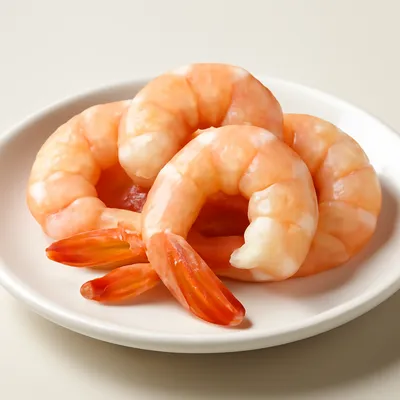



How it's made
7 steps · 1 hour
- 122 min
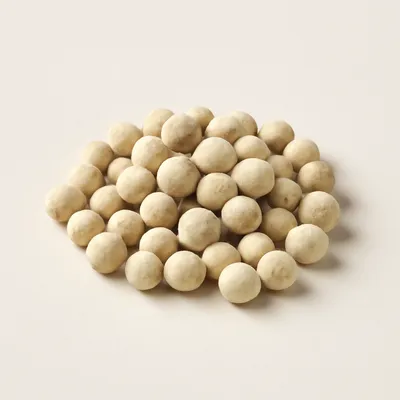
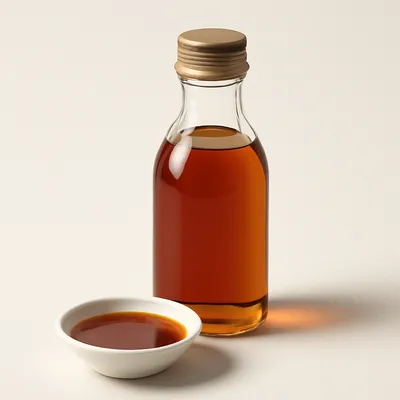
Cut the shrimp into 2–3 pieces each; combine with bamboo shoots, salt, sugar, white pepper, and sesame oil; mix in one direction until slightly sticky. Refrigerate 20 minutes.
- 23 min
Combine flour and tapioca starch in a bowl; pour boiling water over all at once while stirring with a wooden spoon; stir vigorously until a rough dough forms.
Watch outThe water must be fully boiling (100°C) when it hits the starch — pre-gelatinizing the starch is what gives the wrapper its translucency; lukewarm water produces a cloudy, starchy wrapper.
- 36 min
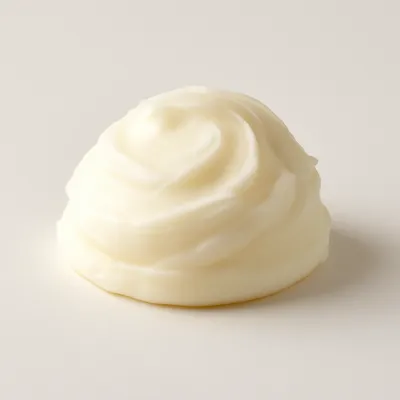
While still hot, knead the lard into the dough for 5 minutes until smooth, pliable, and no longer sticky; cover with a damp cloth.
- 410 min
Pinch off 10g portions; using a cleaver blade or dowel, press each piece into a thin circle about 8cm across by rocking the blade edge.
Watch outRolling with a pin elongates the dough rather than pressing it into a circle — use the flat of a cleaver blade for the traditional thin, round wrapper.
- 520 min
Place a teaspoon of filling on one half of a wrapper; fold and pleat the far edge 12–13 times working left to right, pressing each pleat into the flat front edge to seal.
Watch outFewer than 8 pleats leaves the sealed edge thick and uneven — aim for at least 12 to create the classic fluted top ridge.
- 66 min
Line bamboo steamers with damp parchment or oiled cabbage leaves; place har gow leaving 2cm gaps; steam over boiling water at full heat for 4 minutes.
Watch outSteaming beyond 5 minutes makes the wrapper stick to the lining and the skin tears on removal — time precisely and transfer immediately.
- 71 min
Serve directly from the steamer basket; the wrapper should be glossy, translucent, and the shrimp visible through the skin.
Archive tool suggestions — not reviewed
These legacy suggestions have not been evidence-reviewed and are not presented as required tools.

Stacked bamboo baskets, 20-30 cm across, with woven lattice bottoms and a domed lid. Set over boiling water in a wok, the bamboo absorbs excess condensation so droplets never fall back onto the food — that's why xiaolongbao stay glossy and dumplings don't go soggy. Multiple tiers let dim-sum kitchens steam four or five different items in one stack on the same flame.

A heavy rectangular Chinese knife — the cai dao — with a flat 18-22 cm blade about 2 mm thick. The single tool handles every kitchen job: julienning ginger, splitting whole chickens, smashing garlic with the side of the blade, scooping diced onions on the broad face. The flat profile means knife-skill in Chinese kitchens is fundamentally different from Western technique — you push-cut and rock-cut, never slice through.


