



Pastila (пастила) was associated above all with the town of Kolomna near Moscow, where it is first reliably documented in the 16th century. The orchards of Kolomna and nearby Belyov perfected it: tart Antonovka apples baked, mashed with honey and egg whites, whipped into a pale foam, then dried over multiple days into a fluffy fruit-bar. Tolstoy mentions Belyov pastila in his letters; the technique survives as a revived traditional Russian foodway, with Kolomna and Belyov as its two famous centers.
An apple-meringue confection from Kolomna — light as air, fruity, faintly sour. Slices into wafer-thin pieces that dissolve on the tongue.
Pastila is made from puréed apples (typically Antonovka, a sour Russian variety) whipped with egg whites — the apple pectin and egg-protein structure traps air, creating the wafer-light texture. Traditional Kolomna pastila is dried for 4 days at low temperature.
Variations
Kolomna pastila uses Antonovka apple; Belyov version uses cooked apple instead of raw; berry-, nut- or cinnamon-flavored versions also exist — variations on the same airy apple confection.
On the Palate
Where Pastila sits in the Russian flavor cloud
Ingredients
How it's made
6 steps · 12 hours
- 125 min
Bake 1.5 kg of tart apples (Antonovka or Granny Smith) at 180°C for 45 minutes until completely soft. Cool slightly.
- 24 min
Peel and core; pass the flesh through a fine sieve to remove all fibers. You want a satin-smooth purée.
Watch outPush the baked flesh through a fine sieve until it's satin-smooth — any leftover fibre or skin bits will keep the pastila from whipping up light.
- 33 min
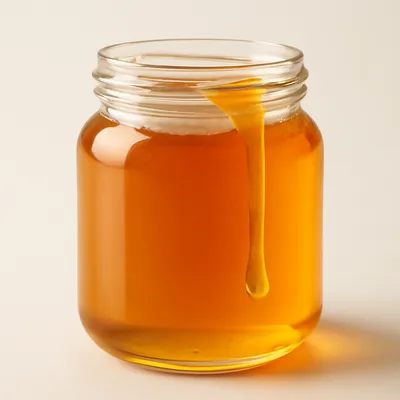
Whisk the purée with 200g honey (or sugar) until pale and slightly fluffy.
- 43 min
Beat 2 egg whites separately to stiff peaks; fold gently into the apple purée until light and homogeneous.
Watch outFold the stiff whites in gently with a few strokes — deflate them by over-mixing and you lose the airy wafer texture that makes it pastila.
- 5420 min
Spread the mixture 2cm thick on a parchment-lined baking sheet. Dry at 70°C with the oven door slightly ajar for 6-8 hours.
Watch outDry it low and slow with the door cracked — too much heat browns and cracks the surface before the inside sets springy.
- 64 min
Once firm and slightly springy, cool fully, dust with powdered sugar, and cut into bars or roll into logs.
Archive tool suggestions — not reviewed
These legacy suggestions have not been evidence-reviewed and are not presented as required tools.

Flat rectangular metal pan (sheet pan, half-sheet, quarter-sheet), 33×23 cm to 45×33 cm, with a low rim. The flat surface gives even heat for cookies, biscuits, roasted vegetables, sheet-pan dinners. Heavy aluminum sheets conduct heat fastest; non-stick coatings make cleanup easier but can warp over 200°C; rimmed half-sheet is the modern American restaurant standard.

Hand-held wire loop tool for beating eggs, whipping cream, emulsifying dressings, and incorporating air into batters. Balloon whisks (large round head) for whipping cream and meringues; French whisks (narrow tear-drop) for sauces in pots; flat whisks (gravy) for pan sauces. Stainless steel is universal; silicone-coated for non-stick pans.


