
Frankfurt marzipan Christmas cookie — small almond-marzipan cookies decorated with exactly three whole almond halves arranged like a clover, baked golden — invented in 1838 by the Bethmann banking family of Frankfurt, eaten throughout German Christmas season.
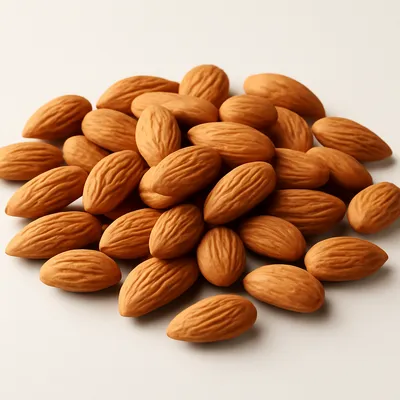
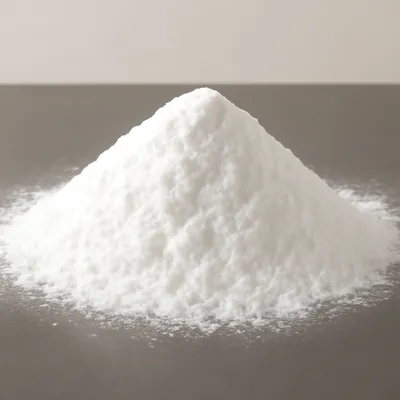



Bethmännchen ('little Bethmann') were invented in 1838 by Jean Jacques Gautenier, the personal pastry chef of the Bethmann banking family in Frankfurt. The original recipe is said to have featured four almond halves on each cookie — one for each of the four sons of banker Simon Moritz von Bethmann (Moritz, Karl, Alexander, and Heinrich). When one brother died in 1845, the family ordered the cookie to be decorated with only three almonds in memoriam; the three-almond version has remained the canonical form since. The cookie is now associated with Frankfurt Christmas markets and is sold in every German bakery during Advent. The dough is a marzipan-rich mixture of almonds + sugar + rosewater + egg whites, formed into small balls with three almond halves pressed into the surface in a clover pattern, baked at low heat until golden but still soft inside. The cookies are uniquely Frankfurt: their precise visual signature (3-almond pattern) makes them instantly identifiable.
A Bethmännchen is a small marzipan jewel: round, golden-brown, with three perfectly-placed almond halves catching the light. The first bite — sweet marzipan meets crunchy almond — releases a wave of almond-rosewater-vanilla aroma. The interior is soft, dense, sweetly-almond-rich; the almonds on top add nutty crunch. The dough is not as sweet as American cookies — it's more refined, more European, more 'patisserie' than 'cookie.' Frankfurters serve these alongside Glühwein during Advent; the warm spiced wine + cool almond cookie is a classic pairing. Two Bethmännchen and a cup of mulled wine = a Frankfurt Christmas market memory.
Bethmännchen rely on three Mediterranean baking concepts: (1) marzipan paste — finely ground almonds + sugar + bound by egg white creates a structural dough that holds shape when shaped; (2) the low-heat slow bake (150°C) allows the almonds to slowly Maillard-brown without overcooking the marzipan center, which would make the cookie hard rather than chewy-soft; (3) the rosewater contributes characteristic Middle-Eastern-via-Frankfurt-Jewish-baking floral character that's hard to identify but immediately recognizable. The egg yolk wash provides the golden gloss via Maillard reaction at the surface. The 3-almond pattern is uniquely Frankfurt; cookies with 4 almonds or a single almond aren't Bethmännchen.
Variations
Frankfurt canonical with 3 almonds + marzipan + rosewater; modern Frankfurt bakeries make a 'Bethmännchen mit Eisbein' Christmas cookie (with caramelized bone — odd but real); commercial mass-produced Bethmännchen are sold in tins at German Christmas markets (decent quality); variations with pistachio garnish instead of almond exist; the dish is naturally vegetarian; the rosewater is somewhat divisive — some find it too 'Eastern,' others love it; modern variations skip the rosewater and use just vanilla (acceptable but less authentic); the 3-almond signature must be preserved or the cookies are not Bethmännchen.
On the Palate
Where Bethmännchen sits in the German flavor cloud
Ingredients
Serves 30How it's made
10 steps · 40 min active + 50 min waiting
- 15 min
Make the marzipan dough: in a food processor, combine 300g blanched whole almonds + 200g powdered sugar + 1 tbsp rosewater (or substitute with 1 tsp orange-flower water + 2 tsp water). Pulse until the almonds are ground to a fine powder and the mixture forms a thick paste. Should be similar to commercial marzipan.
- 23 min
Add 1 large egg white + 1 tsp vanilla extract + 50g all-purpose flour + zest of 1 lemon. Pulse a few more times to integrate. The dough should be thick, sticky, and hold its shape when squeezed. If too sticky, add 1-2 tbsp more flour; if too dry, add 1 tsp more rosewater.
Watch outThe dough is right when a squeezed handful holds its shape and doesn't crack — too sticky and the cookies spread, too dry and they crumble.
- 332 min
Cover and refrigerate the dough 30 min to firm up — easier to shape when chilled.
- 414 min
Prepare the almond garnish: blanch 90 whole raw almonds in boiling water 1 min; drain; squeeze out of skins. Halve each almond lengthwise (split along the natural seam) to make 180 almond halves. You need 3 almond halves per cookie × 30 cookies = 90 halves; the rest are backup.
- 54 min
Preheat oven to 150°C / 300°F. Line 2 baking sheets with parchment paper.
- 612 min
Form cookies: with damp hands (water prevents sticking), take a 15g portion of dough; roll into a smooth ball about 3cm diameter. Place on the prepared baking sheet, leaving 4cm between cookies.
- 78 min
Press 3 almond halves into each ball, arranging in a clover pattern (3 almonds equally spaced around the top, pointed ends touching at center). Gently press to embed the almonds slightly into the dough — they should stick out about 50%.
- 83 min
Brush each cookie lightly with 1 beaten egg yolk (this gives the golden glaze when baked).
- 921 min
Bake 18-20 min until the cookie surface is just-golden and the almonds are golden-tan. The cookies should remain soft inside — DO NOT overbake. Cool 5 min on the baking sheet (they're fragile when hot), then transfer to a cooling rack.
Watch outPull them the instant the surface is just pale-gold and the almonds tan — the centers must stay soft; a fully browned cookie has already gone hard.
- 100 min
Store in an airtight tin at room temperature; will keep 2-3 weeks. Serve at Christmas with a Glühwein (mulled wine), strong coffee, or a Frankfurt Apfelwein. Eat in 2-3 bites per cookie.
Archive tool suggestions — not reviewed
These legacy suggestions have not been evidence-reviewed and are not presented as required tools.


