Karpfen blau ('blue carp') is the classic gentle way to cook a whole Franconian carp: a very fresh, unscaled fish is doused with hot vinegar and poached in a light court-bouillon, which turns its skin a glistening steel-blue. It is a winter and feast-day dish in the carp-pond country around the Aischgrund, eaten especially in the colder R-months and on Christmas Eve and New Year's Eve. Served whole with drawn butter or horseradish, boiled potatoes and a wedge of lemon, it is prized as much for the trembling, delicate flesh as for its uncanny blue sheen.
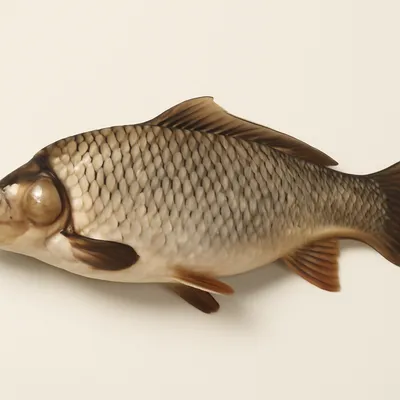



Carp farming in Franconia dates back to medieval monastic fish ponds, and the Aischgrund north-west of Nuremberg is one of Germany's densest carp-pond landscapes; 'Fränkischer Karpfen' (also marketed as Frankenkarpfen / Karpfen aus Franken) was registered as an EU Protected Geographical Indication in 2012, and the neighbouring Aischgründer Karpfen holds its own PGI from the same year. Carp blau follows the same naming logic as Forelle blau and is traditionally tied to the autumn-and-winter carp season — summarised in the old rule of eating carp only in months containing the letter 'R' — and to the Catholic tradition of fish on Christmas Eve.
The flesh is exceptionally tender — pale, almost custard-soft, falling away from the bones in clean flakes once the skin is peeled back. There is little browning and no crust; the flavour is clean, sweet and faintly muddy-river in the best sense, lifted by the sharpness of the cooking vinegar and the bite of horseradish. The famous blue skin is glossy and taut. Melted butter or horseradish cream and a boiled potato are all it needs; this is delicate, quiet eating, not a robust roast.
The blue colour is a reaction between the fish's natural mucus layer and the acid of the cooking liquid, which is why the carp must be handled as little as possible and never scaled or wiped — rubbing off the slime removes the very layer that turns blue. Hot vinegar is poured over the fish just before poaching to set the colour, then the carp is barely simmered in an aromatic court-bouillon. Cooking below a hard boil keeps the soft flesh intact and prevents the skin from splitting; an overcooked or roughly handled carp comes out grey and ragged rather than blue and whole.
Variations
Beyond blau, Franconian carp is just as often served gebacken (deep-fried in a batter, the pub-and-festival favourite) or as Karpfen blau's close cousins across the carp regions; the Oberpfälzer and Aischgründer ponds each hold their own PGI carp. Accompaniments vary between drawn butter, freshly grated horseradish, horseradish cream and lemon. A pinch of salt added to the hot vinegar is said to help the blue set, and some cooks add wine to the court-bouillon.
On the Palate
Where Karpfen Blau sits in the German flavor cloud
Ingredients
Serves 2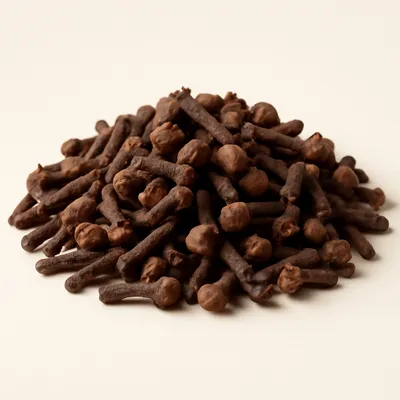

How it's made
6 steps · 25 min active + 20 min waiting
- 15 min
Choose a very fresh, live or just-killed carp and handle it as little as possible — do not scale or wipe off the protective slime.
Watch outHandle the carp as little as possible and never wipe off the slime — that protective mucus is exactly the layer that reacts to turn blue.
- 210 min
Make a court-bouillon with water, vinegar, onion, carrot, bay, peppercorns, cloves and salt and bring it to a bare simmer.
- 35 min
Lay the cleaned, gutted carp in a fish kettle and pour hot vinegar over the skin to set the blue colour.
- 420 min
Add enough of the hot court-bouillon to just cover the fish and poach gently below boiling for 15-20 minutes until the flesh is just set.
Watch outPoach gently below a boil for fifteen to twenty minutes until just set — a hard boil splits the delicate skin and leaves the fish grey and ragged.
- 53 min
Lift the whole carp out carefully and drain.
- 62 min
Serve whole with melted butter or horseradish, boiled potatoes and lemon.
Archive tool suggestions — not reviewed
These legacy suggestions have not been evidence-reviewed and are not presented as required tools.



