Zimtsterne are star-shaped Christmas biscuits made almost entirely of ground almonds, sugar and cinnamon, bound with egg white and bearing a thin white meringue-royal-icing crust on top. They contain no flour and no butter, which gives them a dense, chewy-soft body beneath a crisp sugar lid. Cut with a five-point star cutter and baked only briefly so the crust sets pale while the inside stays moist, they are one of the indispensable cookies of the German Plätzchen tin and a fixture on Advent platters across the German-speaking world.
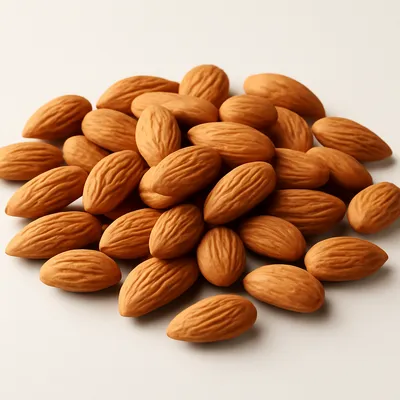




Cinnamon stars belong to the wider family of flourless almond-and-cinnamon Christmas biscuits of southern Germany, Switzerland and Austria, a tradition that grew up where almonds, sugar and 'Oriental' spices reached late-medieval and early-modern bakers through the spice trade. A recipe close to the modern Zimtstern appears in southwest German and Swiss cookery writing from the 18th century onward, though no single inventor or precise first date can be fixed and the dish is best treated as a regional development rather than one person's creation. Cinnamon — long among the most prized and costly imported spices — made such biscuits a luxury of the festive table, which is part of why they settled into the Christmas repertoire rather than everyday baking.
A crisp, sweet white crust gives way to a dense, moist almond interior that is chewy rather than crumbly — closer to a soft macaroon than a shortbread. Cinnamon runs all the way through, warm and insistent, while the egg-white icing on top is purely sweet and snaps faintly under the teeth. There is a gentle marzipan richness from the high almond content, and a slight stickiness at the centre when freshly baked. Best a day or two after baking, once the crumb has settled.
With no flour to provide structure, the body relies entirely on ground almonds bound by sugar and egg white — there is no gluten and no fat, so the texture is set by how much the almond paste is dried in the oven. The royal-icing crust is spread on before baking and acts as a moisture seal: it sets to a crisp white lid in the brief bake while protecting the soft interior from drying out. The bake is deliberately short and cool, because the almond crumb scorches and hardens easily; pulled early, the centre stays chewy. The dough is sticky and must be rolled out on plenty of sugar (not flour) and the cutter dipped in sugar or water so the stars release cleanly.
Variations
Recipes vary in spice — some add a little clove, lemon zest or a splash of kirsch alongside the cinnamon. The almonds may be left with their skins for a darker, nuttier biscuit, or blanched for a paler one; some bakers use part hazelnut. The white crust is the classic finish, but plainer versions skip it and dust the stars with icing sugar instead. Swiss Zimtsterne are very close and often a touch chewier. The same flourless almond-meringue base also turns up shaped as other festive figures.
On the Palate
Where Zimtsterne sits in the German flavor cloud
Ingredients
Serves 10How it's made
6 steps · 45 min active + 45 min waiting
- 110 min
Whisk egg whites with sugar to a stiff, glossy meringue; set aside a few spoonfuls for the crust.
Watch outWhip the whites and sugar to a stiff, glossy meringue — with no flour or fat, this foam is the entire structure of the cookie.
- 210 min
Fold ground almonds and plenty of cinnamon into the remaining meringue to form a stiff, sticky dough; chill briefly.
- 38 min
Roll the dough out about 1 cm thick on a work surface dusted generously with sugar, not flour.
- 410 min
Spread the reserved meringue thinly over the surface, then cut out stars, dipping the cutter in sugar so they release.
- 530 min
Lift the stars onto a lined tray and let them dry at room temperature for about 30 minutes so the crust sets.
- 615 min
Bake at 150°C for only about 12-15 minutes until the crust is set and white but the centres are still soft; do not let them colour. Cool fully.
Watch outBake cool and short until the crust is set and white but never coloured — the almond crumb scorches easily, and pulled early the center stays chewy.
Archive tool suggestions — not reviewed
These legacy suggestions have not been evidence-reviewed and are not presented as required tools.


