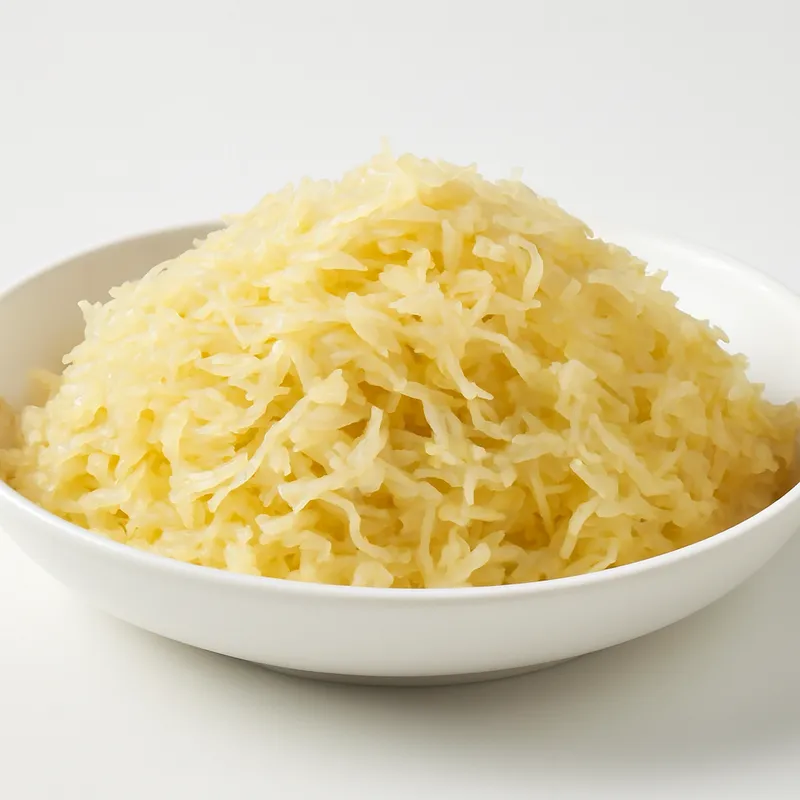
Bavarian potato dumplings — boiled-cooled potatoes mashed with raw potato starch and flour, formed into tennis-ball-sized dumplings with a small toasted bread cube hidden inside, poached in salted water until they float — the canonical sopper-upper of dark Bavarian gravy.





Kartoffelknödel (also called Kloß in northern Bavaria) are the iconic Bavarian dumpling, indispensable accompaniment to Schweinebraten, Schweinshaxe, Sauerbraten, and any dish with a rich brown gravy. The dish is documented in Bavarian cookbooks since the 18th century, but the technique of using a mix of raw and cooked potato is much older — Bohemian-Bavarian peasant cooking. The roughly half-and-half ratio of cooked-and-grated to raw-and-grated potato gives Knödel its unique structure (debates put it anywhere from 1:1 to 60:40 raw-to-cooked): chewy-elastic exterior, soft-fluffy interior. The hidden toasted bread cube ('Brotwürfel') in the center is the dish's culinary surprise — when you bite into the dumpling, the soaked bread cube reveals itself like a small treasure. Every Bavarian Wirtshaus makes Kartoffelknödel; debates rage over the right ratio of raw-to-cooked potato (60:40 is the most common canonical claim).
A Kartoffelknödel from the pot is impressively large — bigger than a tennis ball, slightly tacky surface, pale gray-white from the raw potato. Cut it in half with the side of your fork: the cross-section reveals a delicate spiral of fine potato grain plus a small golden-brown bread cube in the center (the surprise!). Pour brown gravy over the cut halves; the dumpling soaks up everything. The first bite: chewy-elastic exterior, soft-fluffy potato interior, a sudden contrast of crisp toasted bread in the center. The dumpling's delicate potato flavor is the canvas for the rich gravy. Two Knödel + a slice of Schweinebraten + a pile of sauerkraut + a Maß of Helles = peak Bavarian existence.
The half-and-half raw:cooked potato ratio is critical to Knödel's signature texture. Cooked potato provides starch granules that have already gelatinized — these are the soft, fluffy component. Raw potato provides protein + amylose that gelatinize during cooking, binding the dumpling together — this is the chewy-elastic component. Either component alone gives an inferior dumpling (all-cooked = falls apart; all-raw = rubbery). The toasted bread cube in the center serves dual purpose: (1) absorbs excess moisture from the inside, preventing soggy centers; (2) provides textural surprise that makes Knödel different from other potato dumplings.
Variations
Bavarian canonical with 60:40 raw-to-cooked + bread cube; Bohemian variant uses more cooked potato (lighter, softer); Tyrolean Knödel often have meat or speck inside; Thuringian Klöße use almost all raw potato (more chewy, more elastic); commercial frozen Knödel are widely sold and acceptable in a pinch but lack the bread-cube surprise; the dish is intentionally substantial — one Knödel weighs ~120g cooked, two is a serious side; vegetarian by default but can be made with a sausage cube inside (controversial — Bavarians usually keep them simple).
On the Palate
Where Kartoffelknödel sits in the German flavor cloud
Ingredients
Serves 6How it's made
7 steps · 1 hour active + 30 min waiting
- 132 min
Two days ahead (recommended) or day-of: boil 600g floury potatoes (Russet or similar starchy varieties) IN THEIR SKINS in salted water 25-30 min until very tender. Drain; cool completely; peel and grate on a fine grater. (Cold-and-grated cooked potato is the cooked component.)
- 214 min
Day-of: peel and grate 400g raw floury potatoes on a fine grater. Wrap the grated raw potato in a clean kitchen towel; squeeze hard to expel as much water as possible. Place the squeezed grated raw potato in a large bowl. (Critical: save the potato-water that drained out for 10 min — a starchy white sediment will settle. Pour off the water; scrape the white starch back into the bowl with the raw potato. This is the natural binder.)
Watch outSqueeze the grated raw potato dry until it barely drips — leftover water makes the dough slack and the dumplings fall apart in the pot.
- 38 min
Combine in the bowl: the squeezed raw potato + reclaimed starch + the cold grated cooked potato + 80g all-purpose flour + 2 tbsp semolina + 1 egg + 1 tsp salt + 1/4 tsp ground nutmeg. Mix gently with hands until uniform but don't overwork — the dough should be tacky and hold its shape when pressed into a ball.
Watch outThe dough is right when it's tacky and holds a ball under gentle pressure — knead just to combine, more and it turns gluey and heavy.
- 47 min
Prepare the bread cubes: cut 4 slices of stale white bread (crusts removed) into 1.5cm cubes. Toast in a dry pan or oven until golden-crisp, 5 min. Set aside.
- 517 min
Form dumplings: with wet hands, take a 100g portion of potato mixture, flatten in palm into a 10cm disc. Place 2-3 toasted bread cubes in the center. Close the dough around the bread; roll between palms into a smooth ball about 5-6cm diameter. Repeat to make 8-10 dumplings.
- 614 min
Bring a large pot of well-salted water to a gentle simmer (NOT boiling — boiling will break the dumplings). Gently lower 4-5 dumplings at a time into the water. They will sink to the bottom initially; after 5-7 min they will rise to the surface. Cook 5 min more after they rise. Total ~12 min per batch.
Watch outKeep the water at a lazy shiver, never a rolling boil — the dumplings sink, then bob up when done; give them five minutes more after they surface.
- 74 min
Lift out gently with a slotted spoon. Drain briefly on a clean cloth. Serve immediately, hot, alongside roast pork, sauerbraten, or any Bavarian dish with rich gravy. Cut each dumpling in half with a knife to reveal the bread cube — pour gravy over the cut halves. Eat with a fork.
Archive tool suggestions — not reviewed
These legacy suggestions have not been evidence-reviewed and are not presented as required tools.