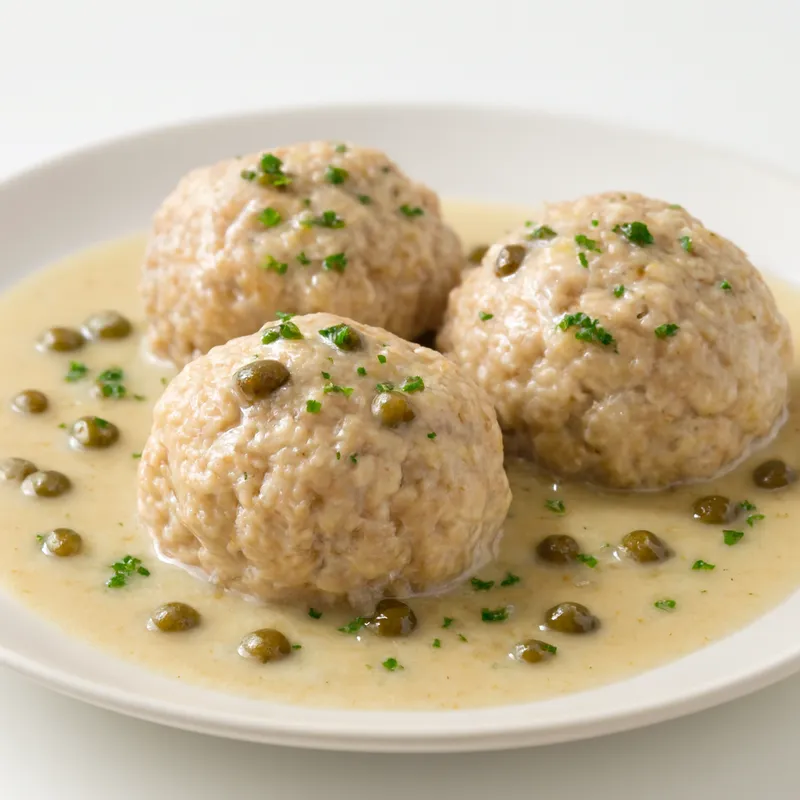
An old-fashioned German winter vegetable: black salsify, a long dark-skinned root nicknamed "winter asparagus" (Winterspargel), peeled to its ivory flesh, simmered tender and bound in a light béchamel or butter sauce. Beneath the rough black skin the root is creamy-white and faintly sweet, with a delicate, almost oyster-like flavour that has earned salsify the name "oyster plant" elsewhere. It is a cold-season Beilage, served alongside roast and boiled meats, that has grown rare on modern tables — a vegetable of the old kitchen garden.






Schwarzwurzel is black salsify (Scorzonera hispanica), a root vegetable long grown in German kitchen gardens as a winter crop and prepared as a gentle Beilage rather than a dish of any single region. Salsify spread through European cultivation from the 16th to 18th centuries and became a valued cold-season vegetable in an era before greenhouses and imports made tender produce available year-round; its German nickname "Winterspargel" reflects both its season and the way it was treated like asparagus, peeled and served under a light sauce. As asparagus, beans and other vegetables became available out of season, salsify slipped toward obscurity, surviving as a traditional, slightly nostalgic winter side rather than an everyday one.
Slender, ivory-pale lengths of root, tender but with a slight firmness, mild and faintly sweet with a delicate flavour often likened to oysters or artichoke hearts. Cloaked in a smooth, pale béchamel finished with butter and a little nutmeg, it is soft, creamy and gentle on the palate, the sauce carrying the subtle root. There is nothing aggressive about it; its charm is its mildness and the silky texture against the cream. A quiet, old-fashioned vegetable that rewards careful cooking.
The work is in the peeling, and chemistry makes it a chore. Cut or scraped salsify oozes a sticky white latex and its flesh browns within minutes as enzymes oxidise — so it must be peeled under running water with gloves and dropped at once into acidulated water (with vinegar or lemon and often a little flour, a blanc) to stop the discolouration and keep the root ivory. It is then simmered until tender, traditionally in that same blanc so it stays pale. The light béchamel — a butter-and-flour roux loosened with milk or the cooking liquid and seasoned with nutmeg — coats the mild root without overwhelming its delicate flavour.
Variations
Beyond the classic béchamel, salsify is tossed simply in browned butter and parsley, breaded and fried like Wiener-style "Schwarzwurzeln Wiener Art," baked au gratin with cheese, or served cold in a vinaigrette as a salad. A little lemon brightens the cream; some cooks add a sprinkle of toasted breadcrumbs or ham. The white-rooted salsify (Tragopogon porrifolius) is a close cousin treated the same way. It is firmly a winter dish, at its best in the cold months when the roots are in season.
On the Palate
Where Schwarzwurzel sits in the German flavor cloud
Ingredients
Serves 4How it's made
6 steps · 30 min active + 15 min waiting
- 115 min
Wearing gloves, peel the black salsify under running water and drop each piece at once into water with vinegar or lemon (and a little flour).
Watch outPeel the salsify under running water and drop each piece straight into acidulated water — cut and left in air, it browns within minutes.
- 212 min
Cut into finger lengths and simmer in the acidulated water until just tender, then drain, reserving some liquid.
- 35 min
Make a light roux by cooking butter with flour, then whisk in milk and a little of the cooking liquid to a smooth béchamel.
Watch outCook the roux until it just loses its raw-flour smell before whisking in milk — this keeps the béchamel silky, not floury-tasting.
- 42 min
Season the sauce with salt, white pepper, nutmeg and a squeeze of lemon.
- 52 min
Fold the drained salsify gently into the warm sauce to coat.
- 61 min
Serve hot as a side, scattered with parsley if liked.
Archive tool suggestions — not reviewed
These legacy suggestions have not been evidence-reviewed and are not presented as required tools.