
The long oval flatbread of Afghan tandoor ovens — a soft, slightly chewy wheat bread, stamped before baking with three parallel ridges and a scatter of nigella and sesame seeds, baked at extreme heat against the clay wall of a tandoor until it puffs and blisters. Eaten with every meal: torn, scooped into stew, wrapped around kebab, dipped into tea.





The communal daily bread of the Afghan-Persian-Central Asian tandoor tradition — neighborhoods often share a single brick tandoor set into the ground (tandoor in Dari, tanoor in Pashto) and a designated baker who supplies fresh naan every morning. The Afghan naan is distinguished from the round breads of Persia and Central Asia by its long oval or teardrop shape and the parallel ridges pressed down its length with the fingertips. The ridges aren't decorative: thinning the dough there lets steam escape so the soft, leavened bread doesn't balloon into a hollow pillow, setting instead into the classic thin-center, thick-rimmed shape. Because the dough is soft, it sags under its own weight against the hot wall into a tapered teardrop. Baked at roughly 300°C or hotter, it is done in 1-2 minutes.
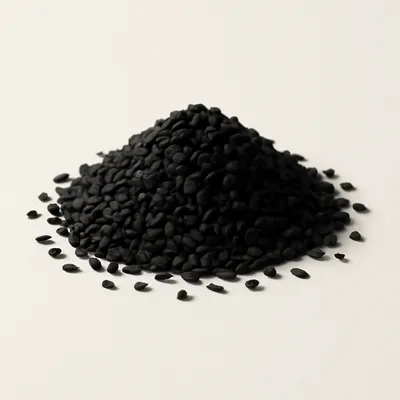
The exterior is dry-crisp, the interior soft and slightly chewy with the irregular open crumb of well-developed gluten. Charred bits along the ridges add bitter smoke notes. Nigella seeds have a distinctive oniony-peppery flavor; sesame adds nuttiness. Best eaten warm from the oven — tear off a piece, dip in olive oil or stew, or wrap around a kebab. Within an hour the bread firms up; the trick is eating it fast.
Yeast fermentation develops both flavor (organic acids) and structure (a CO2-bubble network) for an airy crumb. Yogurt in the dough adds slight tang and softness — its lactic acid relaxes the gluten. The fingertip ridges are the key move: they give steam an escape route and let the thinner center bake faster than the rim, so the bread puffs without going hollow. The intense oven heat (around 300°C or more) gelatinizes the surface starch against the wall almost instantly into a crust while the inside steam-expands. Wrapping the hot bread in a towel traps moisture so it stays soft longer.
Variations
Kabul classic (yeast + flour + yogurt + nigella + sesame); a richer version brushes with butter straight from the oven; some bakers add caraway or fennel seed alongside the nigella; a whole-wheat version uses about 50% whole wheat for nutty depth and chew; a sweet breakfast version adds 2 tbsp sugar and is brushed with honey after baking. The bread keeps 2 days wrapped in cloth at room temperature.
On the Palate
Where Naan-e Afghani sits in the Afghan flavor cloud
Ingredients
Serves 6

How it's made
8 steps · 30 min active + 2 hours 30 min waiting
- 112 min
In a small bowl combine 1 cup warm water (40°C), 1 tsp sugar, and 2.25 tsp active dry yeast. Let stand 10 minutes until foamy.
Watch outLook for a thick foamy head on the yeast water — if it stays flat after 10 minutes the yeast is dead, start over.
- 23 min
In a large bowl whisk 4 cups all-purpose flour with 1.5 tsp salt. Make a well in the center.
- 35 min
Pour the yeast mixture into the well, along with 2 tbsp yogurt and 2 tbsp neutral oil. Mix with a wooden spoon, then turn out onto a floured surface.
- 410 min
Knead by hand 10 minutes until smooth, soft, and slightly tacky. The dough should pass the windowpane test — stretch a piece thin enough to see light through without tearing.
Watch outStop kneading when the dough is smooth and just tacky and stretches thin enough to see light through without tearing.
- 595 min
Place in an oiled bowl, cover with a damp cloth, and let rise in a warm place 1.5 hours until doubled.
- 612 min
Punch down. Divide into 4 portions. Roll each into a long oval ~30 cm by 15 cm and 1 cm thick. Place on parchment.
- 74 min
Press 3 parallel ridges down the length of each oval using the side of your hand or the back of a knife. Brush lightly with water; sprinkle with nigella seeds and sesame seeds.
Watch outPress the ridges firmly right down to the board — they steer the steam so the bread puffs evenly instead of blowing one big hollow.
- 835 min
Preheat oven to 250°C (the highest setting) with a pizza stone or heavy baking sheet inside for 30 minutes. Slide naan onto the hot stone; bake 4-5 minutes until puffed, deep gold on top, and starting to char on the ridges. Wrap in a clean towel immediately to keep soft.
Watch outGive the stone a full 30-minute preheat and pull the naan when the ridges just start to char — a cool stone bakes it dense.
Archive tool suggestions — not reviewed
These legacy suggestions have not been evidence-reviewed and are not presented as required tools.

A vertical clay cylinder, 1-1.5 m tall, fired by a charcoal or wood pit at the bottom — the inner walls reach 480°C. Naan dough is slapped against the side and pulls free in 60 seconds, blistered and chewy; chicken on long iron skewers cooks dangling over the embers. Restaurant tandoors are gas-or-electric clones, but the original clay cylinder gives bread an aroma the modern versions can't quite replicate.

Flat rectangular metal pan (sheet pan, half-sheet, quarter-sheet), 33×23 cm to 45×33 cm, with a low rim. The flat surface gives even heat for cookies, biscuits, roasted vegetables, sheet-pan dinners. Heavy aluminum sheets conduct heat fastest; non-stick coatings make cleanup easier but can warp over 200°C; rimmed half-sheet is the modern American restaurant standard.

Cylindrical wooden, marble, or silicone roller for flattening dough — pie crust, pasta, dumpling skins, naan, tortilla, pizza. French-style is tapered (no handles, the cook holds the wood itself); American-style has fixed handles with rotating barrel; marble pins stay cool for laminated doughs (croissant, puff pastry). The right pin depends on the dough's stickiness and lamination needs.


