
Montenegro's signature mountain dish — coarse cornmeal slowly simmered with water and salt into a thick, custardy porridge, then beaten vigorously with melted butter, large quantities of grated kashkaval and Njeguški cheese, and kajmak (clotted cream) until the mixture is dense, glossy, and stretchy. Served piping-hot in a deep bowl. The cornerstone of Montenegrin highland cuisine.






Kačamak (also called pura on the Montenegrin coast) is the universal Balkan polenta-like cornmeal dish, with cognates across Serbia, Bosnia, Romania and Croatia (pura, palenta, mamaliga). The Montenegrin version is the most-elaborate — distinguished by the large quantities of cheese and kajmak that transform a humble cornmeal porridge into something between Italian polenta and French aligot. The dish took shape after corn (originally from the Americas) spread through the Ottoman-era Balkans around the 17th century. Before corn, the equivalent porridge was made with barley or millet — and grain porridge itself long predates the Ottomans, going back to Roman puls, so the dish is not an Ottoman import. The name is sometimes said to come from Turkish kaçamak ('escapade/to evade'), folklore linking it to rebels hiding in the mountains from Ottoman troops, but this etymology is unverified. Kačamak became the cornerstone of Montenegrin highland cuisine — cheap, filling, made entirely from local ingredients (cornmeal, sheep cheese, cow milk for kajmak). It is the iconic Montenegrin shepherd's lunch — protein-and-carbohydrate-rich, calorie-dense for cold mountain days; a celebrated Montenegrin version (smočani) folds in boiled potato. Modern Montenegrin restaurants serve kačamak as a traditional main course, often with smoked meat or sausage on top. The kačamak-beating technique requires patience and arm strength — the mixture should stretch like mozzarella when properly made (the cheese's casein proteins align during beating).
Lift a spoonful of kačamak — the cornmeal is invisible, transformed into a stretchy, glossy, golden mass that pulls in long strings of cheese. First taste: the corn's earthy-sweet flavor comes first, then the kashkaval's sharp-savory richness, then the Njeguški cheese's barnyard-funk, the kajmak's creamy-tangy mellowing, the butter binding everything. The texture is the magic: dense yet light, stretchy yet spoonable, gentle yet rich. Each spoonful pulls cheese strings off the plate. With a sip of Vranac red wine and a bite of raw onion to cut the richness, this is mountain Montenegro on a plate — frugal ingredients elevated by technique and patience.
The vigorous beating is essential — it activates the cheese's casein proteins, which align in long strands (giving kačamak its mozzarella-like stretch). Adding cheese in 3 batches (rather than all at once) prevents clumping. The cornmeal must be fully cooked before adding cheese — undercooked cornmeal will be grainy and won't bind. The kajmak adds both fat (essential for stretch) and acidity (balances the richness). Pre-warming the serving bowl prevents the kačamak from hardening too quickly. The dish must be served immediately — once cooled, the cheese sets and the stretch is lost.
Variations
Cicvara is a similar but lighter dish — more butter and kajmak, less cheese, no Njeguški cheese. Crmnica kačamak uses smoked bacon instead of butter. Mushroom kačamak adds sautéed wild mushrooms. Spinach kačamak (modern) adds blanched spinach for color. Skadar Lake fish kačamak tops with fried whitefish. Sweet kačamak (children's version) is served with milk, sugar, and cinnamon. Day-after fried kačamak (sliced and pan-fried) is breakfast.
On the Palate
Where Kačamak Montenegrin sits in the Montenegrin flavor cloud
Cook the cornmeal completely before any cheese goes in, then beat like your arm depends on it — the stretch is real work, and undercooked grain or a lazy arm gives you grainy mush instead of the mozzarella-like pull that defines kačamak.
Ingredients
Serves 4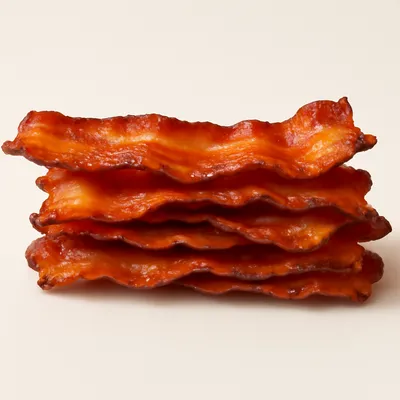


How it's made
14 steps · 35 min active + 40 min waiting
- 18 min
Boil 2 L water in a heavy pot. Add 2 tsp salt.
- 24 min
Once boiling, slowly pour in 400 g coarse yellow cornmeal (kukuruzni griz) in a thin stream, whisking constantly to prevent lumps.
- 324 min
Reduce heat to low. Cover; cook 20-25 min, stirring vigorously every 5 min with a wooden spoon (the spoon should stand up in the porridge near the end).
Watch outIt's cooked enough when the spoon stands upright in the porridge near the end.
- 48 min
Meanwhile, prepare the cheese mix: grate 300 g kashkaval cheese + 200 g Njeguški cheese (or sheep cheese). Measure 200 g kajmak. Melt 150 g butter.
- 52 min
When the cornmeal is fully cooked (thick enough to pull away from pot sides), remove from heat.
- 63 min
Add the melted butter; beat vigorously with the wooden spoon for 2-3 min — the porridge should become silky and glossy.
- 76 min
Add the grated cheeses in 3 batches, beating after each addition until completely incorporated.
- 85 min
Add the kajmak; beat for 3-5 min until the mixture becomes stretchy and stringy (like mozzarella). The cheese's casein proteins will align with vigorous beating.
Watch outKeep beating until the mass strings and stretches off the spoon like mozzarella.
- 92 min
Test for stretch: pull up the spoon — the mixture should stretch in long ribbons. If not stretchy enough, add more kashkaval and beat longer.
Watch outLift the spoon to test — proper kačamak pulls up in long, unbroken ribbons.
- 101 min
Optional: add 3 minced garlic cloves and 1 tsp black pepper for savory version.
- 113 min
Serve immediately: spoon a generous portion into a deep pre-warmed bowl (kačamak hardens as it cools).
Watch outServe the instant it's ready into a warmed bowl, before it cools and sets.
- 124 min
Top with: a generous spoon of extra kajmak, a sprinkle of crumbled bacon (if available), 1 tbsp melted butter, and optionally 100 g smoked sausage (chopped).
- 134 min
Eat with a spoon, breaking off cheese strands. Serve alongside: chopped raw onion, pickled hot peppers, country bread, and a glass of Vranac red wine.
- 141 min
Leftover kačamak hardens overnight — slice and pan-fry for breakfast (the day-after version is also a Montenegrin classic).


