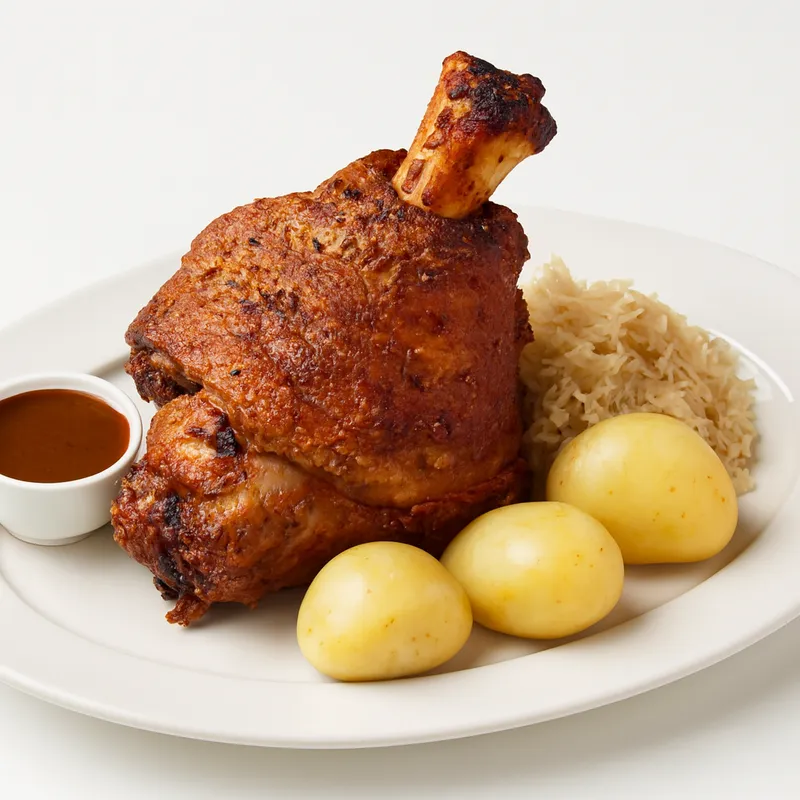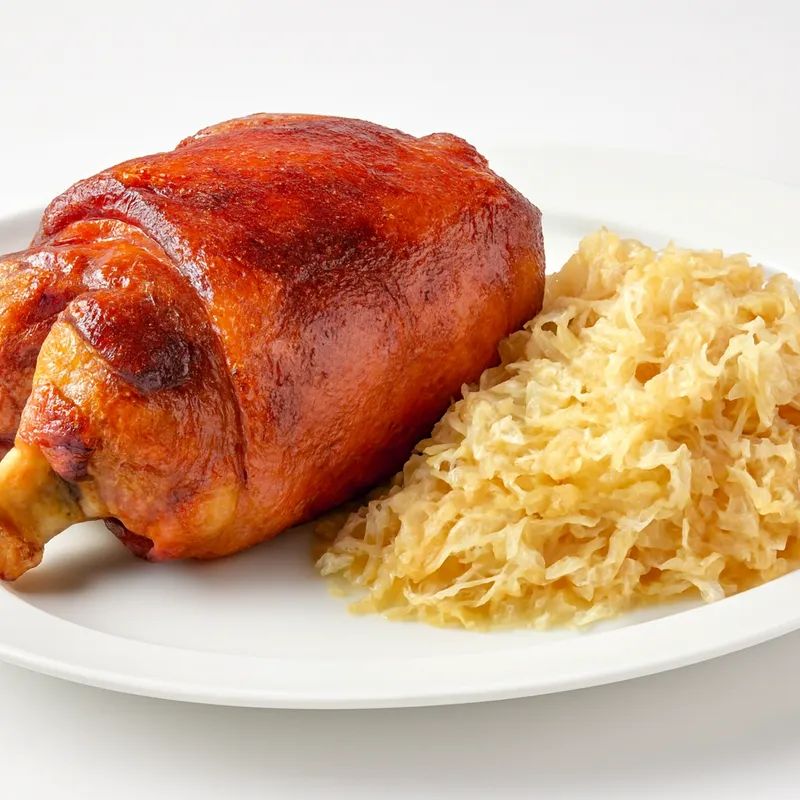
A cured and boiled pork knuckle served with sauerkraut.




Northern and eastern German tradition, especially Berlin and Brandenburg, going back at least to the 18th century. The cure-and-boil method preserved pork through winter before refrigeration; the brine pulled water out, slow boiling rehydrated it ready to eat. Distinct from the southern Schweinshaxe, which is roasted, not boiled — same cut, opposite technique, opposite texture.
Northern and Berlin tradition since at least the 18th century — cured 5–7 days in juniper-bay-pepper brine, then boiled below 90°C. Hard simmer toughens the collagen and you get rubber knuckle. Pink color is sodium nitrite fixing the myoglobin, not raw.
A whole cured pork knuckle, boiled until the meat falls off the bone and the skin goes gelatinous and pale — not crisp. Served on a mountain of sauerkraut and pea puree (Erbspüree), with mustard and a beer. Berlin and northern German style. The meat should pull apart with a fork; the skin is eaten too, soft like aspic.
Cure first (typically 5–7 days in salt brine with juniper, bay, peppercorn), then boil 2–3 hours in water with the same aromatics. The brine is what makes the meat pink throughout, not raw color — sodium nitrite fixes the myoglobin. Boiling temperature must stay below 90°C; a hard simmer toughens the collagen instead of dissolving it, and you end up with rubber knuckle.
Variations
Berliner Eisbein (cured, boiled, sauerkraut + Erbspüree + mustard); Schweinshaxe (Bavarian, roasted not boiled — opposite technique on the same cut); Polish golonka peklowana (cured-and-boiled cousin); Czech vepřové koleno (typically roasted with dark beer).
On the Palate
Where Eisbein sits in the German flavor cloud
Ingredients


How it's made
6 steps · 32 min active + 1 hour 30 min waiting
- 12 min
Rinse the pork knuckle under cold water to remove any excess salt from curing. Pat it dry with a paper towel to ensure a crisp finish.
- 25 min
Place the pork knuckle in a large pot and cover it with water. Add a generous pinch of salt and bring to a gentle simmer over medium heat. The water should bubble slightly but not boil vigorously.
Watch outBring it up to where only a few bubbles rise and hold it there — if it's rolling and churning, pull the heat down before the collagen tightens.
- 310 min
Continue simmering the pork knuckle for about 1.5 to 2 hours until the meat is tender and can be easily pierced with a fork.
Watch outIt's done when a fork slides into the thickest part with no resistance and the meat wants to slip off the bone.
- 45 min
While the pork simmers, prepare the sauerkraut and potatoes. Rinse the sauerkraut under cold water to reduce acidity, then drain thoroughly.
- 55 min
Boil the potatoes in salted water until tender, about 20 minutes. Drain and set aside.
Watch outEnsure the water is at a rolling boil before adding the potatoes for even cooking.
- 65 min
Once the pork knuckle is tender, remove it from the pot and let it rest for a few minutes before serving. Serve with the boiled potatoes and sauerkraut.
Watch outLet the knuckle rest a few minutes off the heat before serving so the juices settle back into the meat instead of running out.
Archive tool suggestions — not reviewed
These legacy suggestions have not been evidence-reviewed and are not presented as required tools.