Taiwan's signature gift pastry (伴手礼): a buttery, milk-powder-enriched shortcrust wrapped around a thick paste of cooked pineapple jam, pressed into small square molds and baked golden — the shell shatters at a bite, the filling is chewy and sweet-tart. The filling splits two ways: pure-pineapple 土凤梨酥 (tart, faintly fibrous) and the cheaper, sweeter winter-melon-and-pineapple style. Because pineapple in the Hokkien dialect sounds like 旺来 ('prosperity coming'), the cake carries auspicious meaning and is a staple of Taiwanese gifting and weddings.
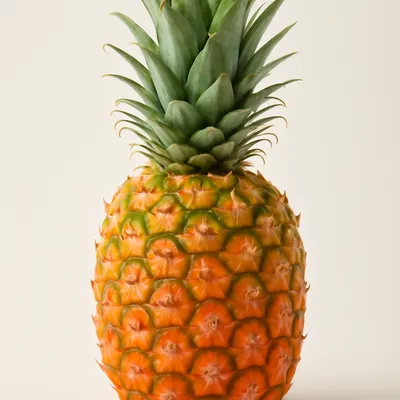




Pineapple cake is rooted in Taiwan's pineapple industry. From 1906 the Governor-General's office brought in the more commercial Hawaiian Kai-ying (Cayenne) variety, and a cannery set up by Okamura Shotaro at Jiuqutang near Fengshan turned the island into a major canned-pineapple exporter — by 1920 the town of Yuanlin alone held some twenty-eight canning plants. With cheap pineapple and a tradition of fruit-filled wedding pastries (a pineapple-filled cake, 凤饼, was one of the auspicious betrothal cakes; pineapple in the Hokkien dialect sounds like 旺来, 'prosperity coming'), bakers shrank the old large 凤饼 into the small individually wrapped cake known today. The cheaper commercial filling long mixed shredded winter melon with pineapple — milder, sweeter, and less sticky — which is the older mainstream style. The pure-pineapple 土凤梨酥, tart and fibrous, was popularized by the brand SunnyHills (微热山丘): founded in Nantou in 2008 with its products launched in 2009, it built its line on the century-old Kai-ying pineapple grown on the Bagua Mountain foothills, dropping the winter melon entirely and reframing the cake around real fruit.
Snap the cake and the crust shatters into fine, buttery, melt-in-the-mouth crumbs, smelling of toasted milk powder. Inside, a dense amber paste of cooked pineapple — chewy, almost candied, glossy and slightly translucent. A good 土凤梨酥 reads tart-sweet with a faint fibrous bite from the fruit; the winter-melon style is rounder and sweeter, smoother on the tongue. The pleasure is the contrast: dry crisp shell against a sticky, fragrant, fruit-acid center.
Two things drive the texture. The crust starts from creamed butter: beating soft butter with powdered sugar whips in countless tiny air bubbles, and during baking that aerated fat — plus the way butter coats the flour and limits gluten — gives the short, crumbly 'melt' rather than a chewy crumb; the milk powder adds proteins and lactose that brown and deepen the aroma. The filling is the long reduction: fresh pineapple (with or without winter melon) is cooked down over low heat to drive off water, and as the sugars concentrate, Maillard browning and caramelization turn it amber and intensely fragrant, often finished with maltose, whose resistance to crystallizing keeps the paste pliable and glossy. The mix must be cooked nearly dry — a wet filling won't hold its shape and splits the crust in the oven. Baked around 170-180°C, the cakes are turned partway so both faces set to an even gold.
Variations
The defining split is filling: pure-pineapple 土凤梨酥 (tart, fibrous, more expensive) versus the older winter-melon-and-pineapple style (sweeter, smoother, cheaper). Crust recipes vary in butter-to-shortening ratio and whether milk powder, cheese powder, or egg yolk goes in for richer color. Some makers swap in a whole salted egg yolk for a savory-sweet contrast, the cake then often sold as 蛋黄凤梨酥. Pineapple cake is also the parent of the round, egg-yolk-cored pastry sold as 凤凰酥 (using winter-melon-pineapple jam around a salted yolk), and modern shops experiment with cranberry, longan, or other fruit fillings under the same buttery shell.
On the Palate
Where Pineapple Cake sits in the Taiwanese flavor cloud
Ingredients
Serves 12


How it's made
8 steps · 40 min
- 120 min
Peel and finely chop or grate 1kg fresh pineapple (and 300g winter melon, if using a milder filling); squeeze out and reserve the juice.
- 215 min
Cook the fruit in a wide non-stick pan over medium-high heat, stirring, until much of the water boils off and it begins to thicken.
- 310 min
Stir in 80g rock sugar and a knob of butter, lower the heat, and keep stirring as the mixture darkens to amber.
- 415 min
Add 40g maltose and cook, stirring constantly, until the paste is glossy, sticky, and nearly dry enough to hold a shape; cool completely (it firms as it cools).
Watch outCook the pineapple down until it's glossy, sticky and nearly dry enough to hold a shape; too wet and the filling leaks and softens the shell — it firms further as it cools.
- 58 min
Cream 150g soft butter with 60g powdered sugar until pale and fluffy, beat in 1 egg yolk, then fold in 250g flour and 30g milk powder to a soft dough; chill 20 minutes.
Watch outCream the soft butter with sugar until pale and fluffy; that whipped-in air is what gives the crust its short, melt-in-the-mouth crumb rather than a chewy one.
- 612 min
Divide dough and filling into equal portions (about 20g dough to 15g filling); flatten each piece of dough, wrap it fully around a ball of filling, and seal.
- 78 min
Press each into a greased square mold set on a lined tray, flattening the top.
- 822 min
Bake at 175°C for about 10 minutes, then flip the cakes (in their molds) and bake another 10 minutes until both faces are golden; cool before unmolding.
Watch outBake, then flip the cakes in their molds to bake the second side until both faces are golden; leave it one-sided and the bottom stays pale and doughy.
Archive tool suggestions — not reviewed
These legacy suggestions have not been evidence-reviewed and are not presented as required tools.


