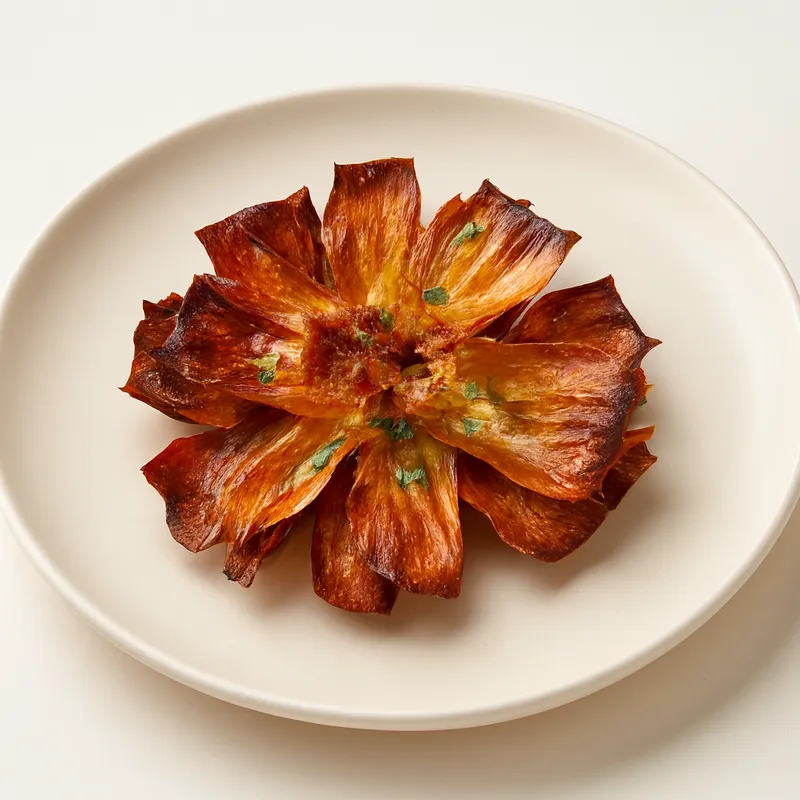
Warm shortcrust pastries from the walled medieval town of Erice, above Trapani. A domed shell of buttery pasta frolla is filled with a soft, lemon-scented pastry cream, dusted thickly with icing sugar and eaten hot from the oven, while the custard inside is still loose.




Erice's genovesi were born in the kitchens of its cloistered convents, above all the Convento di San Carlo, where the nuns made almond sweets, marzipan mustazzoli and these cream pastries. Between the 14th and 16th centuries noble families raised dozens of churches in the town; as the families left, many of them passed to the convents. When 19th-century laws suppressed the religious houses the recipes nearly died out, only to be saved by Maria Grammatico, born in 1940, orphaned as a girl and placed in the San Carlo institute, who learned the guarded pastry by watching the nuns, then opened her own shop with three kilos of almonds and carried the genovesi to the world; her story is told in the book 'Bitter Almonds'. The name is said to echo the caps of the Genoese sailors who once traded through Trapani.
Warm and fragile: the snow of icing sugar dissolves at the lips, then a thin, buttery, tender crust gives way to a rush of warm lemon custard. The pastry itself is barely sweet, so the cream carries it, and it is at its best eaten straight from the oven, when crumb and cream play off one another.
Pasta frolla bakes 'short' and crumbly because the fat coats the flour and holds gluten back; worked cold and quickly, it sets tender rather than chewy. The filling thickens as egg yolks coagulate and starch gelatinizes together into a pipeable custard that stays soft, the starch also shielding the yolks from curdling. In the oven the shell browns by the Maillard reaction and steam lifts the crumb, while the sealed dome traps the cream so it heats through without drying out. Warm, the fat in the crust is soft and the custard loose; cold, both firm up.
Variations
Fillings vary: the classic is yellow lemon pastry cream, but sweet ricotta, or candied squash with chocolate chips, also turn up. Some enrich the frolla with lard in place of butter for extra shortness, and sizes run from small to a palm-sized pastry; a chocolate-cream version exists too. In Erice they are baked and sold hot all through the day, and beyond the town they appear across the Trapani area.
On the Palate
Where Genovese Ericina sits in the Italian flavor cloud
Ingredients
Serves 8
How it's made
7 steps · 30 min
- 120 min
For the pastry cream, heat the milk with lemon zest; whisk the yolks with the sugar and cornstarch, temper in the hot milk and cook gently until thick, then cover and cool.
Watch outCook the pastry cream gently just until thick, stirring — rush the heat and the yolks scramble; the starch protects them, but only if you keep it moving.
- 212 min
Rub the butter into the flour and sugar to a sandy crumb, work in the egg yolks and a little cold water and bring together to a smooth short dough.
- 330 min
Wrap the dough and chill it for at least 30 minutes.
- 412 min
Roll the frolla thin, cut into discs and spoon a mound of the cold pastry cream onto half of them.
- 510 min
Cover each with a second disc, press the edges to seal and trim into neat domed rounds with a cutter.
Watch outPress the two discs together firmly all around the rim — a loose seal lets the cream burst out in the oven; the dome has to be sealed tight.
- 615 min
Chill the filled pastries briefly, then bake in a hot oven at 200℃ until just pale gold, about 15 minutes.
Watch outBake hot at 200 just to pale gold, about 15 minutes — pull them before they deepen; overbaked and the crust hardens and the cream inside dries out.
- 73 min
Dust thickly with icing sugar and serve warm, while the cream inside is still soft.
Archive tool suggestions — not reviewed
These legacy suggestions have not been evidence-reviewed and are not presented as required tools.