
A small individual pie of rich, crumbly short-crust pastry, baked in a fluted mould around a soft, often saucy filling — chicken, hearts of palm, shrimp or cheese are the classics. Unlike the fried, folded empanada, the empada is baked, has a closed lid, and is firm enough to hold a moist filling that is eaten with a fork. It is a standard of Brazilian bakeries, lunch counters and parties, where the larger version is the empadão, a full pie meant to be sliced. The benchmark is pastry that crumbles and almost melts against a generously sauced centre.




The empada belongs to the Iberian-Brazilian family of baked pastries that descends from the Portuguese and Spanish empada and empanada, words rooted in the verb meaning to wrap in bread or pastry; the form reached Brazil during the colonial centuries and settled into local baking. Over time a clear Brazilian distinction took hold: the empada became a small, lidded, mould-baked pie with a tender short crust and a soft filling, set apart from the fried, folded empanada or the Argentine empanada. It is a long-standing item of bakeries and confeitarias across the country, and the saucy chicken empada (empada de frango) and the hearts-of-palm empada (de palmito) are among the most familiar fillings. The larger sliceable form is called the empadao.
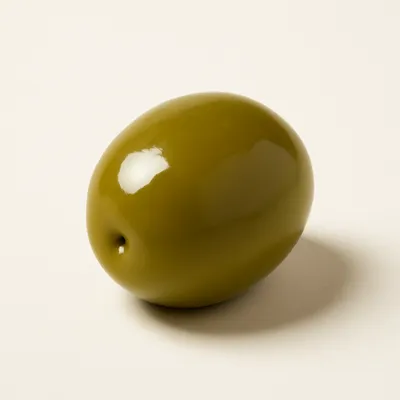
A pie the size of a large muffin top, pale gold, with a crisp-edged lid you lift or cut into. The crust is rich and short — it shatters and crumbles rather than flakes, almost shortbread-like from the butter and egg yolk — and gives way to a warm, soft, saucy centre. A classic chicken empada is moist shredded chicken in a thickened, lightly seasoned sauce, often with olives, peas and hearts of palm; the palmito version is creamy and tangy. Eaten warm, usually with a fork because the filling is too loose to hold by hand.
The pastry is a massa podre ('rotten', i.e. very short dough) made with a high proportion of fat — butter or lard — and egg yolk, worked as little as possible so the fat coats the flour and limits gluten; this is what makes it crumble and melt rather than turn tough. Chilling rests the dough and keeps the fat solid so the shell holds its moulded shape. The filling is pre-cooked and thickened, then cooled, because a hot or runny filling would melt the raw pastry and leak; the thickener and the cooling let it set just enough to bake inside a sealed case. Baking in a mould supports the soft crust until the egg-washed lid sets and colours.
Variations
Empada de frango (chicken in a thick sauce with olives) is the everyday default; empada de palmito (hearts of palm), de camarao (shrimp, strong in coastal and northeastern states), de queijo, and de carne are all common. The bite-sized empadinha is the party version, and the large round empadao is baked as a full pie and sliced. Goias is famous for its empadao goiano, a deep two-crust pie layered with chicken, sausage, cheese, olives and guariroba palm. Most fillings are bound in a thickened sauce so they stay moist inside the closed shell.
On the Palate
Where Empada sits in the Brazilian flavor cloud
Ingredients
Serves 8

How it's made
6 steps · 45 min active + 45 min waiting
- 115 min
Make a short pastry by rubbing cold butter into flour with a little salt, then binding with egg yolk and a splash of cold water; handle minimally, wrap and chill.
Watch outHandle the pastry as little as possible and keep it cold — worked too much the gluten develops and it bakes tough instead of crumbling and melting.
- 225 min
Cook the filling: poach and shred chicken, make a roux or starch-thickened sauce with onion and stock, fold in the chicken with olives, peas and chopped hearts of palm; season and cool completely.
Watch outCool the filling completely before it goes in — a hot or runny filling melts the raw pastry and leaks; it should be set enough to spoon.
- 312 min
Roll out most of the chilled pastry and line greased fluted moulds, pressing it up the sides.
- 412 min
Spoon in the cooled filling, then cut lids from the remaining pastry, lay them on and seal the edges; brush with beaten egg yolk.
- 522 min
Bake in a hot oven until the pastry is set and golden.
- 64 min
Cool briefly, unmould, and serve warm with a fork.
Archive tool suggestions — not reviewed
These legacy suggestions have not been evidence-reviewed and are not presented as required tools.


