
A pale, trembling coconut-milk pudding set with cornstarch, poured into a ring mold and turned out to wear a dark prune syrup poured down its sides. The body is barely sweet and clean with coconut; the syrup is where the sugar and the contrast live — glossy, faintly tart, often touched with cinnamon or clove. It is a classic of the Brazilian dessert table, the kind of thing a grandmother unmolds onto her best plate, and it descends from the white blancmange of medieval Europe by way of Portugal.




Manjar branco is the Brazilian heir of blancmange, the white dish of medieval European cooking — built originally from pounded almonds and rice in a sweetened milk, and old enough to surface in Henrik Harpestræng's 13th-century Danish recipe book, in the prologue to the Canterbury Tales, and in the court cookery of Richard II. It crossed to Brazil with the Portuguese, where the kitchen rewrote it around what grew here: coconut milk in place of almond milk, and cornstarch standing in for the pounded rice that once gave it body. The dark prune or plum syrup is the Brazilian signature. Stories tie the dish to a Portuguese 'manjar à portuguesa' and to Lebanese mahalabia, but those threads are folkloric rather than documented; what is firm is the medieval blancmange line and the Portuguese passage.
It quivers when the plate is nudged and gives softly under the spoon, smooth and a touch slippery, the cornstarch set holding just firm enough to keep its ring. The pudding itself is mildly sweet and tastes cleanly of coconut, more refreshing than rich. Then the syrup: dark, glossy, sweeter and a little sour, the cooked prunes gone soft and jammy, sometimes warmed with cinnamon. Eaten cold, each spoonful is pale cream chased by dark fruit.
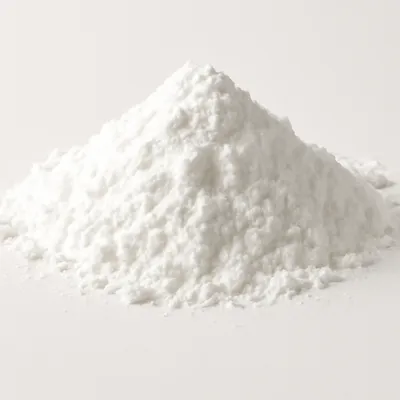
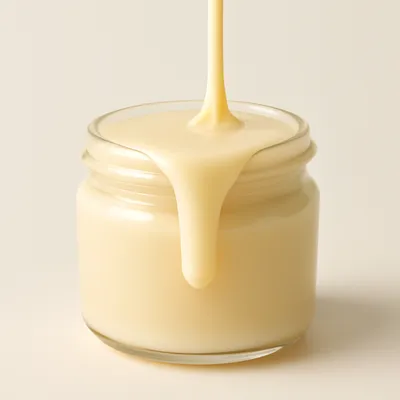
Cornstarch is the whole structure. Heated in the coconut and milk, its granules absorb liquid and burst, releasing long starch chains that swell and lock the milk into a soft, sliceable gel as the mix cools — the same gelatinization that thickens a pastry cream, here taken far enough to unmold. It must be brought to a boil and stirred without stop, or the starch clumps and the pudding sets lumpy; poured promptly into a wetted mold, it slips out clean once chilled. The syrup is a separate reduction: prunes simmered with sugar and water until the fruit collapses and the liquid thickens to a pourable gloss, its tartness and color set deliberately against the white. Underset and it will not stand; overset and it turns rubbery.
Variations
The standard is coconut-milk pudding under prune syrup, but the syrup also runs to plums, dried figs, or red berries, and condensed milk often joins the milk for a richer body. A version made with almonds or almond milk hews closer to the European original. Some cooks finish with a little clove or cinnamon in the syrup. It is most often set in a ring mold; poured into a flat dish it becomes a softer, spoonable manjar de coco.
On the Palate
Where Manjar Branco sits in the Brazilian flavor cloud
Ingredients
Serves 8
How it's made
5 steps · 25 min active + 3 hours 45 min waiting
- 13 min
Whisk the cornstarch into the cold milk until no lumps remain.
- 25 min
Combine with the coconut milk, condensed milk, and sugar in a pan and bring to a boil over medium heat, stirring constantly.
Watch outBring it to a boil stirring without stop — the cornstarch clumps and the pudding sets lumpy if you let go of the whisk.
- 312 min
Cook, stirring without stop, until the mixture thickens to a heavy, glossy cream that pulls from the pan.
Watch outCook until it thickens to a heavy, glossy cream that pulls from the pan, then pour it promptly into the wetted mold so it slips out clean once set.
- 4180 min
Pour into a wetted ring mold and chill until fully set and unmoldable.
- 530 min
For the syrup, simmer pitted prunes with sugar, water, and a little cinnamon until the fruit softens and the liquid thickens; cool, unmold the pudding, and pour the syrup over.
Archive tool suggestions — not reviewed
These legacy suggestions have not been evidence-reviewed and are not presented as required tools.



