A Bavarian fried yeast-dough pastry whose name means 'the pulled-out ones.' A risen dough ball is stretched by hand so the center becomes a thin, almost translucent membrane while a thick puffy rim is left around the edge, then deep-fried so the thin middle turns crisp and the rim stays soft. Dusted with powdered sugar, it is a classic treat of Bavarian church-consecration fairs (Kirchweih). It is the same pastry known as Knieküchle ('knee cake') in Franconia, where bakers traditionally stretched the dough over the knee.






Auszogne belongs to the old family of southern-German farmhouse fried pastries (Schmalzgebäck) made from enriched yeast dough fried in lard, eaten on holidays and at church fairs when the labor and fat were worth spending. It is known by many regional names — Auszogne or Ausgezogene in Old Bavaria, Knieküchle, Kiacherl, Kirchweihnudeln in Franconia and beyond, with cousins across western Austria and Tyrol. The Franconian name Knieküchle, 'knee cake,' records the traditional shaping method: the dough was pulled out over the (cloth-covered) knee until thin enough, by the old saying, to read a letter through. The pastry was historically tied to harvest season and to the Kirchweih, the annual parish fair marking a church's consecration; a precise origin is not recorded.
Held up to the light, the center is a thin golden sheet, crisp and shattering like a wafer, while the rim is a thick, soft, doughnut-like ring of fluffy fried bread. The contrast is the whole pleasure — crackling thin middle, pillowy edge, the two textures in one piece. Warm from the fat and snowed with powdered sugar, it tastes of lightly sweet yeast dough and the clean richness of frying fat, faintly of lemon zest. Eaten out of hand at the fair, sugar on the fingers.
An enriched yeast dough — flour, milk, butter, egg, sugar, lemon zest — is kneaded and proved until light, which builds the gas structure that lets the rim puff. After shaping into balls and a second rise, each is stretched from the center outward so the dough thins dramatically in the middle while the gas-filled edges stay thick. In the hot fat (around 170°C) the thin center has little dough and quickly dries and crisps, while the thick rim traps steam and expands into a soft, hollow ring — the same dough giving two textures purely from thickness. Frying with the thin side down first sets the membrane flat; lard or neutral fat at the right temperature browns the surface without soaking the crumb.
Variations
Auszogne / Ausgezogene is the Old Bavarian name; Knieküchle is the Franconian one for the same pastry, with Kiacherl, Kirchweihnudeln and other dialect names elsewhere. Some doughs add raisins; some are flavored with rum or vanilla alongside the lemon. They are usually finished with powdered sugar, occasionally with cinnamon sugar, and traditionally fried in lard for flavor. Closely related Schmalzgebäck of the same fairs includes the Bauernkrapfen of Austria; across the Alps in Tyrol the cousin is the Kiachl.
On the Palate
Where Auszogne sits in the German flavor cloud
Ingredients
Serves 6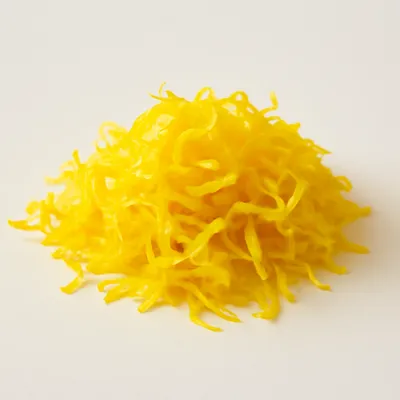
How it's made
7 steps · 40 min active + 1 hour 50 min waiting
- 18 min
Warm the milk and dissolve the yeast with a little sugar; let it foam.
- 212 min
Knead flour, the yeast milk, melted butter, egg, sugar, salt and lemon zest into a smooth, soft dough.
- 360 min
Cover and prove until doubled, about 1 hour.
- 430 min
Divide into balls, place on a floured cloth and let rise again, about 30 minutes.
- 58 min
Stretch each ball from the center outward until the middle is thin and translucent and a thick rim remains.
Watch outStretch each ball from the center out until the middle is thin and translucent with a thick rim left around it — that difference in thickness is what gives the crisp center and puffed ring.
- 63 min
Deep-fry in fat at about 170°C, thin side down first, until golden, then turn, about 2–3 minutes total.
Watch outFry thin-side down first at about 170 degrees until golden — start it right and the center sets crisp while the thick rim traps steam and puffs hollow.
- 72 min
Drain on paper and dust generously with powdered sugar; serve warm.
Archive tool suggestions — not reviewed
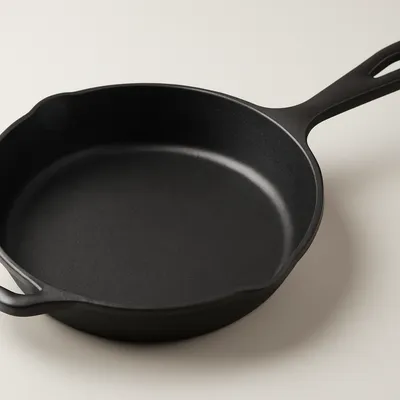
These legacy suggestions have not been evidence-reviewed and are not presented as required tools.