The ubiquitous German fried-potato side: boiled potatoes, sliced and pan-fried with onion and diced bacon or Speck until the edges are deep golden and crisp. Made well, the slices are crackling and brown on the outside yet soft within, glistening with rendered fat and flecked with onion. They turn up everywhere — beside fried fish or eggs, under a fried egg as Bauernfrühstück's cousin, or as the standard accompaniment to schnitzel, Sülze and grilled sausage. Few dishes are more everyday on the German table.





Bratkartoffeln ("fried potatoes") is a humble, nationwide everyday preparation rather than a regional speciality with a fixed origin. The potato itself was slow to take hold in Germany after its 16th-century arrival from the Americas; Frederick the Great's famous 1756 "Kartoffelbefehl" decrees pushed cultivation across Prussia, and by the 19th century the potato was a staple of the German poor. Frying boiled potatoes in fat with onion was a thrifty way to use up leftovers from the day before — which is why German cooks insist on cold, pre-cooked potatoes, since freshly boiled ones fall apart in the pan. The dish belongs to no single Land; every region fries them, and the simplicity is the point.
Crisp, deeply browned potato edges giving way to a soft, almost creamy interior, the whole thing slicked with fat and savoury with rendered bacon and sweet softened onion. The contrast of crackling crust and tender middle is the whole pleasure, and good Bratkartoffeln are never greasy-limp but genuinely crisp. A scatter of marjoram or chives lifts them. Eaten hot from the pan, they are comfort food at its plainest — salty, fatty, satisfying.
Two rules decide success, and both are physics. First, the potatoes must be cooked the day before and fully cold: chilling retrogrades the starch so the slices hold their shape and brown rather than disintegrating into mush, whereas hot fresh-boiled potatoes are too fragile. Second, the pan must not be crowded and the slices not turned too soon — leaving them undisturbed against hot fat lets the surface dehydrate and Maillard-brown into a crust before flipping. Rendering the bacon or Speck first builds savoury fat to fry in; the onion is added later so it softens and sweetens without burning before the potatoes are crisp.
Variations
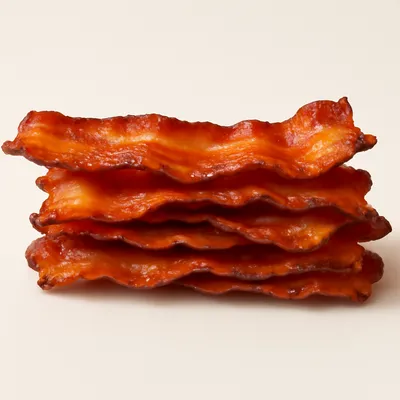
Some cooks fry from raw thin slices for a more uniform crispness, but the classic uses leftover boiled potatoes. Bacon or Speck is traditional, though a meatless version with just onion and fat is common; marjoram is the signature herb in many regions. Served under a fried egg with the addition of more vegetables and ham, the same potatoes become the centrepiece of Bauernfrühstück. They are also the standard side beneath Matjes herring, fried fish and grilled sausages.
On the Palate
Where Bratkartoffeln sits in the German flavor cloud
Ingredients
Serves 4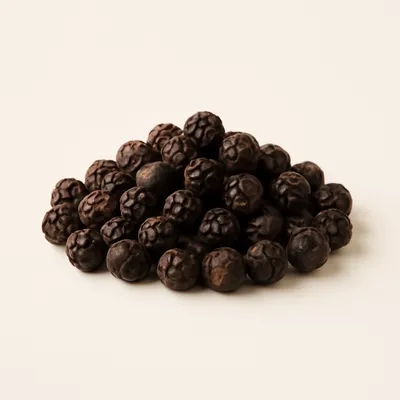
How it's made
6 steps · 30 min active + 10 min waiting
- 120 min
The day before, boil potatoes in their skins until just tender, then cool completely.
Watch outUse potatoes boiled the day before and fully cold — hot fresh ones are too fragile and fall apart into mush in the pan.
- 24 min
Peel the cold potatoes and cut into even slices.
- 35 min
Render diced bacon or Speck in a wide pan until the fat runs and the bits crisp.
- 46 min
Add the potato slices in a single layer and fry undisturbed until the underside is golden, then turn.
Watch outLay the slices in a single layer and leave them undisturbed until golden — crowd or flip too soon and they steam soft instead of crisping.
- 58 min
Add chopped onion and continue frying, turning occasionally, until potatoes are crisp and onion is soft.
- 62 min
Season with salt, pepper and marjoram and serve hot straight from the pan.
Archive tool suggestions — not reviewed
These legacy suggestions have not been evidence-reviewed and are not presented as required tools.