A tart-sweet lingonberry preserve, the small bright-red wild relative of the cranberry cooked briefly with sugar into a loose compote. Its job on the German table is contrast: a spoonful of sharp, fruity, faintly bitter berry beside rich fried or roasted meat. It is the classic partner to Wiener Schnitzel and Jägerschnitzel, to venison and other game, and to baked Camembert, where the acidity and slight astringency cut through fat and breading. Sold widely in jars, it is as much a pantry staple as a cooked side.
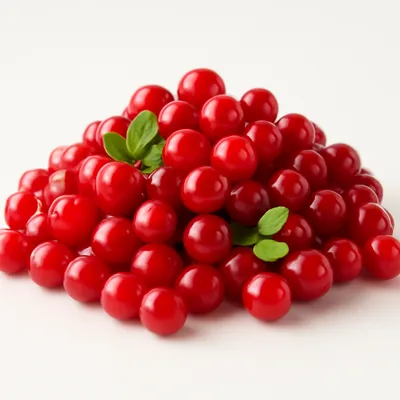



Preiselbeeren are lingonberries (Vaccinium vitis-idaea), a small tart wild berry of cool northern and upland forests across Central and Northern Europe, and the preserve made from them is a traditional German accompaniment rather than a regional dish. Long gathered wild in mountain and heath country, the berries are too sharp to eat raw in quantity but cook into a fragrant sweet-tart compote that keeps well, which made them a natural foil for fatty meat in a cuisine fond of pairing roasts and fried cutlets with fruit. The lingonberry-and-Schnitzel pairing is standard across German-speaking lands; the berry should not be confused with the larger American cranberry, though jarred cranberry sauce is sometimes substituted.
Small, glossy, deep-red berries in a loose ruby syrup, tasting sharply tart and fruity with a faint bitterness and a clean astringency that lingers. It is not jammy-sweet like a dessert preserve but tuned to sit against savoury food, the acidity bright enough to slice through a fatty cutlet or rich game. A little goes a long way: a spoonful beside breaded Schnitzel or melting baked cheese makes the whole plate read fresher. Cool, vivid and bracing.
Lingonberries preserve themselves chemically. They are naturally high in benzoic acid, a built-in preservative, which is why traditional "raw" preparations could keep with only sugar and little or no cooking, and why a cooked compote stores so well. They contain enough pectin and acid to set into a loose gel with sugar alone, so only a short cook is needed — long boiling dulls both the colour and the fresh aromatic compounds. The sugar tempers but should never bury the sharpness; the point of the preserve is to keep the berry tart enough to cut fat, so it is sweetened far less than a dessert jam.
Variations
Beyond the plain sweetened compote, lingonberries are folded into red cabbage, spooned over pancakes and Kaiserschmarrn, baked inside or alongside Camembert, and paired with Königsberger Klopse in some versions. A near-raw "cold-stirred" preparation keeps the berries whole and bright. In dishes a jarred cranberry sauce is sometimes substituted, though true Preiselbeeren are smaller, sharper and less sweet. The same berry is central to Scandinavian cooking as well.
On the Palate
Where Preiselbeeren sits in the German flavor cloud
Ingredients
Serves 8How it's made
6 steps · 15 min active + 10 min waiting
- 14 min
Rinse fresh or thawed lingonberries and pick out any stems.
- 21 min
Put them in a pot with sugar and a splash of water.
- 36 min
Bring gently to a simmer, stirring, until the berries burst and release their juice.
- 44 min
Cook just a few minutes more until lightly thickened, keeping the berries mostly whole.
Watch outCook just a few minutes until lightly thickened, keeping the berries mostly whole — long boiling dulls the color and the fresh aroma.
- 52 min
Add a strip of lemon or a little orange if liked, and adjust the sweetness — keep it tart.
Watch outSweeten sparingly and keep it tart — the point is a sharpness that cuts fat, so stop well short of a dessert jam.
- 63 min
Cool, then store chilled in jars and serve a spoonful beside Schnitzel, game or baked cheese.
Archive tool suggestions — not reviewed
These legacy suggestions have not been evidence-reviewed and are not presented as required tools.



