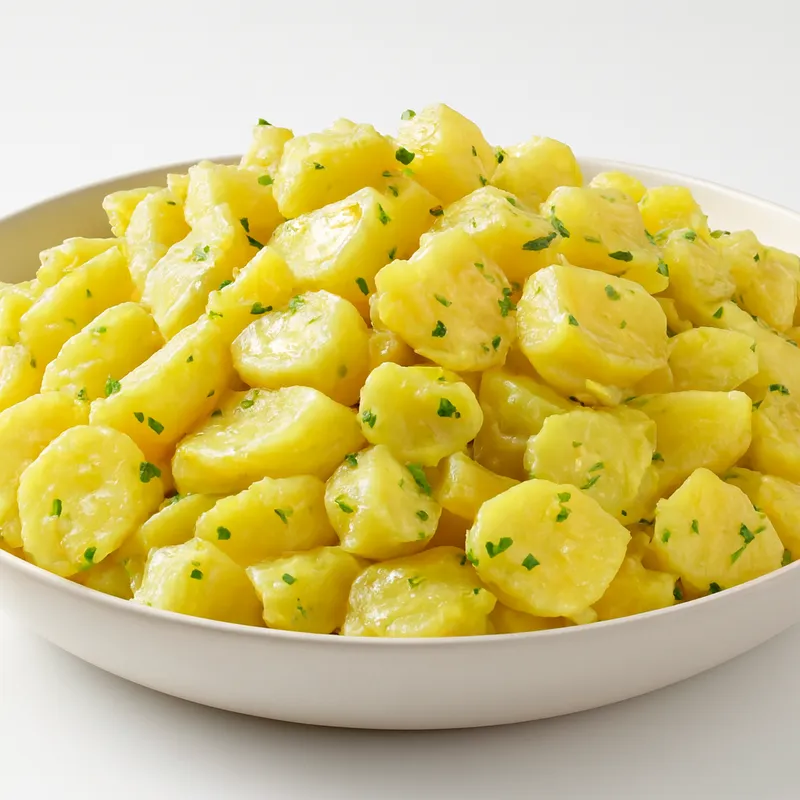
Black Forest ham: a dry-cured, cold-smoked raw ham from the Black Forest in the German southwest, dark red with a clean white fat rim and an almost black, spice-rubbed crust. Pork leg is salted and seasoned with garlic, juniper, coriander and pepper, cured for weeks, then cold-smoked low and slow over Black Forest fir and spruce before a long air-ageing. It is sliced thin and eaten raw — on dark bread, with melon, or as a starter — and is one of Germany's best-known charcuterie exports.




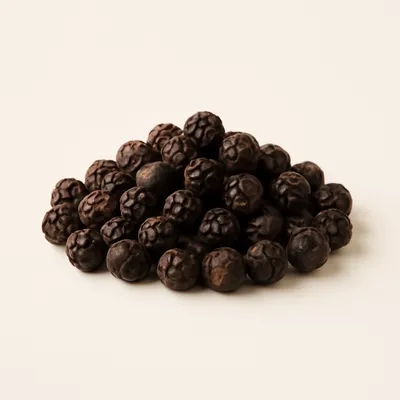
The smoked hams of the Black Forest grew out of farmhouse necessity in a cold, forested, pig-keeping region where salting and smoking over the abundant local conifer wood preserved pork through the winter. The product is tightly defined: since 1997 'Schwarzwälder Schinken' has held a European Protected Geographical Indication (PGI), so a ham may carry the name only if its key stages — curing, smoking and ageing — are carried out within the Black Forest region of Baden-Württemberg, following the traditional method. By the producers' own trade figures it is the best-selling dry-cured (raw) ham in Europe, and it remains the region's defining culinary export.
Sliced wafer-thin, it is silky and yielding, deep red with ribbons of clean white fat. The flavour is layered: salt and cured-pork sweetness underneath, then the resinous, faintly sweet smoke of fir and spruce, then the warm pepper-and-juniper of the spice crust. Drier and firmer than a soft Italian prosciutto, more assertively smoky, with a long savoury finish. Eaten cold and raw, never cooked, often with dark farmhouse bread and butter.
The colour and keeping quality come from the sequence: dry-salting with spices draws out moisture and seasons the meat over two to three weeks; the salt is then removed and the ham rested so the cure equalises through the leg. It is cold-smoked — held below about 25°C so the fat never renders and the meat stays raw — over smouldering Black Forest fir and spruce, whose resinous smoke gives the characteristic aroma and darkens the surface. A final ageing in cool, ventilated rooms over several weeks concentrates the flavour, firms the texture and turns the exterior near-black. Low temperature throughout is the point: this is preserved raw ham, not cooked or hot-smoked.
Variations
Producers differ in their exact spice rub, the conifer mix and the length of ageing, which is why hams from different Black Forest smokehouses taste distinct. It is sold both on the bone for slicing to order and pre-sliced; the prized cuts are thin slices from the lean centre. Within the PGI, only the geographic stages are fixed, leaving room for house styles, and the ham is widely imitated abroad under names like 'Black Forest style,' which cannot legally be sold under the protected name in the EU.
On the Palate
Where Schwarzwälder Schinken sits in the German flavor cloud
Ingredients
Serves 8How it's made
6 steps · 40 min
- 140 min
Rub a trimmed pork leg thoroughly with curing salt, garlic, crushed juniper, coriander and pepper.
- 220160 min
Cure in a cool place for two to three weeks, turning and re-rubbing so the cure penetrates evenly.
- 320160 min
Wipe off the surface salt and rest the ham a further couple of weeks so the cure equalises.
- 47200 min
Cold-smoke over smouldering fir and spruce sawdust below 25°C, in repeated sessions over several days, until the surface darkens.
Watch outCold-smoke below about twenty-five degrees — kept that cool, the fat never renders and the ham stays raw while it takes on the fir-and-spruce aroma; let it warm up and you're cooking the meat, not curing it.
- 540320 min
Hang to age in a cool, ventilated room for several weeks until firm and deep-flavoured.
- 610 min
Slice wafer-thin against the grain and serve raw, with dark bread or melon.
Archive tool suggestions — not reviewed
These legacy suggestions have not been evidence-reviewed and are not presented as required tools.