
Œuf en gelée is an old-school French cold starter: a soft-poached egg, its yolk still runny, set in a clear tarragon-flecked aspic. It is made in a small oval mould or dariole, with a slice of cooked ham and a tarragon leaf arranged in the jelly, then turned out onto a plate. The aspic is a clarified meat or poultry stock — classically a consommé — set firm with gelatin and often lifted with a little Madeira or white wine. Served chilled, it trembles on the plate, and the cool, savoury jelly gives way to the warm-tasting, liquid yolk within. It belongs to the same family of bistro cold-egg starters as œufs mayonnaise, but set in aspic.


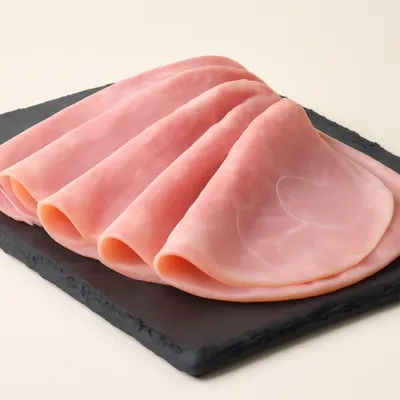
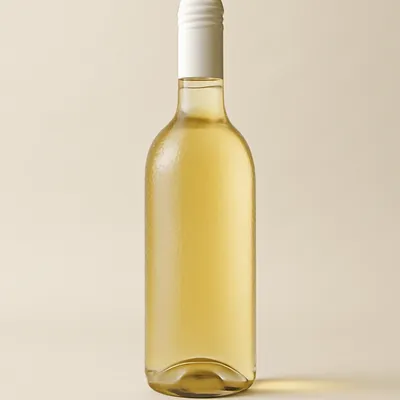
The egg in aspic is a survivor of the old charcuterie and traiteur trade. Set jellies of clarified stock — aspic — were a staple of classical French cold cookery, and the egg version coalesced into its familiar form in the early twentieth century, the soft egg with white ham settling as a cold hors-d'œuvre rather than a garnish. By the 1930s it was a standard offering of charcutiers and bistros, served in the small oval mould that became its signature shape, with the now-fixed garnish of poached egg, jelly, white ham and tarragon. It sits in the same repertoire of bourgeois and bistro cold egg dishes as œufs mayonnaise, distinguished by being suspended in trembling aspic.
The first impression is the contrast of temperatures and textures: the aspic is cold, clear and quivering, breaking cleanly under the fork with a savoury, lightly winey richness from the stock and Madeira. The ham reads salty and firm, the tarragon a thread of aniseed perfume through the jelly. Then the egg — the yolk poached just to runny, spilling soft and warm-tasting into the cool jelly around it, white tender, faintly yielding. Well made it is limpid and glossy, the egg centred and the yolk liquid. A jelly set too hard turns rubbery; a yolk overcooked to firm loses the whole point of the dish.
The dish turns on gelatin's sol-gel transition and on poaching control. Gelatin — collagen thermally denatured into a soluble protein — dissolves in the warm stock and, on chilling, its chains partly re-coil into a junction-zone network that traps the liquid as a thermoreversible gel; because that gel melts near 35°C, just below body temperature, the aspic stays firm and trembling when cold yet softens the instant it reaches the mouth. The stock is clarified first — classically with a raft of egg white and lean meat that, as it coagulates, snares the fine cloudy particles — so the set jelly is glass-clear. The egg is poached only briefly, the white coagulating around 62 to 65°C while the fattier yolk stays liquid below about 70°C, then cooled, so that under the set aspic the yolk remains runny. The mould is layered and chilled in stages so the garnish stays suspended where it is placed.
Variations
The aspic is the chief variable: many cooks reinforce a homemade consommé or fortify a stock with leaf gelatin, and flavour it with Madeira, Port or dry white wine. The garnish inside the jelly ranges from the classic ham and tarragon to chervil, a slice of tomato or a ribbon of leek green for colour. The egg may be soft-poached, as here, or coddled; some versions use a whole small egg, others a halved one to show the yolk. Beyond the egg, the same aspic technique sets jambon persillé and countless cold terrines. As a bistro cold starter it shares the table with œufs mayonnaise and the marinated-herring and crudité hors-d'œuvres.
On the Palate
Where Œuf en Gelée sits in the French flavor cloud
Ingredients
Serves 4
How it's made
8 steps · 45 min
- 110 min
Soak the leaf gelatin in cold water until soft, then squeeze out the excess.
- 25 min
Warm the clarified stock with the Madeira and white wine, dissolve the gelatin in it, and season; let cool to lukewarm.
- 35 min
Poach the eggs gently for about 3 minutes so the whites set but the yolks stay runny, then cool in cold water and trim.
Watch outPoach the eggs about 3 minutes so the whites just set but the yolks stay runny — an overcooked yolk kills the soft center under the jelly.
- 430 min
Pour a thin layer of aspic into each oval mould and chill until just set.
Watch outChill the first thin aspic layer until just set before adding the garnish — pour it all at once and the tarragon and ham float loose.
- 55 min
Lay a tarragon leaf and a slice of ham on the set layer, with a little more aspic to fix them.
- 65 min
Set a poached egg in each mould, yolk down, and fill with the remaining lukewarm aspic.
Watch outFill with lukewarm aspic, not hot — hot jelly cooks the runny yolk and can melt the set layer beneath.
- 7240 min
Chill for several hours until fully set and firm.
- 83 min
Dip each mould briefly in warm water, turn out onto a plate and serve cold.
Archive tool suggestions — not reviewed
These legacy suggestions have not been evidence-reviewed and are not presented as required tools.



