
Higashi (干菓子, "dry confection") is the family of low-moisture wagashi, the dry counterpart to the soft, fresh namagashi served at the tea ceremony. Its defining type is rakugan (落雁): finely sieved sugar bound with roasted glutinous-rice flour and just enough syrup to hold, pressed into hand-carved wooden molds and turned out as pale, crisp little pieces shaped like plum blossoms, maple leaves, chrysanthemums, and other seasonal motifs. The finest are made with wasanbon, the artisanal fine-grained sugar of Shikoku, and dissolve almost the instant they touch the tongue. Barely sweet, faintly fragrant, and made to be looked at before it is eaten, higashi is the standard accompaniment to thin tea (usucha), taken just before the matcha so its dry sweetness sets off the tea.


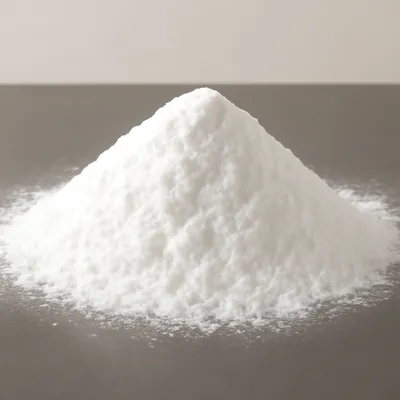



Pressed-sugar sweets entered Japan from Ming China in the Muromachi period through the Japan-Ming trade and spread alongside the rise of chanoyu, the way of tea, as a sweet to set beside the bowl. The name rakugan has two competing explanations: one traces it to the Chinese confection nanrakukan (軟落甘), from which the character for "soft" was dropped, while the other likens the dusted, pale shapes to a flight of geese descending onto the lake in "Katata no Rakugan," one of the Eight Views of Omi. Refinement came in the Edo period, when carved molds, refined sugars, and seasonal forms turned a simple pressed sweet into an art of the tea room. Its prestige is settled in the so-called Three Great Confections of Japan — Koshi-no-yuki, Choseiden, and Yamakawa — all of them rakugan.
A piece of rakugan looks like fired porcelain and breaks with a faint dry snap, then collapses on the tongue into a cool wash of sweetness that is gone before you can chew it. There is no chew at all; the whole point is the dissolve, clean and quick, leaving only the toasted, faintly grain-like scent of the rice flour behind. Wasanbon higashi takes this further still, melting so finely it feels almost weightless, with a rounded sweetness softer and less sharp than ordinary white sugar. Taken before the matcha, its bone-dry sweetness is the deliberate foil to the bitter, frothy tea that follows.
Higashi keeps because it is, in effect, a slow sugar candy: with moisture only in the low single-to-low-double-digit percentages — far below the roughly thirty percent and up of fresh namagashi — there is too little free water for spoilage, so well-kept pieces last for months. Rakugan is built not by cooking but by compression. Sieved sugar and roasted glutinous-rice flour are dampened with a trace of syrup (shitori) so the grains will cohere, packed hard into a carved mold, and knocked out to hold a crisp shape that then dries fully. In the mouth, the lightly bound crystals simply redissolve, which is why it melts rather than chews. Wasanbon makes the cleanest melt of all: its repeated kneading and pressing yield exceptionally fine crystals, and small crystals dissolve faster and feel smoother than the coarse grains of ordinary sugar.
Variations
The grandest split is between rakugan, bound with rice or bean flour, and pure wasanbon higashi, pressed from the fine Shikoku sugar with almost nothing else. Color and form follow the seasons — plum and cherry in spring, fresh green leaves in summer, maple and chrysanthemum in autumn, white shapes in winter — and a maker keeps shelves of carved molds for the year's motifs. Beyond pressed sweets, the wider higashi family includes the spiky sugar beads of konpeito, baked senbei and arare, and the half-dry, jelly-edged kohakuto. Regional rakugan run from the muki-rakugan offered at temples to the celebrated trio of Koshi-no-yuki in Echigo, Choseiden in Kanazawa, and Yamakawa in Matsue.
On the Palate
Where Higashi sits in the Japanese flavor cloud
Ingredients
Serves 6How it's made
6 steps · 40 min
- 16 min
Push wasanbon (or fine sugar) and roasted glutinous-rice flour through a fine sieve together so the mix is even and free of lumps.
- 28 min
Sprinkle in a little syrup or sugar-water (shitori), a few drops at a time, working it through until the powder just holds its shape when pressed in a fist.
Watch outAdd the syrup a few drops at a time until the powder just holds shape in a fist — too wet and it won't take a crisp print or dry properly.
- 37 min
Dust a carved wooden mold lightly, then pack the damp powder in firmly, pressing hard into every detail so the print comes out sharp.
Watch outPack the damp powder hard into every detail of the mold — press firm and the print comes out sharp, loose and it crumbles.
- 46 min
Level the back flush with a card, then tap the mold to release each piece onto a tray without breaking it.
- 58 min
Tint small batches with a pinch of matcha or food coloring, or leave plain, arranging the pieces by seasonal motif.
- 6720 min
Leave the pieces to air-dry until fully crisp and set, then store airtight; serve a few before thin tea.
Archive tool suggestions — not reviewed
These legacy suggestions have not been evidence-reviewed and are not presented as required tools.


