Gyeongdan are small glutinous rice balls, about the size of a chestnut, boiled in water and rolled while still wet in a powdery coating. The dough — glutinous rice flour scalded with hot water and kneaded smooth — is shaped by hand, sometimes around a little red-bean or honeyed-sesame filling, then dropped into boiling water and lifted out the moment the balls float. While their surface is still damp they are tumbled in their coating: yellow soybean powder, toasted black or white sesame, crushed sweet red bean, ground mung bean, or, in modern shops, shredded coconut. The result is soft, intensely chewy, and only mildly sweet. Unlike steamed siru-tteok or pounded injeolmi, gyeongdan is defined by boiling, which puts it among Korea's classic 'boiled rice cakes.'



Gyeongdan belongs to the family of Korean rice cakes called sammneun-tteok, the 'boiled' cakes, set apart from the steamed and pounded kinds by being cooked in water. Its name is written with the Sino-Korean characters 瓊團, 'jade ball,' a nod to the small round shape. The cakes are old enough to appear in nineteenth-century Korean food and seasonal texts: the Imwon Sipyukji records versions coated in soybean powder, in honey and ginger juice dusted with cinnamon, and in red-bean powder, while the Dongguk Sesigi lists them among early-winter seasonal foods. Conceptually they sit close to the Chinese tangyuan and yuanzi that a Chinese cook knows well, but where those are served in syrup, gyeongdan is rolled dry in a coating — that coated, boiled form is the distinctly Korean one. The cakes turn up at holidays, at a child's first-birthday feast, and at ancestral rites.
Soft and yielding at first, then deeply chewy, with the clean stickiness of glutinous rice and very little sweetness of its own. The pleasure is in the contrast between the smooth, springy ball and its dry, fragrant coat — nutty and faintly bitter from toasted sesame, mellow and beany from soybean powder, or earthy-sweet from crushed red bean. A filled one gives way to a soft pocket of sweet paste at the center. Warm from the pot the cakes are at their tenderest; left to cool they tighten and turn firmer.
Boiling, not steaming, is what defines gyeongdan, and it does real work. Glutinous rice flour is almost pure amylopectin, the branched starch that swells and gelatinizes fast in water; cooking the balls fully submerged gelatinizes them quickly and evenly, all the way through. The cakes sink at first, then rise and float once cooked — the gelatinized, expanded interior is less dense than the surrounding water, so floating is the reliable signal that they are done. Lifted straight into cold water, the surface sets and the cooking stops, which keeps the balls springy instead of dissolving into mush. Just as important, the residual moisture left clinging to that set surface is the glue that makes the dry powder coat adhere — a dry ball would shed it. Because glutinous starch retrogrades and hardens as it cools, gyeongdan is at its best the day it is made.
Variations
The coating is where gyeongdan varies most: soybean powder, toasted white or black sesame, crushed red bean, mung-bean powder, ground nuts, dried mugwort powder, and the modern coconut version found in dessert cafes. The dough itself is often colored and flavored — plain white, mugwort green, pumpkin gold, or omija pink — and may be plain or wrapped around a filling of red-bean paste, honey, or sesame and sugar. The most storied variant is susu-gyeongdan, made from glutinous sorghum flour and coated in red bean: it is traditionally prepared for a child's hundredth-day and first-birthday celebrations, and given on birthdays up to the age of ten, the red coating believed to drive off misfortune.
On the Palate
Where Gyeongdan sits in the Korean flavor cloud
Ingredients
Serves 6How it's made
8 steps · 35 min
- 112 min
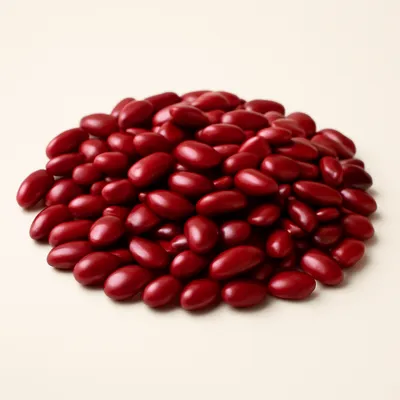
If making filled gyeongdan, cook and lightly mash red beans with a little sugar and salt, then roll the paste into small marbles for the centers.
- 26 min
Prepare the coatings: toast and lightly grind sesame, set out soybean powder, crushed red bean, or shredded coconut in separate dishes.
- 38 min
Scald the glutinous rice flour with hot water a little at a time, mixing and then kneading into a smooth, pliable dough that does not crack.
Watch outScald the glutinous flour with hot water a little at a time and knead smooth — the dough must be pliable and not crack, or the balls split when boiled.
- 410 min
Pinch off small pieces and roll into chestnut-sized balls; for filled cakes, flatten each piece, tuck in a bead of bean paste, and seal into a smooth round.
- 53 min
Bring a wide pot of water to a rolling boil and drop in the balls a batch at a time so they do not crowd.
- 64 min
Boil until the balls rise and float, then let them cook a moment longer so the centers set through.
Watch outThe balls sink, then rise and float when done — floating is the reliable cue; let them cook a moment more so the centers set through.
- 73 min
Scoop the floating balls straight into a bowl of cold water and let them cool briefly to firm the surface.
Watch outScoop the floated balls straight into cold water — this stops the cooking and firms the surface so they stay springy, not gummy.
- 86 min
Lift out and drain, then roll each still-damp ball in its coating until evenly covered, and serve fresh.
Archive tool suggestions — not reviewed
These legacy suggestions have not been evidence-reviewed and are not presented as required tools.