
A firm, faintly translucent steamed cake of rice flour, sugar, and water, set in a mold and cut into slabs or bars. Uiro is gently sweet with a chew that sits between two textures most people already know — denser and less springy than pounded mochi, softer and more yielding than the dense agar-set bean paste of yokan. The plain version is milky white, but it is just as often tinted and flavored with matcha, brown sugar (kurozato), cherry blossom, or yuzu. Though several old castle towns claim it, Nagoya is its best-known face today, where boxed uiro is one of the city's defining railway-station souvenirs.


Uiro takes its name from a medicine, not a sweet. In the late 14th century a family descended from Chen Zongjing — an official who had held the post of yuanwailang (員外郎) at the Yuan Chinese court — fled the dynasty's collapse and settled in Japan, first around Hakata and Kyoto and later in Odawara, where they compounded a breath-freshening herbal pill known as uiro or transtōkō (透頂香). How the confection inherited that name is told two ways in the old sources: one account says a steamed sweet resembling the dark medicine in color and shape simply borrowed its name, while another holds it was the palate-cleanser served alongside the pill when the family presented their medicine at court. References to uiro as a confection appear by the early 18th century, and Nagoya makers built the modern trade — Mochibun, founded in 1659, is counted among the oldest, while Aoyagi secured the sole licence to sell uiro aboard the Tōkaidō Shinkansen from its 1964 opening, carrying the Nagoya version to nationwide fame as a souvenir. The medicine itself lives on in the famous kabuki tongue-twister Uiro-uri, a rapid-fire sales patter for the pill.
The first impression is a cool, smooth, very slightly slippery surface that gives way to a dense, springy chew — closer to a firm jelly than to a fluffy cake, with none of mochi's long stretch. The sweetness is restrained and clean, letting the flavoring carry the cake: grassy and faintly bitter in the matcha version, dark and molasses-deep in the kurozato one. It is usually served chilled in neat fingers, where the firm, sliceable body and quiet sweetness make it an unfussy companion to green tea.
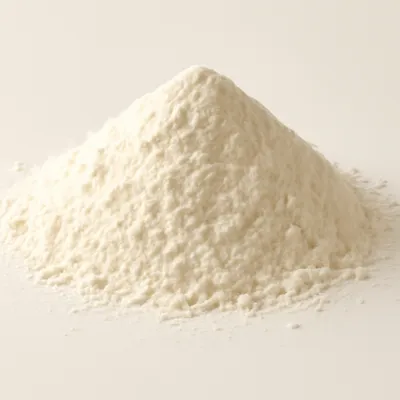
Uiro is steamed, not pounded, and that single difference defines its texture. A loose batter of non-glutinous rice flour (joshinko), sugar, and water is poured into a mold; under steam the rice starch absorbs water and gelatinizes, swelling and then setting on cooling into a firm, cohesive, slightly translucent crumb. Because uruchi rice flour is simply steamed rather than hot-pounded the way mochi rice is, no stretchy glutinous network is worked up, so uiro reads as dense and short rather than elastic. The sugar holds water in the set gel, keeping the cake moist and supple and slowing it from drying or hardening as quickly as a leaner steamed cake would.
Variations
Flour and starch change with the region. Nagoya, the most familiar style, is built on rice flour for a clean, bouncy chew; Yamaguchi works bracken starch (warabi) into the batter, giving a softer, more tender and jelly-like body; Ise in Mie leans on more wheat flour for an extra-firm, springy bite. Odawara, where the medicine itself originated, makes uiro in several shades — white, brown, adzuki, and black-sugar — and Kyoto, Hakata, and Tokushima keep their own traditions. Beyond plain, matcha, kurozato (brown sugar), cherry blossom, yuzu, and adzuki are the everyday flavors.
On the Palate
Where Uiro sits in the Japanese flavor cloud
Ingredients
Serves 6How it's made
6 steps · 20 min
- 18 min
Whisk joshinko (non-glutinous rice flour) with sugar, then gradually beat in water (and matcha or brown sugar if flavoring) to a smooth, lump-free batter.
Watch outBeat to a completely smooth, lump-free batter, then strain — any lumps steam into hard specks in the finished cake.
- 24 min
Strain the batter through a sieve and lightly oil a steaming mold or loaf tin.
- 33 min
Pour the batter into the mold to an even depth and cover loosely to keep condensation off the surface.
- 445 min
Steam over high heat until the cake is fully set, firm, and translucent through, roughly 40 to 50 minutes.
Watch outSteam until the cake is fully translucent through — any opaque patch means the rice starch hasn't gelatinized and set.
- 530 min
Cool the cake to room temperature, then chill so it firms enough to slice cleanly.
- 65 min
Unmold and cut into neat fingers or squares with a wet knife; serve chilled with green tea.
Archive tool suggestions — not reviewed
These legacy suggestions have not been evidence-reviewed and are not presented as required tools.


