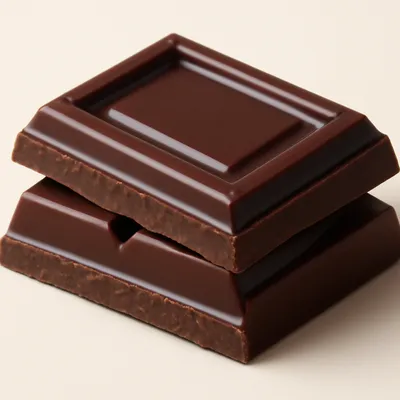
Brownies are the square-cut chocolate bar that sits halfway between a cake and a candy, baked in a pan and sliced into portable pieces. The batter is mostly chocolate, butter, sugar, eggs, and a small amount of flour, so the crumb runs dense, moist, and deeply chocolatey rather than airy. A glossy, papery crust forms on top while the inside stays soft. Walnuts or pecans are the traditional add-in, and the bars are among the most-baked sweets in the American home kitchen, equally at home in a lunchbox, a bake sale, or warm under a scoop of ice cream.



The brownie is a turn-of-the-twentieth-century American invention, though its exact birth is contested. The often-repeated story credits the kitchen of Chicago's Palmer House Hotel, which says a chocolate-and-walnut bar with apricot glaze was created there for box lunches at the 1893 World's Columbian Exposition; the hotel still serves a version, but there is no contemporary documentation for the 1893 date, so the claim is best treated as legend. What is documented is that Fannie Farmer printed a recipe called 'Brownies' in 1896, though hers contained no chocolate, and that the first true chocolate-brownie recipes appear in community cookbooks around 1904, in Laconia, New Hampshire, and in Chicago. The bar spread quickly through such recipe collections to become a national staple.
The top has a thin, shiny, slightly crackly crust that shatters faintly under the teeth, giving way to a dense, fudgy interior that turns almost molten at the center of a slightly underbaked pan. The flavor is straight, dark chocolate, rich and a little bittersweet, with butter rounding it out. Walnuts add a soft crunch and a toasty edge against the smooth crumb. A good brownie is intensely chocolatey and clings to the roof of the mouth; the corner pieces, with two chewy crust edges, are the prizes.
Texture is set by the ratio of fat and sugar to flour: with little flour, almost no gluten develops, so the bars stay tender and dense rather than springing up like cake. Melted chocolate and butter coat the few flour particles, and the high sugar holds moisture, keeping the crumb fudgy. The signature crackly top forms when sugar dissolves into the eggs and rises to the surface, where it sets into a thin meringue-like sheet as the bars bake; whisking the sugar and eggs well encourages it. Baking at moderate heat, around 175°C, and pulling the pan while the center is just set leaves the middle soft, since the bars continue to firm as they cool. More flour and a little leavening swing the same formula toward a lighter, cakier brownie.
Variations
The great divide is fudgy versus cakey: more butter and chocolate with less flour gives the dense fudge style; more flour plus baking powder gives a lighter, taller cake style. Cocoa-powder brownies are sharper and leaner than those built on melted chocolate. Common additions are walnuts or pecans, chocolate chips, a swirl of cream cheese or peanut butter, or a layer of caramel or mint. Boxed mixes made the brownie a weeknight staple, and a frosted version is essentially a thin chocolate sheet cake.
On the Palate
Where Brownies sits in the American flavor cloud
Ingredients
Serves 16

How it's made
8 steps · 15 min active + 35 min waiting
- 15 min
Line a square baking pan with parchment and set the oven to a moderate heat.
- 26 min
Melt the chocolate with the butter, stirring until smooth, then let it cool slightly.
- 34 min
Whisk the sugar into the eggs until thick and glossy, then stir in the vanilla.
Watch outWhisk the sugar and eggs until thick and glossy — this dissolved sugar is what rises and bakes into the signature crackly top.
- 42 min
Mix the warm chocolate into the egg mixture until fully combined.
- 53 min
Fold in the flour and salt just until no streaks remain, then stir through the walnuts.
- 62 min
Scrape the batter into the pan and smooth the top.
- 730 min
Bake until the top is set and shiny but a tester from the center comes out with moist crumbs.
Watch outPull the pan while a tester from the center still shows moist crumbs — bake till clean and the fudgy middle sets into dry cake.
- 825 min
Cool completely in the pan before lifting out and cutting into squares.
Archive tool suggestions — not reviewed
These legacy suggestions have not been evidence-reviewed and are not presented as required tools.