Cassava cake is a baked Filipino kakanin of grated cassava bound with coconut milk, condensed milk, sugar, and eggs, set firm in the oven and crowned with a rich custard-cheese topping browned until golden. Moist and dense rather than airy, it is sweet, faintly salty from the cheese, and chewy from the root starch. It is a favourite merienda and a fixture at fiestas and Christmas tables.
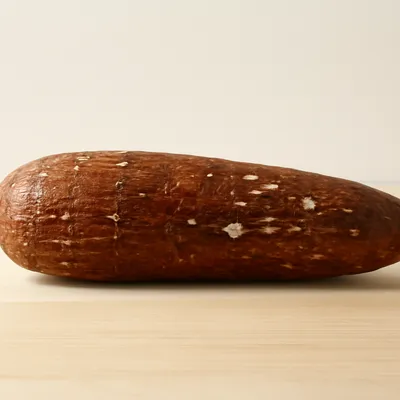




Cassava cake, also called cassava bibingka, is a modern Filipino baked sweet that grew out of the older tradition of root-and-coconut kakanin once cassava (kamoteng kahoy) became a common, easily grown staple in the islands. It has no single inventor or town of origin; it is a home and bakery dessert that spread across the country. The custard topping and the use of canned condensed and evaporated milk reflect the wider Filipino taste for rich, milky finishes on coconut-based sweets.
The body is dense and a little chewy, almost fudgy from the cassava starch, with a clean coconut sweetness running through it. On top sits a softer, custardy layer, salty-rich from the cheese and slightly caramelized where it met the heat. Many versions carry chewy strands of macapuno coconut, which add little bursts of soft, jelly-like sweetness.
Grated cassava is rich in starch but binds poorly on its own, so the eggs and milk set around it as the cake bakes, trapping the swelling starch granules into a moist, sliceable whole. Baking, unlike the steaming used for many kakanin, drives a little browning and firms a distinct top. The topping — a custard of egg, condensed and evaporated milk, often with cheese — is added partway or near the end and finished under high heat so its sugars and proteins brown and the surface turns glossy and golden.
Variations
The most loved versions fold in macapuno (soft mutant coconut) and finish with a cheese-laden custard top; simpler ones just sprinkle grated cheese before baking. Ube is a popular twist, tinting the cake violet, and some cooks add a little grated regular coconut for extra texture. Richness varies with how much condensed milk and cheese go in.
On the Palate
Where Cassava Cake sits in the Filipino flavor cloud
Ingredients
Serves 12
How it's made
8 steps · 20 min
- 112 min
Peel and finely grate fresh cassava and lightly squeeze off excess liquid.
- 26 min
Mix the grated cassava with coconut milk, condensed milk, sugar, beaten eggs, and macapuno if using, until well combined.
- 33 min
Pour the batter into a greased baking dish and smooth the top.
- 445 min
Bake in a moderate oven until set and just firm to the touch, around 45 minutes.
Watch outBake until the cake is set and just firm to the touch before adding the topping; a wet, wobbly base won't support the custard layer.
- 55 min
Meanwhile whisk the topping: eggs, condensed milk, and evaporated milk, with grated cheese.
- 63 min
Spread the topping over the partly baked cake.
- 720 min
Return to the oven and bake until the top is set and golden, then broil briefly to caramelize.
Watch outAfter the topping sets, broil it briefly to caramelize; you want the surface glossy and golden, watching so it browns rather than burns.
- 860 min
Cool fully so the cake firms up before slicing into squares.
Archive tool suggestions — not reviewed
These legacy suggestions have not been evidence-reviewed and are not presented as required tools.


