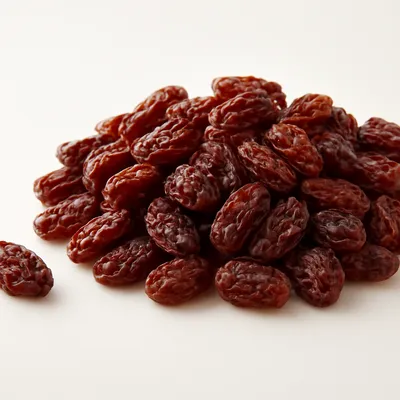
A Manchu pastry of egg-rich dough cut into fine noodles, deep-fried until puffed and crisp, then bound with a hot sugar-and-honey syrup, pressed into a frame and cut into soft, sweet squares. Pale gold and faintly fragrant, it eats light and yielding, dissolving between the teeth. Traditional versions are scattered with raisins, candied fruit threads, melon seeds and sesame; plainer modern ones leave most of that off. It was one of the great Manchu "bobo" cakes that entered Beijing with the Qing and spread across China.


Sachima is a transliteration of the Manchu word sacima; the Qing court dictionaries render it in Chinese as tangchan, "sugar-wound." Scholars read the word as built from the verb root saci- (to cut or chop) plus a noun suffix, giving a sense close to "cut cake" — the folk gloss "cut into squares and stacked up" is popular but linguistically shakier. It was a Manchu pastry sold in the bobo shops and used in temple and ancestral offerings. Fucha Dunchong's late-Qing Yanjing Suishi Ji lists it (written sachima): "a Manchu cake, made of fine flour with rock sugar and butter, shaped like glutinous rice, baked... cut into squares, sweet and rich." The Guangxu-era Shuntian Fu Zhi records an early form (saselima) steamed with lard, and an 1848 trade-guild stele confirms its place at Banner weddings and funerals.
A soft golden block, riddled with the gaps left by the fried noodle strands, glossy where the syrup caught. It gives at once — no chew, no resistance — and turns sweet and tender, dissolving with a faint warmth of honey and butter. The old style is denser and more aromatic, studded with chewy raisins and the slight crunch of melon seeds and sesame; the syrup carries it without ever turning hard.
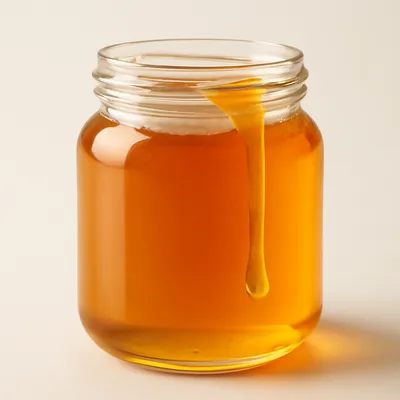
The dough is bound almost entirely with egg — flour and beaten egg with barely any water — so the strands fry up airy and crisp rather than dense. It is rolled thin, cut into fine noodles, dusted with starch, and deep-fried at around 150°C until pale gold and hollow. Meanwhile sugar, maltose and a little water (often with honey) are boiled to roughly 115°C, to the stage where they pull a thread and hold a dense foam — too cool and it won't bind, too hot and it sets brittle. The fried strands are folded into the hot syrup, pressed firmly into an oiled frame, topped, and cut into squares once cool. Older recipes leaned on butter, osmanthus and honey for that fuller fragrance.
Variations
Old-style sachima is denser and more fragrant — built on rock sugar, butter and honey, heavy with osmanthus and loaded with fruit and seeds; mass-market versions fry an egg dough, bind it with plain sugar syrup, add leavening for extra softness, and strip the toppings back to almost nothing. The earliest topping was a wild goji-type berry (gou-naizi, often miscopied as gou-naizi "dog-milk"); after the Qing entered Beijing it gave way to raisins, candied threads, melon seeds, hawthorn jelly, plum and dates. In Guangdong and Hong Kong the same cake is called "ma-zai," with small local differences in syrup and proportion.
On the Palate
Where Sachima sits in the Chinese flavor cloud
Ingredients
Serves 8

How it's made
8 steps · 50 min active + 30 min waiting
- 135 min
Beat eggs and work into the flour with almost no water to a firm, smooth dough; rest 30 minutes.
- 210 min
Roll the dough out thin and cut into fine noodle strands; dust with cornstarch and separate.
- 312 min
Deep-fry the strands in batches at about 150°C until pale gold, puffed and crisp; drain.
Watch outPull the strands at pale gold and puffed — brown them and the finished sachima turns hard instead of airy.
- 48 min
Boil sugar, maltose, water and honey to about 115°C, until it pulls a thread and foams densely.
Watch outTake the syrup to where it pulls a thread and foams thick — too cool it won't bind, too hot it sets brittle and shatters.
- 53 min
Off the heat, fold the fried strands quickly into the hot syrup until evenly coated.
Watch outFold the strands in fast while the syrup is hot — dawdle and it stiffens before every strand is coated.
- 64 min
Press the mixture firmly and level into an oiled frame lined with sesame.
- 73 min
Scatter raisins, candied threads and melon seeds over the top and press in.
- 85 min
Cool until set, turn out, and cut into squares.
Archive tool suggestions — not reviewed
These legacy suggestions have not been evidence-reviewed and are not presented as required tools.

