A famous Tangshan pastry and gift sweet, shaped like a layered floral rosette and described as thin as cicada wings. Wheat dough is rolled paper-thin, folded into many layers, sliced and twisted into an open lattice flower, deep-fried until pale gold and crisp, then drizzled with a hot syrup of sugar, honey, maltose and osmanthus. The result is milk-white to light yellow, soft yet shatter-crisp, fragrant and sweet. Despite the name 麻糖, it is a flat, layered fried honey-pastry, not the brittle sesame candy found in other regions.



A traditional pastry of Fengrun in Tangshan's Jidong region, said to date to the Wanli era of the Ming and counted as having more than four hundred years of history. It is most associated with the old firm Guangsheng-hao (广盛号); the firm's founder and exact founding date can no longer be verified, the earliest entry traced in its aged ledgers being the fourth year of Wanli (1576). The pastry evolved from the local fried-lattice snack paizha (排叉), which came in two kinds — a hard, crisp oil-fried version and a soft, syrup-glazed version. Guangsheng-hao fused the two and borrowed the syrup-pouring method of the Beijing temple offering migong (蜜供); after the technique passed to the city of Tangshan around 1930 the makers switched from dipping the pastry in syrup to pouring syrup over it, fixing the form sold today. In 2009 Guangsheng-hao matang was listed as a Hebei provincial intangible cultural heritage.
A pale, lacy floral disc you can almost see through, glistening where the syrup has set. The first bite shatters into thin crisp leaves, then turns soft and yielding as the layers give way; the sweetness is honeyed and clean, lifted by a whisper of osmanthus. Eaten fresh it is light and brittle; the open lattice means it is more air than dough, and a good piece leaves only a fragrant, sugary trace.
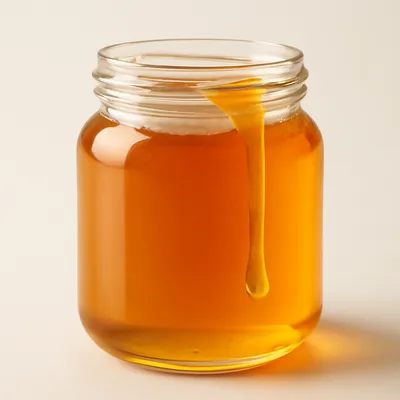
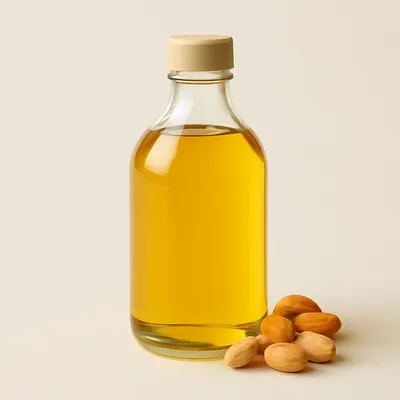
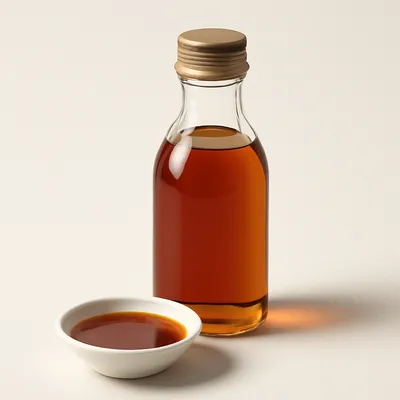
Everything rests on rolling the dough thin enough and on the heat of the syrup. The sugar is first dissolved into the flour and the dough is worked stiff, then repeatedly wetted and kneaded to build gluten and elasticity, and rested under cooked flour about an hour. It is rolled out again and again — dusted, folded into a flat tube and rolled tight — until a single piece becomes a paper-thin sheet, then sliced into ribbons of fifteen to seventeen layers and cut on the bias into diamonds, each nicked and twisted open so the lattice fries through and stays crisp. The pieces fry in peanut oil cut with sesame oil for about seven minutes, turned once, to a light gold. The glaze must go on hot: sugar is boiled to a syrup, then honey, maltose and osmanthus are stirred in and poured over the fried pastry in two passes — too cool a syrup will not cling and coat evenly.
Variations
The milk-white style is paler and softer, the light-yellow style fried a shade deeper and crisper. Osmanthus is the classic aromatic, though some makers lean on honey alone for a rounder sweetness. The form descends from two kinds of paizha, and the older Beijing migong offering shares its syrup-pouring lineage; sweet hawthorn-paste and other fillings belong to the related lattice-snack family rather than to the open-flower pastry itself. Among the many later brands, Guangsheng-hao is held to be the most orthodox.
On the Palate
Where Tangshan Honey-Sesame Pastry sits in the Chinese flavor cloud
Ingredients
Serves 8
How it's made
8 steps · 1 hour 30 min
- 112 min
Dissolve sugar in water, work it into the flour to a stiff dough, then wet and knead it repeatedly until smooth, springy and elastic.
Watch outWet and knead the stiff dough repeatedly until it's smooth and springs back — this builds the gluten that lets it roll paper-thin without tearing.
- 260 min
Bury the dough in cooked flour and rest it about one hour to relax the gluten.
- 315 min
Roll the dough out, dusting with flour each pass, folding into a flat tube and rolling tight, working it again and again until it is a single paper-thin sheet.
Watch outRoll and fold again and again until it's a single translucent sheet — too thick and the lattice won't fry through crisp to the center.
- 45 min
Slice the layered sheet into ribbons about one centimeter wide and fifteen to seventeen layers thick.
- 58 min
Cut the ribbons on the bias into diamonds; nick the center of each and twist one end open into a lattice flower to form the raw piece.
- 68 min
Heat peanut oil cut with sesame oil and fry the pieces about seven minutes, turning once, until light gold; lift out and drain.
Watch outFry to a light gold only, turning once — take it darker and the thin lattice tips over into scorched and bitter.
- 76 min
Boil sugar with a little water into a syrup, then stir in honey, maltose and osmanthus.
- 86 min
Pour the hot syrup over the fried pastry in two passes so every piece is evenly glazed, then let set.
Archive tool suggestions — not reviewed
These legacy suggestions have not been evidence-reviewed and are not presented as required tools.
