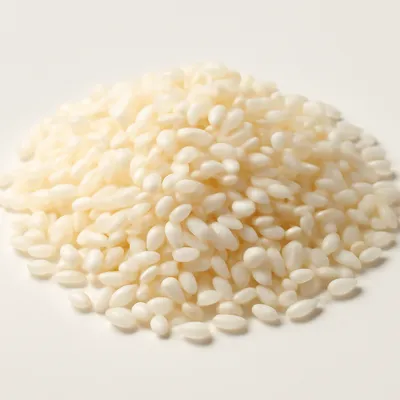
Suji Puffed-Rice Brittle is a traditional confection from Suji Town in Leshan, Sichuan, with a lineage of over a century. Glutinous rice is soaked, steamed, and air-dried for one to two days until bone-hard, then flash-fried in oil at 180–190°C until each grain blooms into a hollow, latticed puff. The puffed rice is tumbled with toasted peanuts and white sesame, then bound by a hot maltose-and-lard syrup pressed into pale-white bars. Each piece shatters cleanly — fragrant, sweet, crisp, and never cloying — and is Leshan's most recognizable keepsake confection.


Suji Town sits at a historical crossing on the Emei River — a transit hub for riverboat porters moving goods between Emei, Jiajiang, and the broader Sichuan basin. Locals had long made a rough rice candy called guhua from glutinous rice, cane sugar, and pork lard. Around the early twentieth century, artisan Zhang Jiwu opened a production workshop on Shazui Street in Suji, introducing maltose to stabilize the syrup and adding peanuts and sesame to deepen the flavor. The product was informally renamed sesame-oil puffed-rice candy in the 1930s, with the lard-enriched syrup as its signature distinction. In 1956, Suji's candy workshops merged into a collective factory establishing a unified Suji brand. The craft was listed as Sichuan Province intangible cultural heritage in 2009, and in 2015 received National Geographic Indication Protection status.
A block of Suji rice brittle is feather-light and bone-dry to the touch. The first bite shatters with a clean crack — puffed rice fragments disperse in the mouth, peanut and sesame fragrances bloom in sequence, and the lard-enriched syrup rounds the sweetness without any cloying stickiness or residue. A faint, clean note of glutinous rice persists in the finish. Best eaten slowly with hot tea.
Two techniques define the brittle's character: puffing and syrup. Glutinous rice must be air-dried after steaming for one to two days until nearly moisture-free; only then will the trace water locked inside each grain flash-vaporize in oil at 180–190°C, blasting the starch cells open into a porous, shatter-crisp puff. Underdried rice produces hard, dense nuggets — no amount of heat fixes it. The syrup is a blend of white sugar and maltose cooked to hard-crack stage (around 135°C), at which it sets rigid and non-sticky on cooling. Adding lard to the syrup suppresses sucrose recrystallization, keeping the set candy smooth rather than grainy, while contributing the rounded sweetness that distinguishes Suji brittle from simpler all-sugar confections. The narrow temperature window for both operations — and the speed required to press the mixture before the syrup locks — is where the craft lives.
Variations
Workshops in Suji adjust sesame and peanut ratios to develop house signatures — higher sesame proportion yields a nuttier, more aromatic bar with a densely speckled cross-section; more peanut adds bulk and coarser crunch. Simplified commercial versions substitute pure sugar for the maltose blend, producing a sweeter, harder result that locals consider inferior. Some modern producers add pumpkin or purple sweet potato powder to create multicolored bars targeting younger buyers, though Leshan purists insist the authentic version is a clean, unadorned pale white.
On the Palate
Where Suji Puffed-Rice Brittle sits in the Chinese flavor cloud
Ingredients
Serves 8
How it's made
7 steps · 30 min
- 11440 min
Rinse glutinous rice and soak in cold water for 8 hours or overnight. Drain, then steam over high heat for 25 minutes until fully cooked. Spread on a tray, rub to separate the grains, and air-dry in a well-ventilated spot for 1 to 2 days until each grain is bone-hard and completely moisture-free.
Watch outAir-dry the steamed rice until each grain is truly bone-hard — any trapped moisture and it won't puff, giving hard dense nuggets instead.
- 210 min
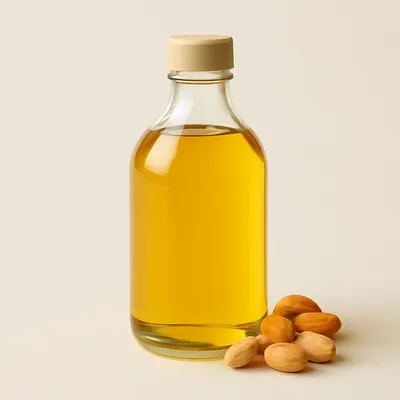
Heat peanut oil in a wok to 180–190°C. Working in small batches, drop in the dried rice and fry for about 30 seconds, stirring constantly, until the grains puff, turn lightly golden, and feel hollow. Remove immediately with a spider, drain on paper towels, and cool on a tray. Repeat until all rice is puffed.
Watch outFry until the grains puff, pale-gold, and feel hollow — about 30 seconds; let them brown and they turn bitter.
- 310 min
In a dry wok over medium heat, toast peanuts for about 5 minutes until golden and fragrant. Cool slightly, rub off the skins, and crush roughly into halves. In the same dry wok, toast white sesame seeds for about 2 minutes until faintly golden. Set both aside.
- 410 min
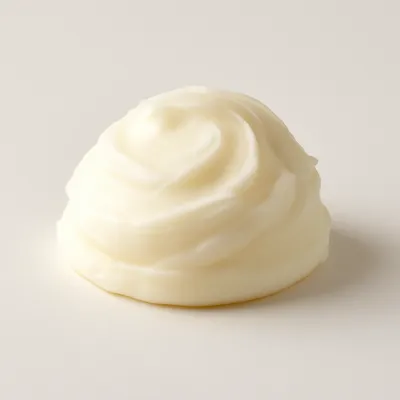
Combine sugar, maltose, lard, and water in a heavy-bottomed saucepan. Cook over medium heat, stirring until dissolved. Stop stirring and bring to 135°C (hard-crack stage) — a small drop in cold water should harden instantly into a brittle ball that snaps cleanly.
Watch outCook the syrup to hard-crack — a drop in cold water snaps clean and brittle; short of that the brittle stays sticky and won't set.
- 55 min
Working quickly off the heat, pour the hot syrup over the puffed rice, crushed peanuts, and sesame in a large bowl. Stir vigorously with an oiled spatula to coat everything evenly. Speed is critical — the syrup sets within seconds once it cools.
Watch outWork fast once you pour the syrup on — it sets in seconds, and a slow toss leaves half the puffs uncoated.
- 65 min
Immediately pour the mixture into a lightly oiled mold or onto oiled parchment paper. Press firmly and evenly with a flat-bottomed pan or rolling pin to form a slab about 1.5 cm thick.
- 715 min
While still warm and pliable, score into bars roughly 4 × 8 cm with a sharp knife. Let cool completely at room temperature until fully set and brittle, then cut through the score lines and wrap each piece individually.
Archive tool suggestions — not reviewed
These legacy suggestions have not been evidence-reviewed and are not presented as required tools.


